Blog

  • Why Night Owls Struggle in a Morning World

    Why Night Owls Struggle in a Morning World

    How biological timing collides with early schedules and drains daily energy

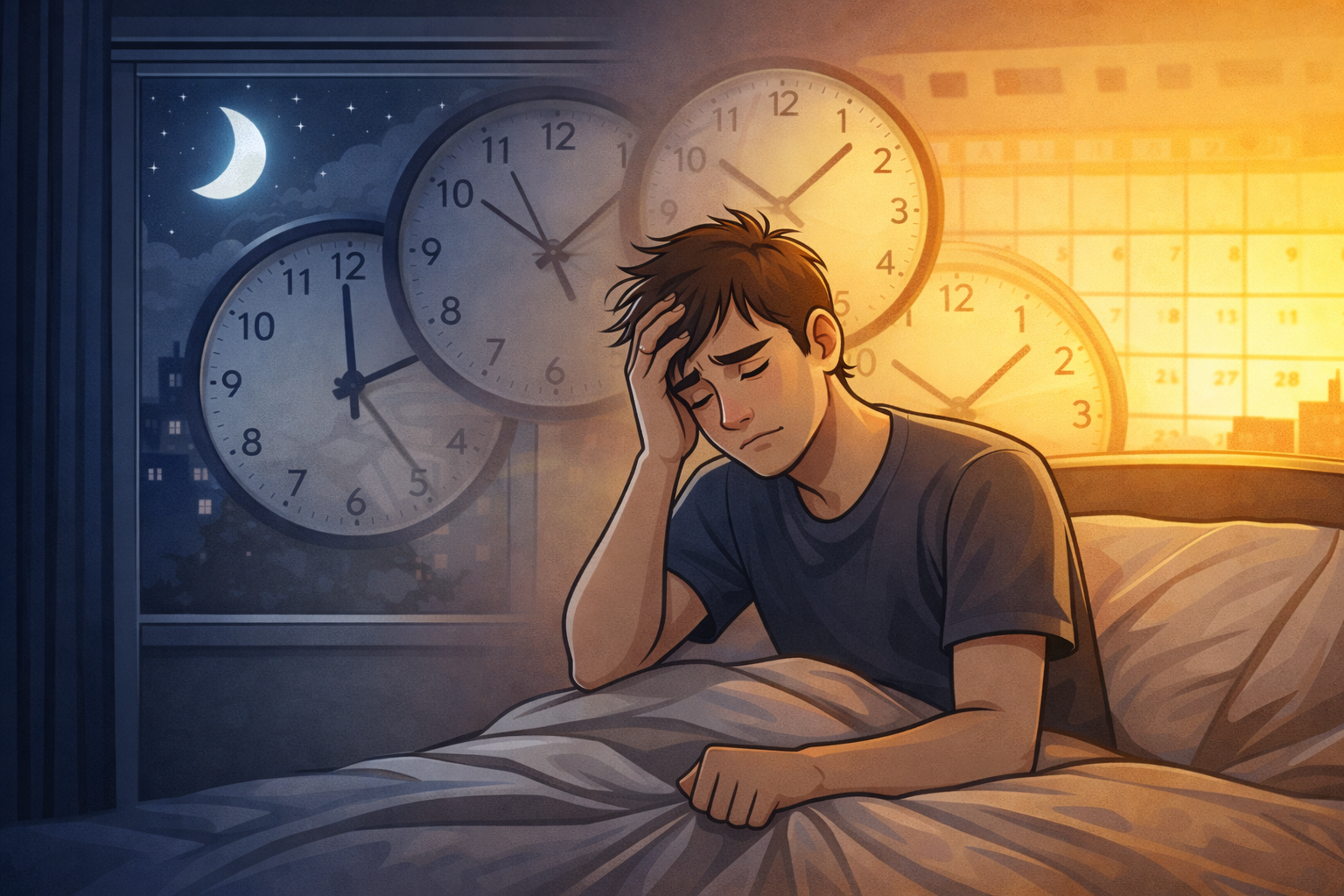
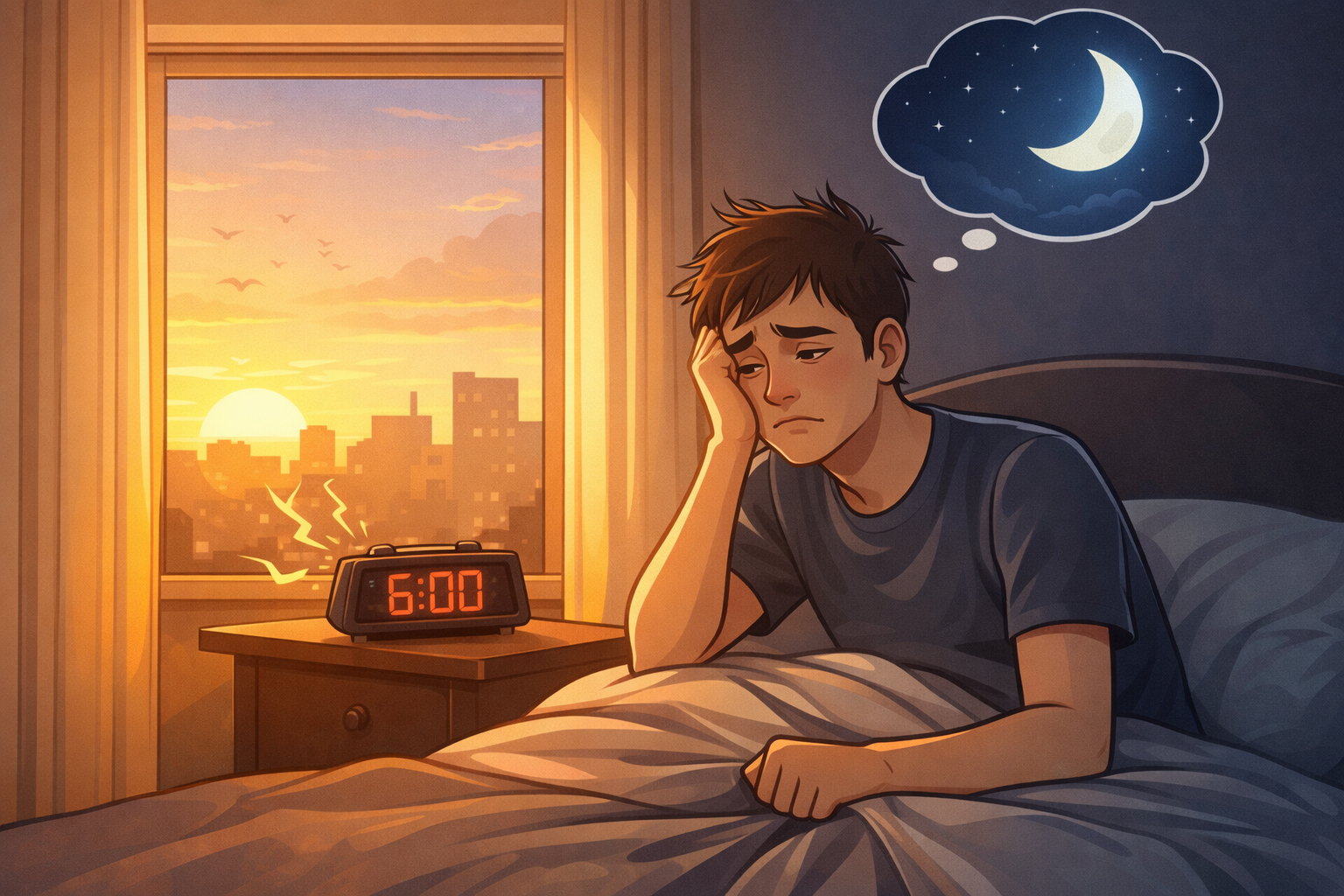
    For many people, mornings feel like a constant uphill battle. Waking up early feels unnatural, mental clarity arrives late, and peak productivity seems to come only after most of the day has already passed.

    In a world built around early schedules, this struggle is often framed as a lack of discipline or motivation. In reality, it is usually the result of a mismatch between biological timing and social expectations. For night owls, the problem is not effort — it is alignment.


    What It Means to Be a Night Owl

    Being a night owl is not a personality trait or a lifestyle choice. It reflects a later biological timing of the sleep–wake cycle, known as a delayed chronotype.

    Night owls naturally feel more alert later in the day and evening. Their brains take longer to fully transition into wakefulness in the morning, while cognitive performance, focus, and creativity tend to peak in the afternoon or evening hours.

    This pattern is driven by internal biological processes, not habits or preferences. Even when night owls follow early schedules for years, the underlying timing often remains the same.


    Why Mornings Feel So Difficult for Night Owls

    For night owls, early mornings occur during a biological low point.

    At this time, alertness is still rising, reaction time is slower, and mental clarity is reduced. Tasks that require focus, decision-making, or learning demand significantly more effort than they would later in the day.

    This is not because the brain is incapable, but because it is being asked to perform before it is biologically ready. The result is a sense of mental fog, heavy fatigue, and resistance to waking that feels disproportionate to the situation.


    The Role of Circadian Timing

    The struggle night owls experience is rooted in circadian timing.

    In later chronotypes, the internal clock is shifted forward. Hormonal signals that promote alertness rise later, while signals that promote sleep persist longer into the morning. This delay affects not only sleep onset but also daytime cognitive performance.

    When external schedules force early wake-ups, the brain operates out of phase with its internal timing. Over time, this creates chronic misalignment rather than adaptation.


    Why Modern Schedules Amplify the Problem

    Modern society strongly favors early timing. Work schedules, school start times, and social norms are largely built around morning-oriented chronotypes.

    For night owls, this means repeated exposure to early demands combined with insufficient alignment opportunities later in the day. Evening alertness is often cut short by early bedtimes that do not match biological readiness for sleep.

    Artificial lighting, evening screen exposure, and irregular routines further complicate the picture, reinforcing delayed timing while simultaneously penalizing it.


    The Cognitive Cost of Chronic Misalignment

    When night owls are consistently forced into early schedules, the effects accumulate.

    Sleep becomes shorter or less efficient. Morning grogginess intensifies. Focus and memory suffer. Emotional regulation becomes more difficult, and perceived stress increases.

    Importantly, these effects can persist even when total sleep duration appears adequate. The issue is not simply sleep quantity, but timing misalignment between the brain and the environment.

    Over time, this misalignment can lead to chronic fatigue and reduced cognitive resilience.


    Why Willpower Doesn’t Solve the Problem

    Many night owls attempt to overcome morning struggles through discipline: earlier alarms, stronger coffee, stricter routines.

    While these strategies can temporarily mask symptoms, they do not correct the underlying timing mismatch. The brain must expend additional effort to function during biologically suboptimal hours, increasing mental strain rather than improving performance.

    Biological timing systems do not respond quickly to motivation. They adapt slowly to consistent cues, not pressure.


    Can Night Owls Adapt to a Morning World?

    Night owls can make partial adjustments, but full adaptation is uncommon.

    Light exposure, routine consistency, and sleep timing can shift the internal clock slightly earlier. However, the fundamental chronotype often remains stable. Large forced shifts frequently result in ongoing misalignment rather than true adaptation.

    Understanding this limitation reframes the challenge. The goal is not to become a morning person, but to reduce the friction between biology and daily demands where possible.


    Reducing the Impact of Morning Misalignment

    Awareness is the first step toward improvement.

    Recognizing that morning difficulty is biological rather than personal allows night owls to adjust expectations, protect critical tasks for later hours when possible, and reduce unnecessary self-blame.

    Even small timing accommodations can significantly improve perceived energy, focus, and emotional stability. Alignment, not force, is the key.


    The Core Idea to Remember

    Night owls do not struggle because they lack discipline. They struggle because their biology operates on a later schedule in a world built for early timing.

    When the brain is repeatedly forced to perform outside its natural window, fatigue and frustration follow. Understanding this timing mismatch provides clarity — and clarity is the first step toward working with biology instead of fighting it.

  • Are You Fighting Your Chronotype?

    Are You Fighting Your Chronotype?

    Why your natural sleep timing may be working against your daily energy and mental clarity

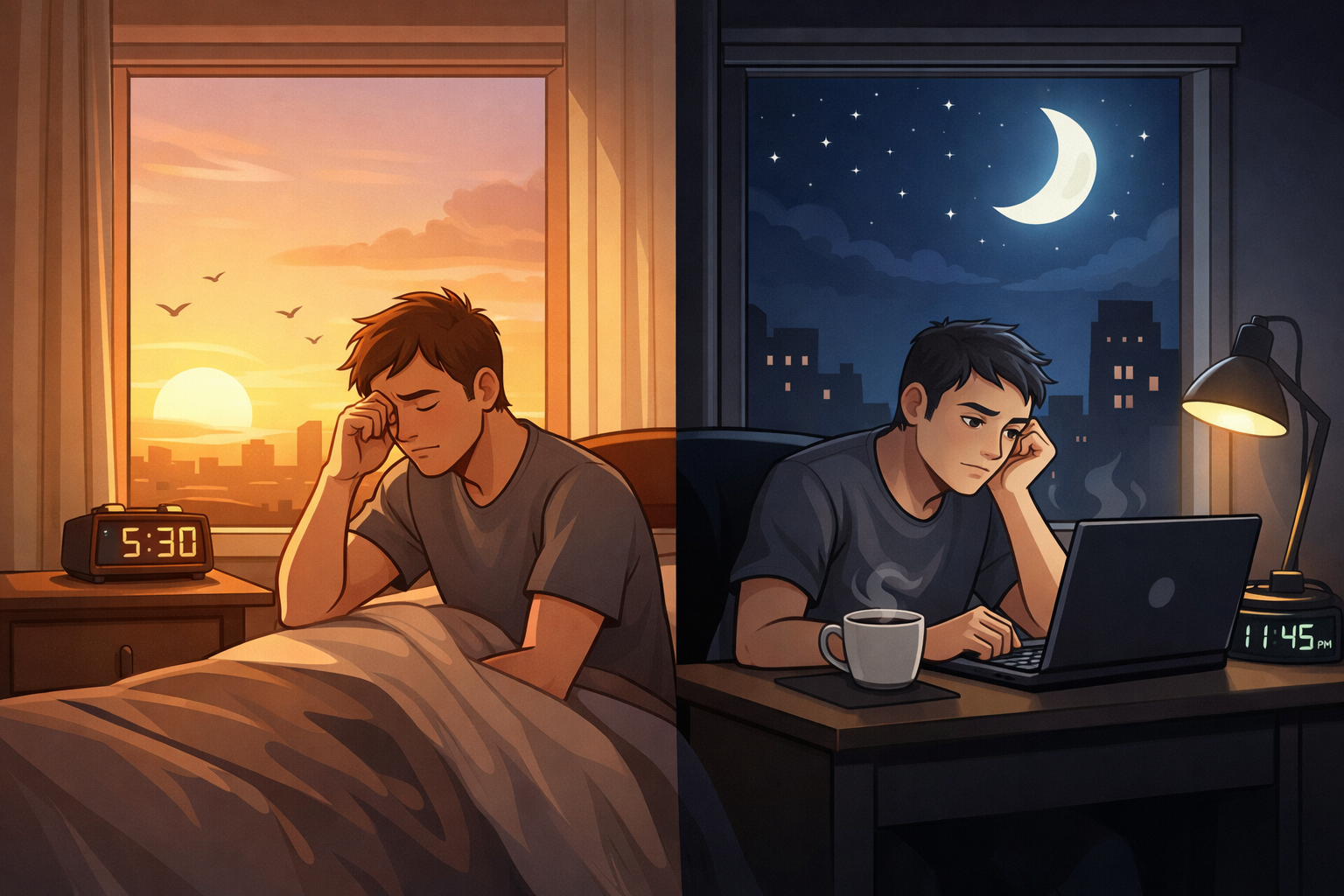
    Most people struggle with low energy, poor focus, and inconsistent sleep without realizing that the problem is not discipline or lifestyle. Waking up early may feel unnaturally difficult, while mental clarity appears later in the day—often when obligations are already ending.

    When this happens consistently, the instinct is to push harder, drink more coffee, or force earlier bedtimes. Yet for many people, these strategies fail because they are fighting their chronotype rather than working with it.

    Understanding chronotype helps explain why effort alone does not always lead to better energy, focus, or sleep quality.


    What a Chronotype Really Is

    A chronotype describes your body’s natural timing for sleep, wakefulness, and peak cognitive performance. It reflects when your brain is biologically prepared to be alert, focused, and mentally efficient, and when it naturally shifts toward rest.

    Chronotype is closely linked to the circadian rhythm, the internal timing system that regulates alertness, hormone release, sleep pressure, and brain performance across the day. While the circadian rhythm defines the overall 24-hour structure, chronotype determines how your body fits within that structure.

    Importantly, chronotype is not a habit you chose or a routine you developed. It is largely biological, shaped by genetics and internal brain timing mechanisms rather than motivation or lifestyle.


    Chronotype Is Not a Preference

    A common misconception is that chronotype is simply a preference that can be trained away. In reality, chronotype tends to remain relatively stable across adulthood, even when schedules change.

    You can force yourself to wake early for years and still feel misaligned. You can adopt late-night habits and still struggle with evening focus. Preferences may adapt, but biological timing resists rapid change.

    This is why some people feel persistently tired or unfocused despite maintaining consistent sleep schedules and “doing everything right.”


    The Biology Behind Different Chronotypes

    Chronotype differences arise from how the brain’s internal clock responds to light and darkness.

    Later chronotypes experience delayed melatonin release, meaning alertness remains elevated later into the evening and rises more slowly in the morning. Earlier chronotypes show the opposite pattern, with earlier sleep pressure and faster morning activation.

    Neither pattern is abnormal. Human populations naturally include a range of chronotypes, each representing a valid expression of circadian biology.


    What Happens When You Fight Your Chronotype

    When daily schedules consistently oppose biological timing, the brain operates under chronic strain.

    Sleep often becomes less restorative, even if duration appears sufficient. Morning grogginess intensifies, focus requires more effort, and emotional regulation becomes more difficult. Over time, this misalignment can lead to persistent fatigue, brain fog, and reduced cognitive performance.

    Crucially, these effects can occur even in people who believe they are sleeping enough. The issue is not always how long you sleep, but when your brain is being asked to perform.


    Why Willpower Doesn’t Fix Chronotype Mismatch

    Many people respond to chronotype conflict with discipline: stricter alarms, more caffeine, tighter routines.

    While these approaches can temporarily override biological signals, they come at a cost. The brain must expend additional cognitive resources to function outside its optimal timing window, reducing efficiency and increasing perceived fatigue.

    Biological timing systems do not respond to motivation alone. They adapt slowly to consistent timing cues, not determination. This is why forcing productivity against chronotype often feels exhausting rather than empowering.


    Can You Change Your Chronotype?

    Chronotype is not entirely fixed, but it is not easily rewritten.

    Research suggests a strong genetic component, meaning that while environmental factors such as light exposure and routines can shift timing slightly, the underlying preference usually remains stable.

    Most people can adjust their chronotype within limits, but attempts to force large changes often result in ongoing misalignment rather than lasting adaptation. Understanding this limitation reframes the goal from changing yourself to working more intelligently with your biology.


    Working With Your Chronotype Instead of Against It

    The first step toward alignment is awareness. Observing when your energy, focus, and mental clarity naturally rise and fall provides valuable insight into your internal timing.

    Rather than forcing immediate change, recognizing these patterns allows for gradual adjustments that reduce friction instead of increasing pressure. Even small shifts toward biological alignment can significantly improve how effortful daily tasks feel.

    Energy is not something you create through willpower. It emerges when timing and biology work together.


    The Core Idea to Remember

    Feeling out of sync is often interpreted as a personal failure. In reality, it is frequently a biological timing issue.

    Chronotype shapes when your brain is ready to perform, recover, and rest. Fighting it repeatedly drains energy, while understanding it creates clarity.

    Recognizing your chronotype does not solve every sleep or energy problem, but it provides a critical framework for understanding why effort alone is not always enough—and that understanding is a powerful starting point.

  • The Science Behind Feeling Rested

    The Science Behind Feeling Rested

    Feeling Rested Is Not the Same as Sleeping Longer

    Many people assume that feeling rested is simply a matter of sleeping more hours. In reality, the sensation of being refreshed after sleep is determined by how sleep is structured and regulated, not just by its duration.

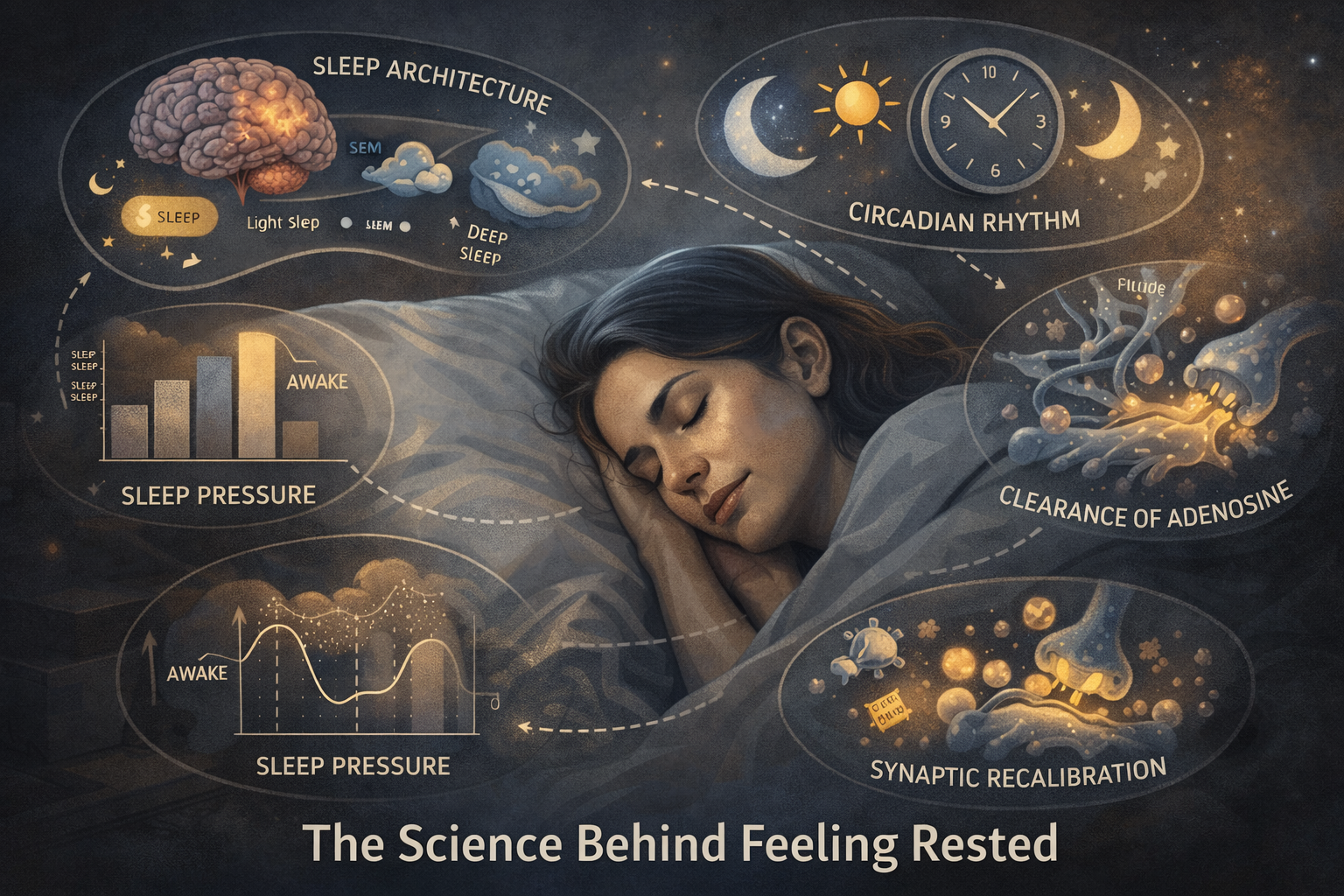
    Sleep is a complex biological process governed by interacting systems that control timing, depth, continuity, and recovery. When these systems align, people wake up feeling mentally clear, physically restored, and emotionally stable. When they do not, sleep may be long but unrefreshing.

    Understanding the science behind feeling rested requires looking beyond the clock.


    The Role of Sleep Architecture

    Sleep is organized into repeating cycles, each composed of different stages, including light sleep, deep sleep, and REM sleep. This structure is known as sleep architecture.

    A typical night includes four to six cycles, each lasting about 90 minutes. Feeling rested depends on:

    • Sufficient deep sleep early in the night

    • Adequate REM sleep in later cycles

    • Smooth transitions between stages

    • Minimal fragmentation or awakenings

    Deep sleep supports physical recovery, metabolic regulation, and immune function. REM sleep plays a central role in emotional processing, learning, and memory integration. Disruption of either stage can significantly reduce perceived restfulness, even if total sleep time appears adequate.


    Sleep Pressure and Homeostatic Balance

    Another key factor behind feeling rested is sleep pressure, a biological drive that builds during wakefulness and dissipates during sleep.

    The longer a person stays awake, the stronger the pressure to sleep becomes. High-quality sleep efficiently reduces this pressure. Poor-quality or fragmented sleep does not.

    When sleep pressure is not adequately relieved, individuals may wake up feeling:

    • Heavy or mentally foggy

    • Physically sluggish

    • Unmotivated or irritable

    This explains why sleeping longer does not always improve how rested someone feels. The issue is not the amount of sleep, but how effectively sleep reduces accumulated pressure.


    Circadian Rhythm Alignment

    The circadian rhythm is the internal biological clock that regulates sleep timing, hormone release, body temperature, and alertness. Feeling rested strongly depends on sleeping in alignment with this rhythm.

    When sleep occurs at biologically appropriate times:

    • Sleep stages organize more efficiently

    • Hormonal recovery processes function optimally

    • Morning alertness improves

    Circadian misalignment—such as irregular bedtimes, late-night light exposure, or social jet lag—can reduce sleep quality even when total sleep duration remains unchanged.

    People who sleep “enough” hours but at inconsistent times often report waking unrefreshed because their internal clock and sleep schedule are out of sync.


    The Importance of Sleep Continuity

    Sleep continuity refers to how uninterrupted sleep remains throughout the night. Frequent micro-awakenings, even if not remembered, fragment sleep architecture and reduce its restorative value.

    Causes of reduced continuity include:

    • Stress and cognitive hyperarousal

    • Environmental noise or light

    • Sleep-disordered breathing

    • Irregular sleep schedules

    Fragmented sleep limits time spent in deeper stages and prevents smooth progression through cycles. As a result, the brain and body fail to complete key recovery processes, leading to persistent fatigue despite adequate time in bed.


    Neurochemical Recovery During Sleep

    Feeling rested is also tied to neurochemical balance.

    During sleep, especially deep sleep, the brain reduces levels of neuromodulators associated with wakefulness, such as norepinephrine and cortisol. This downregulation allows neural circuits to reset sensitivity and restore efficiency.

    At the same time, sleep supports:

    • Synaptic recalibration

    • Energy restoration at the cellular level

    • Clearance of metabolic byproducts

    If sleep is shallow or repeatedly interrupted, these neurochemical processes remain incomplete, contributing to the sensation of mental exhaustion upon waking.


    Why Subjective Rest Does Not Always Match Objective Sleep

    Interestingly, how rested someone feels does not always correlate perfectly with measured sleep duration. This disconnect occurs because subjective restfulness reflects integrated recovery, not isolated metrics.

    Two individuals may both sleep seven hours, yet experience very different outcomes depending on:

    • Sleep timing

    • Sleep depth distribution

    • Fragmentation

    • Stress levels

    This is why wearable data alone cannot fully explain why someone feels rested or not. Biological context matters more than raw numbers.


    The Accumulation Effect of Chronic Disruption

    When sleep architecture, circadian alignment, and continuity are repeatedly disrupted, the feeling of being rested gradually disappears. Over time, the nervous system adapts to chronic sleep strain, lowering baseline alertness and recovery capacity.

    This adaptation can make fatigue feel “normal,” masking the extent of underlying sleep debt. Restfulness only returns when sleep quality is consistently restored, not through occasional recovery nights.


    The Key Takeaway

    Feeling rested is not the result of a single factor. It emerges when sleep architecture, sleep pressure, circadian timing, and continuity work together.

    More sleep does not automatically mean better recovery. High-quality, well-timed, and uninterrupted sleep is what allows the brain and body to complete the processes that produce true rest.

    Understanding this distinction is essential for addressing persistent fatigue and restoring long-term sleep health.

  • The Long-Term Effects of Chronic Sleep Loss

    The Long-Term Effects of Chronic Sleep Loss

    Chronic Sleep Loss Is a Biological Stressor, Not a Lifestyle Choice

    Occasional poor sleep is common and usually reversible. Chronic sleep loss is different. When insufficient or fragmented sleep becomes persistent, it acts as a biological stressor that affects nearly every system in the body.

    Chronic sleep loss is typically defined as regularly sleeping less than the amount needed for optimal functioning—often below seven hours per night—over weeks, months, or years. Its effects accumulate slowly, making them easy to underestimate and difficult to reverse once established.


    Long-Term Effects on Brain Function and Cognition

    One of the most well-documented consequences of chronic sleep loss involves the brain.

    Long-term sleep deprivation is associated with:

    • Reduced attention and vigilance

    • Impaired working memory

    • Slower processing speed

    • Decreased cognitive flexibility

    Neuroimaging studies show that chronic sleep loss alters activity in the prefrontal cortex, the region responsible for decision-making, impulse control, and executive function. Over time, the brain becomes less efficient at regulating emotions and evaluating risk.

    Importantly, these changes can persist even after short periods of recovery sleep, indicating cumulative neural strain rather than temporary fatigue.


    Emotional Regulation and Mental Health Consequences

    Sleep plays a critical role in emotional regulation. When sleep is chronically restricted, the brain’s emotional circuits become imbalanced.

    Long-term sleep loss is linked to:

    • Increased anxiety and irritability

    • Higher risk of depression

    • Heightened emotional reactivity

    • Reduced stress tolerance

    The amygdala, a key emotional processing center, becomes more reactive, while regulatory control from the prefrontal cortex weakens. This imbalance makes emotional responses stronger and less controllable, contributing to mood disorders and burnout.


    Cardiovascular and Metabolic Impact

    Chronic sleep loss has significant effects beyond the brain.

    Long-term studies associate insufficient sleep with:

    • Elevated blood pressure

    • Increased risk of cardiovascular disease

    • Impaired glucose regulation

    • Higher likelihood of insulin resistance

    Sleep deprivation disrupts hormonal balance, including cortisol, insulin, leptin, and ghrelin. These changes promote inflammation, metabolic dysregulation, and increased cardiovascular strain.

    Over time, chronic sleep loss increases the risk of obesity, type 2 diabetes, and heart disease, even in individuals who are otherwise physically active.


    Immune System Suppression and Inflammation

    Sleep is essential for immune regulation. Chronic sleep deprivation weakens immune defenses and promotes low-grade systemic inflammation.

    Research shows that long-term sleep loss leads to:

    • Reduced immune response to infections

    • Slower recovery from illness

    • Increased inflammatory markers

    This persistent inflammatory state is associated with accelerated aging and increased vulnerability to chronic diseases.


    Brain Aging and Neurodegenerative Risk

    Emerging evidence suggests that chronic sleep loss may contribute to accelerated brain aging.

    Sleep is crucial for clearing metabolic waste from the brain through the glymphatic system. When sleep is consistently disrupted, waste products such as beta-amyloid may accumulate more rapidly.

    While sleep loss alone does not cause neurodegenerative disease, long-term disruption appears to increase vulnerability to cognitive decline later in life.


    Why the Effects Accumulate Silently

    One of the most dangerous aspects of chronic sleep loss is that subjective perception often adapts faster than biological systems. People may feel “used to” sleeping less, while objective performance and physiological health continue to decline.

    This mismatch creates a false sense of resilience, delaying corrective action until symptoms become more severe.


    The Key Takeaway

    Chronic sleep loss is not simply about feeling tired. It is a long-term biological burden that affects brain function, emotional stability, metabolic health, immune regulation, and cardiovascular integrity.

    Sleep debt cannot be fully repaid with occasional recovery nights. Long-term sleep health requires consistency, sufficient duration, and stable circadian timing.

    Protecting sleep is not a luxury.
    It is a foundational requirement for long-term health.

  • How Sleep Shapes Brain Plasticity

    How Sleep Shapes Brain Plasticity

    Sleep Is Not Passive: It Actively Rewires the Brain

    For decades, sleep was seen as a passive state—a period where the brain simply “shut down” to recover energy. Modern neuroscience has completely overturned this idea.

    Sleep is one of the most active and critical periods for brain plasticity, the brain’s ability to change, adapt, and reorganize itself. Without sleep, learning stalls, memory fragments, and neural networks lose efficiency.

    In short:
    Sleep is not rest for the brain. It is construction time.


    What Brain Plasticity Really Means

    Brain plasticity (or neuroplasticity) refers to the brain’s capacity to:

    • Strengthen or weaken synaptic connections

    • Create new neural pathways

    • Prune unnecessary or inefficient connections

    • Adapt to new experiences, skills, and environments

    Plasticity is what allows you to learn a language, improve a skill, recover after injury, and integrate emotional experiences.

    Crucially, plasticity does not happen evenly across the day.
    It is strongly dependent on sleep.


    Why Sleep Is the Brain’s Main Remodeling Phase

    During wakefulness, the brain is busy processing incoming information. Neurons fire constantly, synapses strengthen rapidly, and networks become saturated.

    Sleep provides the conditions needed to rebalance and refine this activity.

    Research shows that during sleep:

    • Irrelevant synapses are weakened

    • Important connections are stabilized

    • Neural noise is reduced

    • Signal efficiency improves

    This process is often described as synaptic homeostasis: the brain resets itself to remain flexible rather than overloaded.

    Without this reset, learning becomes inefficient and unstable.


    Deep Sleep and Structural Plasticity

    Deep sleep (also called slow-wave sleep) plays a key role in structural plasticity.

    During this phase:

    • Brain waves slow dramatically

    • Growth-related processes increase

    • Metabolic waste is cleared more efficiently

    Studies indicate that deep sleep supports:

    • Synaptic downscaling (removing excess connections)

    • Long-term network stability

    • Brain tissue maintenance

    This explains why chronic sleep deprivation is linked to reduced cognitive flexibility, slower learning, and impaired problem-solving.

    Deep sleep does not make you smarter—it prevents the brain from becoming rigid.


    REM Sleep, Learning, and Emotional Plasticity

    REM sleep (Rapid Eye Movement sleep) is strongly associated with:

    • Memory integration

    • Emotional processing

    • Creative recombination of information

    During REM sleep, the brain shows activity patterns similar to wakefulness, but without external input. This allows memories to be replayed, reinterpreted, and emotionally reweighted.

    REM sleep is especially important for:

    • Skill learning

    • Language acquisition

    • Emotional regulation

    • Trauma processing

    When REM sleep is disrupted, people often experience:

    • Emotional instability

    • Poor memory consolidation

    • Reduced creativity

    This is why sleep problems frequently coexist with anxiety, depression, and burnout.


    Sleep Loss and Reduced Plasticity

    When sleep is insufficient or fragmented, brain plasticity suffers.

    Research consistently shows that sleep deprivation leads to:

    • Reduced synaptic strength

    • Impaired memory consolidation

    • Slower learning rates

    • Decreased adaptability to new tasks

    Even a single night of poor sleep can reduce the brain’s ability to modify synaptic connections the next day.

    Over time, chronic sleep loss pushes the brain toward rigidity rather than flexibility—a state linked to cognitive decline and emotional dysregulation.


    Why Plasticity Needs Both Sleep and Wake

    Plasticity is a two-phase process:

    • Wake: information is encoded

    • Sleep: information is refined and integrated

    Without wakefulness, there is nothing to consolidate.
    Without sleep, consolidation fails.

    This explains why simply “studying more” without sleeping does not improve performance—and often worsens it.

    Sleep does not add new information.
    It organizes what you already experienced.


    Aging, Sleep, and Brain Adaptability

    As people age, sleep architecture changes:

    • Less deep sleep

    • More fragmented nights

    • Altered REM patterns

    These changes are strongly associated with reduced plasticity and slower learning.

    However, studies also show that improving sleep quality can partially restore plasticity, even later in life. Sleep remains one of the most accessible levers to protect cognitive function over time.


    The Key Takeaway

    Brain plasticity does not happen by chance.
    It is scheduled, and sleep is the schedule.

    Sleep is when the brain:

    • Decides what matters

    • Removes what doesn’t

    • Strengthens what should last

    If learning, memory, or mental flexibility feel impaired, the problem is often not intelligence or effort—but sleep quality.

    Sleep shapes the brain because it is when the brain shapes itself.

  • Why Insomnia Is Often Not a Sleep Problem

    Why Insomnia Is Often Not a Sleep Problem

    Insomnia is commonly framed as a failure to sleep. If you can’t fall asleep, wake up repeatedly, or lie awake for hours, the assumption is simple: something must be wrong with your sleep.
    Scientifically, however, this assumption is incomplete.

    In many cases, insomnia is not caused by an inability to sleep, but by an inability to disengage from wakefulness. The problem lies not in sleep itself, but in how the brain regulates arousal, timing, and safety signals.


    Sleep is a passive process, wakefulness is active

    Sleep does not require effort. In a healthy nervous system, sleep emerges naturally when wakefulness shuts down. Insomnia appears when this shutdown does not occur.

    From a biological perspective, insomnia reflects excessive activation of wake-promoting systems. The brain remains alert when it should be transitioning into rest. This is why people with insomnia often feel exhausted yet unable to sleep.

    The issue is not missing sleep pressure — it is excessive arousal.


    The hyperarousal model of insomnia

    Modern sleep science increasingly explains insomnia through the hyperarousal model. According to this model, the brain of someone with insomnia remains in a heightened state of alertness, even at night.

    This hyperarousal can be:

    • cognitive (racing thoughts)

    • emotional (worry, frustration)

    • physiological (elevated heart rate, stress hormones)

    Importantly, these states can exist even when a person feels calm or tired. The nervous system itself remains primed for wakefulness.


    Why trying harder to sleep backfires

    Because insomnia feels like a sleep problem, people often respond by trying to force sleep. They go to bed earlier, stay in bed longer, or monitor sleep obsessively.

    Paradoxically, these behaviors increase arousal. The bed becomes associated with effort, monitoring, and frustration rather than safety and rest. Over time, the brain learns that nighttime is a period of vigilance.

    This explains why insomnia often persists even when external stressors improve.


    The role of the nervous system

    Sleep requires a shift from sympathetic (alert) nervous system dominance to parasympathetic (rest) dominance. In insomnia, this shift is incomplete.

    The nervous system continues to interpret nighttime as a period requiring readiness rather than recovery. This state may originate from stress, irregular schedules, or past sleep disruption, but it becomes self-sustaining.

    Insomnia, therefore, is better understood as a regulation problem rather than a sleep deficit.


    Circadian rhythm and insomnia perception

    Circadian misalignment can amplify this issue. When sleep timing does not align with the internal clock, sleep pressure builds inefficiently. The brain remains alert not because it refuses sleep, but because timing signals are confused.

    In these cases, insomnia feels psychological, but it is driven by biological timing rather than conscious resistance.


    Why insomnia often coexists with mental strain

    Insomnia frequently overlaps with anxiety and emotional stress, but this does not mean it is purely psychological. Instead, it reflects shared biological pathways.

    Both anxiety and insomnia involve heightened arousal and impaired downregulation. Improving sleep often reduces emotional symptoms, not because sleep “fixes” thoughts, but because it restores nervous system balance.


    Reframing insomnia changes the solution

    When insomnia is seen only as a sleep problem, solutions focus narrowly on sleep itself. When it is understood as an arousal regulation problem, the approach broadens.

    The goal shifts from “trying to sleep” to restoring the conditions under which sleep can occur naturally. This reframing alone often reduces fear and frustration, which are major drivers of persistent insomnia.


    The scientific takeaway

    Insomnia is rarely caused by an inability to sleep. It is more often caused by an inability to turn off wakefulness.

    By understanding insomnia as a problem of arousal, timing, and nervous system regulation, it becomes possible to approach sleep restoration with clarity rather than force.


    The key takeaway

    If insomnia feels like a battle, it is because the brain is fighting wakefulness rather than lacking sleep. Recognizing this distinction is the first step toward restoring natural sleep.

    Sleep returns when wakefulness stands down — not when it is overpowered.

  • The Science Behind Insomnia

    The Science Behind Insomnia

    Insomnia is often described as a simple inability to fall asleep. In reality, it is far more complex. Insomnia is not just a nighttime problem — it is a condition rooted in how the brain regulates arousal, timing, and recovery.

    From a scientific perspective, insomnia reflects a state in which the brain struggles to disengage from wakefulness. Understanding why this happens requires looking at the nervous system, circadian rhythm, and stress regulation together.


    Insomnia is not just “lack of sleep”

    Many people assume insomnia means sleeping too little. While reduced sleep time is a consequence, it is not the core issue. Insomnia is defined by difficulty falling asleep, staying asleep, or waking too early despite adequate opportunity to sleep.

    What distinguishes insomnia from occasional poor sleep is persistence. The brain remains alert when it should be resting, creating a mismatch between intention and physiology.


    The hyperarousal model

    One of the most widely accepted scientific explanations for insomnia is the hyperarousal model. According to this model, the brain of someone with insomnia remains in a heightened state of activation, even at night.

    This activation can be cognitive (racing thoughts), emotional (worry, frustration), or physiological (elevated heart rate, stress hormones). The result is a nervous system that does not fully downshift into sleep mode.

    Importantly, this state can persist even when the person feels exhausted.


    The role of the nervous system

    Sleep requires a shift from sympathetic nervous system dominance (alertness) to parasympathetic dominance (rest). In insomnia, this shift is incomplete.

    Stress, irregular schedules, and conditioned arousal can keep the nervous system primed for wakefulness. Over time, the bed itself can become associated with alertness rather than rest, reinforcing the problem.

    This explains why many people with insomnia feel tired during the day but unable to sleep at night.


    Circadian rhythm and insomnia

    Circadian misalignment plays a significant role in many forms of insomnia. When sleep timing does not match the brain’s internal clock, sleep pressure builds inefficiently.

    Late light exposure, inconsistent schedules, and irregular wake times confuse circadian signals. As a result, the brain may not produce the proper hormonal cues for sleep at the intended time.

    In these cases, insomnia is not a failure to sleep but a failure of timing.


    Stress hormones and sleep onset

    Stress hormones such as cortisol interfere with sleep initiation. Elevated cortisol levels in the evening signal alertness rather than rest.

    Chronic stress, whether psychological or physiological, can flatten normal cortisol rhythms. Instead of declining at night, cortisol remains elevated, delaying sleep onset and increasing nighttime awakenings.

    This hormonal pattern is common in chronic insomnia and contributes to its persistence.


    Why insomnia becomes self-reinforcing

    Insomnia often develops a feedback loop. Poor sleep increases daytime fatigue and stress. Increased stress heightens nighttime arousal. Heightened arousal worsens sleep.

    Over time, fear of not sleeping becomes part of the problem. The brain begins to associate nighttime with frustration rather than rest, strengthening the hyperarousal response.

    This does not mean insomnia is “all in the head.” It means the brain has learned a pattern that must be gently unlearned.


    Insomnia and mental health

    Insomnia and mental health are closely linked. Sleep disruption increases vulnerability to anxiety, depression, and emotional instability. At the same time, these conditions can worsen insomnia.

    Importantly, insomnia can exist independently of mental health disorders. Treating sleep directly often improves emotional symptoms, even without targeted psychological intervention.

    This highlights sleep’s foundational role in brain regulation.


    The scientific takeaway

    Insomnia is not simply a lack of willpower or a bad habit. It is a biological state characterized by hyperarousal, disrupted timing, and impaired nervous system regulation.

    Understanding insomnia scientifically removes blame and opens the door to more effective strategies. Restoring sleep requires addressing arousal and timing — not forcing sleep to happen.


    The key takeaway

    Insomnia reflects a brain that has difficulty disengaging from wakefulness. It is shaped by nervous system activation, circadian misalignment, and stress regulation.

    By understanding the mechanisms behind insomnia, it becomes possible to approach sleep restoration with clarity rather than frustration.

  • Why Sleep Is the Foundation of Mental Health

    Why Sleep Is the Foundation of Mental Health

    Sleep is often treated as a passive state — something that happens when the day ends and the mind shuts off. Mental health, on the other hand, is usually discussed in terms of thoughts, emotions, and psychological resilience.
    In reality, these two domains are deeply interconnected. Sleep is not just related to mental health; it is one of its biological foundations.

    When sleep is stable and restorative, the brain regulates emotions, stress, and cognition more effectively. When sleep is disrupted, mental health often suffers — even in the absence of psychological stressors. Understanding this relationship changes how we interpret anxiety, mood instability, and cognitive fatigue.


    The brain does not reset without sleep

    The brain is constantly active. During waking hours, it processes information, manages emotions, and responds to stress. Sleep provides the only extended period during which the brain can recalibrate these systems.

    During sleep, neural networks involved in emotion and stress are reorganized. Connections are strengthened or weakened based on relevance, helping the brain maintain balance. Without sufficient restorative sleep, this recalibration process becomes incomplete.

    The result is a brain that remains overstimulated and less able to regulate emotional responses during the day.


    Emotional regulation depends on sleep quality

    One of sleep’s most important roles is emotional regulation. Well-rested brains respond to emotional stimuli with greater flexibility and control. Poorly rested brains react more intensely and recover more slowly.

    Research consistently shows that sleep loss amplifies negative emotions and reduces the ability to manage stress. Small challenges feel overwhelming, and emotional reactions become harder to contain.

    This does not mean that sleep causes mental health disorders, but it strongly influences how resilient the brain is to emotional stress.


    Stress, anxiety, and the sleep cycle

    Stress and sleep interact in a bidirectional loop. Stress can disrupt sleep, and disrupted sleep increases stress sensitivity.

    When sleep quality declines, the brain’s stress response becomes more reactive. Stress hormones remain elevated longer, and the nervous system struggles to return to baseline. Over time, this creates a state of chronic hyperarousal.

    Even in individuals without clinical anxiety, poor sleep can produce symptoms such as restlessness, racing thoughts, and heightened worry. These symptoms often improve when sleep stabilizes.


    Sleep and mood stability

    Mood stability relies on consistent neural signaling. Sleep supports this consistency by maintaining healthy communication between brain regions involved in emotion and decision-making.

    When sleep is fragmented or poorly timed, this communication becomes less efficient. Mood swings, irritability, and emotional numbness become more common.

    Importantly, these changes can occur even when sleep duration appears sufficient. Quality, timing, and continuity matter as much as hours.


    Cognitive health and mental clarity

    Mental health is not only about emotions; it also includes cognitive clarity. Sleep plays a critical role in attention, memory, and executive function.

    Good sleep allows the brain to consolidate memories, filter irrelevant information, and prepare for learning. Poor sleep reduces these capacities, leading to brain fog, slower thinking, and reduced problem-solving ability.

    Over time, chronic sleep disruption can make cognitive tasks feel disproportionately difficult, contributing to frustration and reduced confidence.


    Why sleep is a foundation, not a supplement

    Sleep is sometimes treated as an optional enhancement to mental health strategies. In reality, it is foundational.

    Therapeutic techniques, stress management strategies, and lifestyle changes are far more effective when the brain is well-rested. Without sleep, these interventions operate on an unstable biological base.

    This is why improving sleep often produces broad mental health benefits, even without directly addressing psychological content.


    Modern life and mental health strain

    Modern environments frequently undermine sleep quality through artificial light, irregular schedules, and constant stimulation. These factors disrupt circadian timing and reduce restorative sleep.

    As a result, many people experience mental health symptoms that are partially rooted in biological misalignment rather than psychological pathology. Recognizing this distinction is essential for addressing the true source of distress.


    The long-term perspective

    Over time, consistent sleep disruption increases vulnerability to mood disorders and cognitive decline. Conversely, stable, high-quality sleep supports long-term emotional resilience and mental clarity.

    Sleep does not eliminate life’s challenges, but it equips the brain to handle them more effectively.


    The key takeaway

    Sleep is not just correlated with mental health — it supports it at a biological level. Emotional regulation, stress resilience, and cognitive clarity all depend on the brain’s ability to recover during sleep.

    Understanding sleep as a foundation rather than a supplement reframes mental health care. Before asking the mind to do more, the brain must be allowed to rest.

  • How the Circadian Rhythm Controls Hormones

    How the Circadian Rhythm Controls Hormones

    Hormones are often described as chemical messengers that influence how we feel, think, and function. What is less commonly understood is that hormones do not operate randomly. Their release follows a precise biological schedule governed by time, light exposure, and internal signals. At the center of this schedule is the circadian rhythm.

    The circadian rhythm acts as a master timing system, coordinating when hormones rise and fall across the day and night. This timing plays a critical role in energy levels, stress response, sleep quality, and emotional balance. When hormonal timing is aligned, the body functions smoothly. When it is disrupted, even normal hormone levels can feel ineffective.

    The circadian rhythm as a timing system

    The circadian rhythm is a roughly 24-hour internal clock that synchronizes the body with the external light–dark cycle. Rather than directly producing hormones, it tells the body when specific hormones should be released and when they should decline.

    Hormones depend on timing to be effective. A hormone released at the wrong time can create imbalance, even if the total amount is normal. This is why circadian regulation is so important: it ensures coordination across multiple systems rather than isolated chemical signals acting independently.

    Cortisol and the biology of wakefulness

    Cortisol is often labeled a “stress hormone,” but this description is incomplete. Cortisol also plays a vital role in healthy wakefulness and daily energy.

    Under normal circadian conditions, cortisol rises sharply in the early morning. This increase helps mobilize energy, sharpen attention, and prepare the brain and body for the demands of the day. This process is known as the cortisol awakening response.

    When circadian timing is disrupted, cortisol patterns become irregular. Cortisol may remain elevated late at night or fail to rise properly in the morning. The result is often grogginess, low energy, and difficulty feeling alert, even after adequate sleep.

    Melatonin and the signal for sleep

    Melatonin works in opposition to cortisol. Rather than promoting alertness, melatonin signals the body that it is time to rest.

    As evening light decreases, melatonin production increases. This hormonal shift lowers alertness, reduces body temperature, and prepares the nervous system for sleep. Melatonin is not a sleeping drug; it is a biological timing signal. Its effectiveness depends on proper circadian alignment.

    Exposure to artificial light at night suppresses melatonin release. When this signal is delayed or weakened, sleep onset becomes harder and sleep quality declines. Over time, this disruption affects not only sleep but also overall hormonal balance.

    Metabolic hormones and circadian timing

    Circadian rhythm also regulates metabolic hormones such as insulin. The body processes glucose more efficiently at certain times of day, typically earlier rather than late at night.

    Eating late or at irregular times creates a mismatch between metabolic hormone signaling and circadian timing. This mismatch can contribute to energy instability and metabolic stress, even without changes in diet quality.

    Hormonal health is therefore influenced not only by what we eat, but by when the body expects to metabolize nutrients.

    Stress hormones and circadian disruption

    Chronic circadian misalignment places continuous strain on stress-regulating hormones. Irregular sleep schedules, late-night stimulation, and inconsistent light exposure keep the nervous system in a state of partial activation.

    When this happens, stress hormones remain elevated when the body should be recovering. This prevents full physiological downregulation and makes true rest difficult. Over time, this state contributes to emotional volatility, reduced resilience, and mental fatigue.

    Why consistency matters more than precision

    Hormones respond best to predictable patterns. Regular sleep and wake times reinforce circadian signals and allow hormonal cycles to stabilize.

    Inconsistent routines confuse the timing system. Hormones are released unpredictably, reducing their effectiveness and increasing physiological noise. This is why people with irregular schedules often feel “off” even when they believe they are sleeping enough.

    Consistency does not require perfection. It requires giving the circadian system reliable cues day after day.

    Hormonal balance and long-term health

    Because hormones influence nearly every system in the body, circadian disruption has long-term consequences. Energy instability, mood changes, and cognitive fatigue often appear before more serious symptoms emerge.

    Understanding circadian hormone regulation reframes many common complaints. Fatigue, irritability, and poor focus are often timing problems rather than true hormonal deficiencies.

    Supporting circadian alignment is therefore one of the most effective ways to support hormonal health naturally.

    The key takeaway

    Hormones do not function in isolation. They operate on a schedule governed by the circadian rhythm.

    When this timing system is aligned, hormones work together to support energy, clarity, and emotional balance. When it is disrupted, imbalance emerges — even if hormone levels appear normal on paper.

    Understanding how the circadian rhythm controls hormones provides a powerful framework for interpreting sleep, energy, and long-term well-being.

  • REM Sleep vs Deep Sleep: What Actually Restores the Brain

    REM Sleep vs Deep Sleep: What Actually Restores the Brain

    When people talk about “good sleep,” they often imagine a single, uniform state of rest. In reality, sleep is made up of multiple stages, each serving a different biological purpose. Among these stages, two stand out for their role in recovery: deep sleep and REM sleep.

    Both are essential, but they restore the brain in very different ways. Understanding the difference between them helps explain why some nights feel deeply restorative while others leave you mentally drained, even after a full night in bed.


    The structure of sleep cycles

    Sleep is not static. Throughout the night, the brain moves through repeating cycles that include lighter stages of sleep, deep sleep, and REM sleep. Each cycle lasts roughly 90 minutes, and the proportion of stages shifts as the night progresses.

    Early in the night, deep sleep dominates. As morning approaches, REM sleep becomes longer and more frequent. This timing is not accidental. It reflects the different recovery needs of the brain and body at different points in the night.

    Good sleep depends on allowing these cycles to unfold naturally, without excessive disruption.

    These cycles are regulated by the circadian rhythm, the internal biological clock that determines when the brain moves through different stages of sleep.


    What deep sleep actually does

    Deep sleep is the most physically restorative stage of sleep. During this phase, brain activity slows significantly, external awareness is reduced, and the nervous system enters a state of profound recovery.

    One of the key functions of deep sleep is physical and neurological maintenance. Metabolic waste products that accumulate during waking hours are cleared more efficiently, and energy reserves are restored. The brain becomes less responsive to external stimuli, allowing internal repair processes to take priority.

    Deep sleep also plays a role in stabilizing the nervous system. It supports immune function, stress recovery, and overall physiological balance. Without enough deep sleep, the body feels worn down, even if total sleep time appears adequate.


    The unique role of REM sleep

    REM sleep serves a different purpose. During this stage, brain activity becomes more complex and resembles waking patterns. Dreaming is most vivid, and emotional processing intensifies.

    REM sleep is essential for cognitive and emotional restoration. It helps integrate memories, regulate mood, and maintain mental flexibility. Experiences from the day are reorganized, and emotional reactions are softened.

    This stage supports learning, creativity, and emotional resilience. When REM sleep is shortened or fragmented, people often experience irritability, poor emotional regulation, and reduced mental clarity — even if they don’t feel physically tired.


    Why one cannot replace the other

    A common misconception is that one type of sleep can compensate for the other. In reality, deep sleep and REM sleep are not interchangeable.

    Deep sleep restores the brain’s physical foundation. REM sleep fine-tunes emotional and cognitive functioning. Losing either one creates a specific form of imbalance.

    A night with adequate deep sleep but poor REM sleep may leave you emotionally reactive and mentally unfocused. A night rich in REM sleep but lacking deep sleep may result in physical fatigue and reduced stress tolerance.

    True recovery requires both.

    Understanding the balance between deep sleep and REM sleep is essential for defining good sleep quality from a scientific perspective.


    How disruption affects sleep stages

    Sleep stages are sensitive to disruption. Stress, irregular schedules, light exposure at night, and frequent awakenings can all interfere with the normal progression of deep and REM sleep.

    Deep sleep is particularly vulnerable to stress and late-night stimulation, while REM sleep is often shortened by early alarms or irregular wake times. Over time, this imbalance accumulates, even if total sleep duration remains stable.

    This explains why many people feel chronically under-recovered without being clinically sleep-deprived.


    Why you may sleep “enough” but still feel off

    Because deep sleep and REM sleep serve different functions, problems in either stage can produce specific symptoms. Physical heaviness, low resilience, and frequent illness often point to insufficient deep sleep. Emotional volatility, brain fog, and reduced creativity often reflect disrupted REM sleep.

    Importantly, these symptoms do not always appear immediately. The brain can compensate temporarily, masking the effects until the imbalance becomes chronic.


    The role of timing and consistency

    Both deep sleep and REM sleep depend on circadian alignment. When sleep occurs at biologically appropriate times, these stages unfold more efficiently.

    Consistency reinforces this process. Regular sleep schedules help the brain anticipate when to enter each stage, improving both depth and continuity. Irregular timing confuses the system, reducing the quality of both deep and REM sleep.

    Proper timing also supports hormonal regulation, which is controlled by the circadian rhythm’s influence on hormones


    What truly restores the brain

    Brain restoration is not about maximizing a single sleep stage. It is about balance, timing, and stability.

    Deep sleep repairs the brain’s infrastructure. REM sleep restores its flexibility and emotional balance. Together, they create a system that supports clarity, resilience, and long-term cognitive health.

    When either stage is compromised, recovery feels incomplete — no matter how many hours you spend in bed.


    The key takeaway

    Deep sleep and REM sleep are not competing priorities. They are complementary processes that restore different aspects of brain function.

    Understanding their roles shifts the focus away from sleep quantity and toward sleep quality. True restoration happens when the brain is allowed to move naturally through both stages, night after night.

    This distinction is fundamental to understanding why sleep works — and why it sometimes doesn’t.