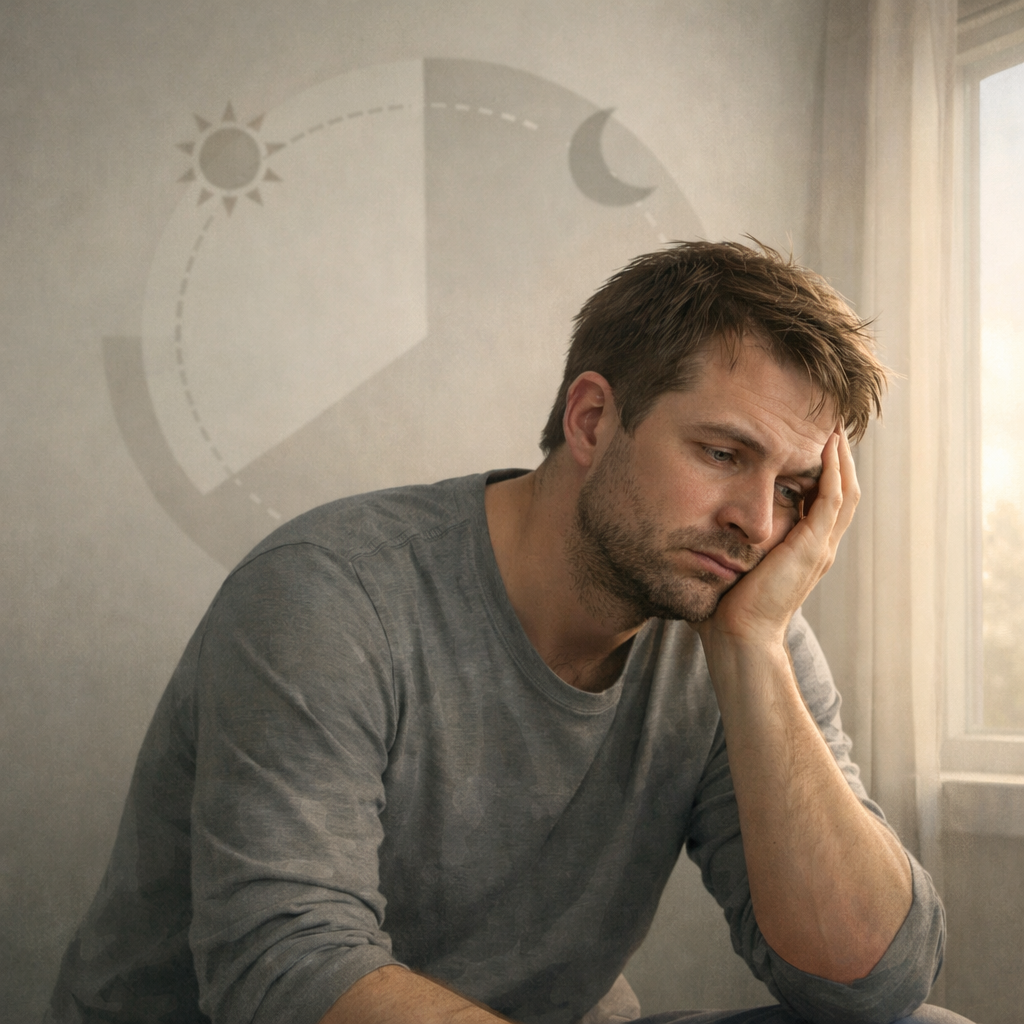
Insomnia is commonly framed as a failure to sleep. If you can’t fall asleep, wake up repeatedly, or lie awake for hours, the assumption is simple: something must be wrong with your sleep.
Scientifically, however, this assumption is incomplete.
In many cases, insomnia is not caused by an inability to sleep, but by an inability to disengage from wakefulness. The problem lies not in sleep itself, but in how the brain regulates arousal, timing, and safety signals.
Sleep is a passive process, wakefulness is active
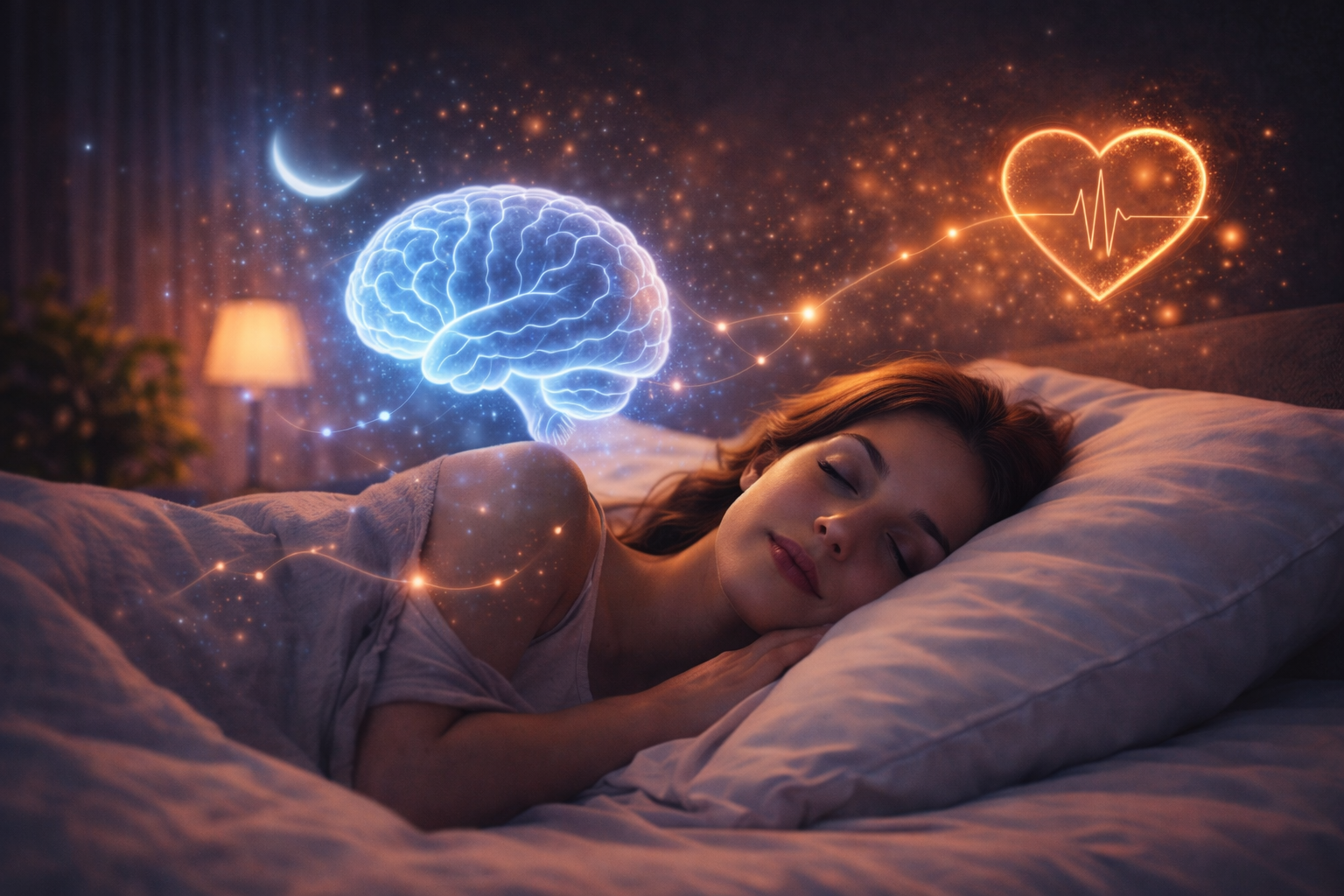
Sleep does not require effort. In a healthy nervous system, sleep emerges naturally when wakefulness shuts down. Insomnia appears when this shutdown does not occur.
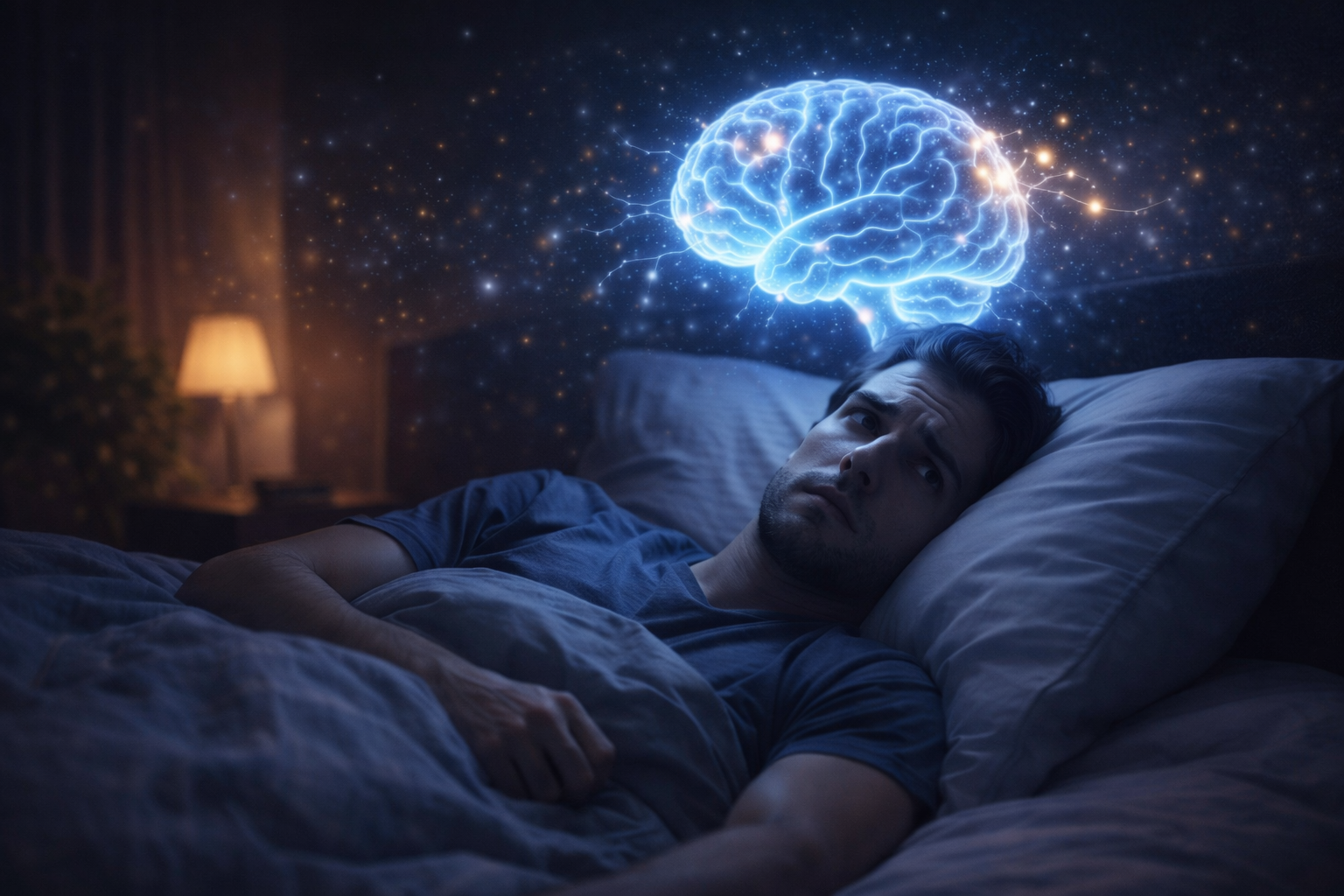
From a biological perspective, insomnia reflects excessive activation of wake-promoting systems. The brain remains alert when it should be transitioning into rest. This is why people with insomnia often feel exhausted yet unable to sleep.
The issue is not missing sleep pressure — it is excessive arousal.
The hyperarousal model of insomnia
Modern sleep science increasingly explains insomnia through the hyperarousal model. According to this model, the brain of someone with insomnia remains in a heightened state of alertness, even at night.
This hyperarousal can be:
-
cognitive (racing thoughts)
-
emotional (worry, frustration)
-
physiological (elevated heart rate, stress hormones)
Importantly, these states can exist even when a person feels calm or tired. The nervous system itself remains primed for wakefulness.
Why trying harder to sleep backfires
Because insomnia feels like a sleep problem, people often respond by trying to force sleep. They go to bed earlier, stay in bed longer, or monitor sleep obsessively.
Paradoxically, these behaviors increase arousal. The bed becomes associated with effort, monitoring, and frustration rather than safety and rest. Over time, the brain learns that nighttime is a period of vigilance.
This explains why insomnia often persists even when external stressors improve.
The role of the nervous system
Sleep requires a shift from sympathetic (alert) nervous system dominance to parasympathetic (rest) dominance. In insomnia, this shift is incomplete.
The nervous system continues to interpret nighttime as a period requiring readiness rather than recovery. This state may originate from stress, irregular schedules, or past sleep disruption, but it becomes self-sustaining.
Insomnia, therefore, is better understood as a regulation problem rather than a sleep deficit.
Circadian rhythm and insomnia perception
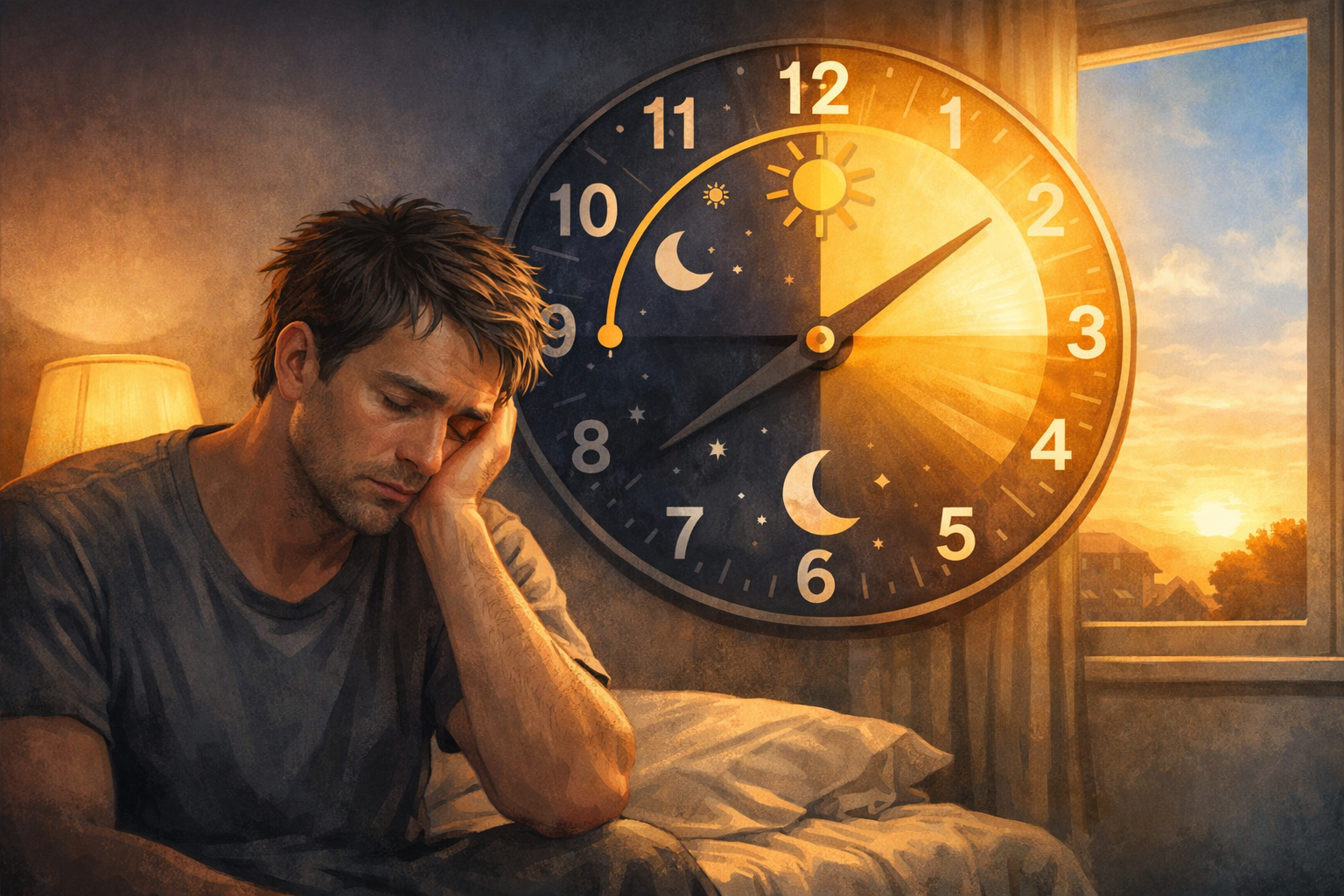
Circadian misalignment can amplify this issue. When sleep timing does not align with the internal clock, sleep pressure builds inefficiently. The brain remains alert not because it refuses sleep, but because timing signals are confused.
In these cases, insomnia feels psychological, but it is driven by biological timing rather than conscious resistance.
Why insomnia often coexists with mental strain
Insomnia frequently overlaps with anxiety and emotional stress, but this does not mean it is purely psychological. Instead, it reflects shared biological pathways.
Both anxiety and insomnia involve heightened arousal and impaired downregulation. Improving sleep often reduces emotional symptoms, not because sleep “fixes” thoughts, but because it restores nervous system balance.
Reframing insomnia changes the solution
When insomnia is seen only as a sleep problem, solutions focus narrowly on sleep itself. When it is understood as an arousal regulation problem, the approach broadens.
The goal shifts from “trying to sleep” to restoring the conditions under which sleep can occur naturally. This reframing alone often reduces fear and frustration, which are major drivers of persistent insomnia.
The scientific takeaway
Insomnia is rarely caused by an inability to sleep. It is more often caused by an inability to turn off wakefulness.
By understanding insomnia as a problem of arousal, timing, and nervous system regulation, it becomes possible to approach sleep restoration with clarity rather than force.
The key takeaway
If insomnia feels like a battle, it is because the brain is fighting wakefulness rather than lacking sleep. Recognizing this distinction is the first step toward restoring natural sleep.
Sleep returns when wakefulness stands down — not when it is overpowered.