
Category: Uncategorized

  • Why Do I Wake Up at 4AM Every Night?

    Why Do I Wake Up at 4AM Every Night?

    Waking up at 4AM every night is a surprisingly common experience. Many people fall asleep easily but suddenly wake up in the early morning hours and struggle to fall back asleep. If this happens regularly, it can leave you feeling tired, frustrated, and confused about what is happening in your body. Understanding why do I wake up at 4AM every night can help in addressing this issue.

    Early morning awakenings can occur for several reasons. They are often related to sleep cycles, hormonal changes, stress levels, blood sugar fluctuations, or lifestyle habits that disrupt the body’s natural sleep rhythm.

    Understanding the causes of these awakenings is the first step toward improving sleep quality and restoring more restful nights.


    Sleep Cycles and Early Morning Awakenings

    During sleep, the body passes through several cycles that typically last around 90 minutes each. These cycles include different stages of sleep:

    • light sleep

    • deep sleep

    • REM sleep

    In the first part of the night, deep sleep is more dominant. This is the stage where the body performs physical repair and recovery.

    However, as the night progresses, deep sleep becomes shorter and the body spends more time in lighter sleep stages. Because sleep becomes lighter in the early morning hours, the brain becomes more sensitive to disturbances.

    This means that even small factors such as noise, temperature changes, or internal signals from the body can wake you up more easily around 4AM. To gain insight into your sleep patterns, consider asking yourself: Why do I wake up at 4AM every night?


    The Role of Cortisol in Early Morning Waking

    One of the most important hormones involved in sleep and wake cycles is cortisol.

    Cortisol follows a natural daily rhythm called the cortisol awakening response. Normally, cortisol levels:

    • drop at night

    • stay low during sleep

    • begin rising in the early morning

    • peak shortly after waking

    This rise helps prepare the body to wake up and feel alert.

    However, when stress levels are high, cortisol may rise too early. When this happens, the brain receives a signal that it is time to wake up even though the body still needs sleep.

    Common causes of elevated nighttime cortisol include:

    • chronic stress

    • anxiety

    • overthinking before bed

    • irregular sleep schedules

    If cortisol rises earlier than normal, it can easily wake you around 4AM.


    Blood Sugar Drops During the Night

    Another common cause of early morning awakenings is blood sugar instability.

    During sleep, the body continues to consume glucose for energy. If blood sugar drops too low, the body responds by releasing stress hormones such as cortisol and adrenaline to stabilize glucose levels.

    These hormones can wake you up suddenly.

    Blood sugar fluctuations are more likely to occur if you:

    • eat large amounts of sugar in the evening

    • drink alcohol before bed

    • skip dinner

    • eat very late at night

    Keeping blood sugar stable during the night can help reduce early morning awakenings.


    Stress and an Overactive Mind

    Mental stress is one of the most common triggers of nighttime awakenings.

    When the brain is under stress, the nervous system becomes more alert and sensitive. Even while sleeping, the mind may remain partially active.

    This can lead to waking up during the night, especially during lighter sleep stages.

    People often notice that when they wake up around 4AM, their mind immediately starts thinking about:

    • work problems

    • financial concerns

    • responsibilities

    • unresolved worries

    This mental activity can make it very difficult to fall back asleep.


    Why Waking Up at 4AM Becomes More Common After 40

    Understanding Why Do I Wake Up at 4AM Every Night

    Many people notice that sleep patterns begin to change with age.

    After the age of 40, several biological changes occur that can make sleep lighter and more fragmented. These include:

    • reduced melatonin production

    • hormonal fluctuations

    • increased sensitivity to stress hormones

    • changes in circadian rhythm

    Because sleep becomes naturally lighter in the early morning hours, these changes can increase the likelihood of waking up around 4AM.

    This does not necessarily mean something is wrong, but it does mean that maintaining good sleep habits becomes more important.


    Environmental Factors That Can Wake You Up

    External factors in the sleeping environment can also trigger early morning awakenings.

    Some common disturbances include:

    Temperature changes
    If the bedroom becomes too warm or too cold, the body may wake up to adjust.

    Noise
    Even small sounds can interrupt sleep during lighter sleep stages.

    Light exposure
    Early morning light entering the room can signal the brain to start waking up.

    Uncomfortable mattress or pillow
    Physical discomfort can also interrupt sleep.

    Creating a sleep environment that supports uninterrupted rest can significantly improve sleep quality.


    Sleep Disorders That May Cause Early Waking

    In some cases, repeated early morning awakenings may be related to sleep disorders.

    One example is sleep maintenance insomnia, a condition where people fall asleep easily but wake up during the night and cannot fall back asleep.

    Another possibility is sleep apnea, a disorder that causes brief breathing interruptions during sleep. These interruptions can trigger frequent awakenings without the person realizing the cause.

    If early morning awakenings happen consistently and lead to daytime fatigue, it may be helpful to consult a healthcare professional.


    How to Stop Waking Up at 4AM

    Improving sleep often requires small adjustments to daily habits and nighttime routines.

    Some helpful strategies include:

    Maintain a consistent sleep schedule
    Going to bed and waking up at the same time each day helps regulate circadian rhythms.

    Avoid caffeine late in the day
    Caffeine can remain active in the body for several hours and interfere with sleep.

    Limit alcohol before bedtime
    Alcohol may help you fall asleep initially but often disrupts sleep later in the night.

    Create a relaxing bedtime routine
    Activities such as reading, stretching, or meditation can help calm the nervous system.

    Reduce evening screen exposure
    Blue light from phones and computers can interfere with melatonin production.


    Natural Supplements That May Support Sleep

    Some natural supplements may help support deeper and more stable sleep.

    Common options include:

    Magnesium glycinate
    Magnesium helps relax muscles and support nervous system balance.

    Glycine
    This amino acid may improve sleep quality and reduce nighttime awakenings.

    L-theanine
    Found in green tea, L-theanine may promote relaxation without sedation.

    Before taking any supplement, it is always advisable to consult a healthcare professional.


    Frequently Asked Questions

    Is waking up at 4AM normal?

    Yes, occasional early waking can be normal. Sleep becomes lighter in the early morning hours, which makes it easier to wake up.

    However, if it happens frequently and affects your energy levels during the day, it may indicate an underlying issue with sleep quality.


    Why do I wake up at the same time every night?

    Waking at the same time can happen because of circadian rhythms, stress hormones, or consistent lifestyle habits that influence the body’s internal clock.


    Can stress cause early morning awakenings?

    Yes. Stress and anxiety can raise cortisol levels and make the brain more alert during the night, increasing the chance of waking early.


    What should I do if I wake up at 4AM and can’t fall back asleep?

    If you cannot fall back asleep after about 20 minutes, it may help to get up and do a relaxing activity in low light until you feel sleepy again.

    Avoid checking your phone or exposing yourself to bright screens.


    Final Thoughts

    Waking up at 4AM every night can have many different causes, from natural sleep cycles to stress, hormonal changes, or lifestyle habits.

    In many cases, improving sleep hygiene and managing stress can significantly reduce early morning awakenings.

    By understanding how the body regulates sleep, it becomes easier to identify the factors that may be interfering with restful nights and take steps toward healthier sleep patterns.
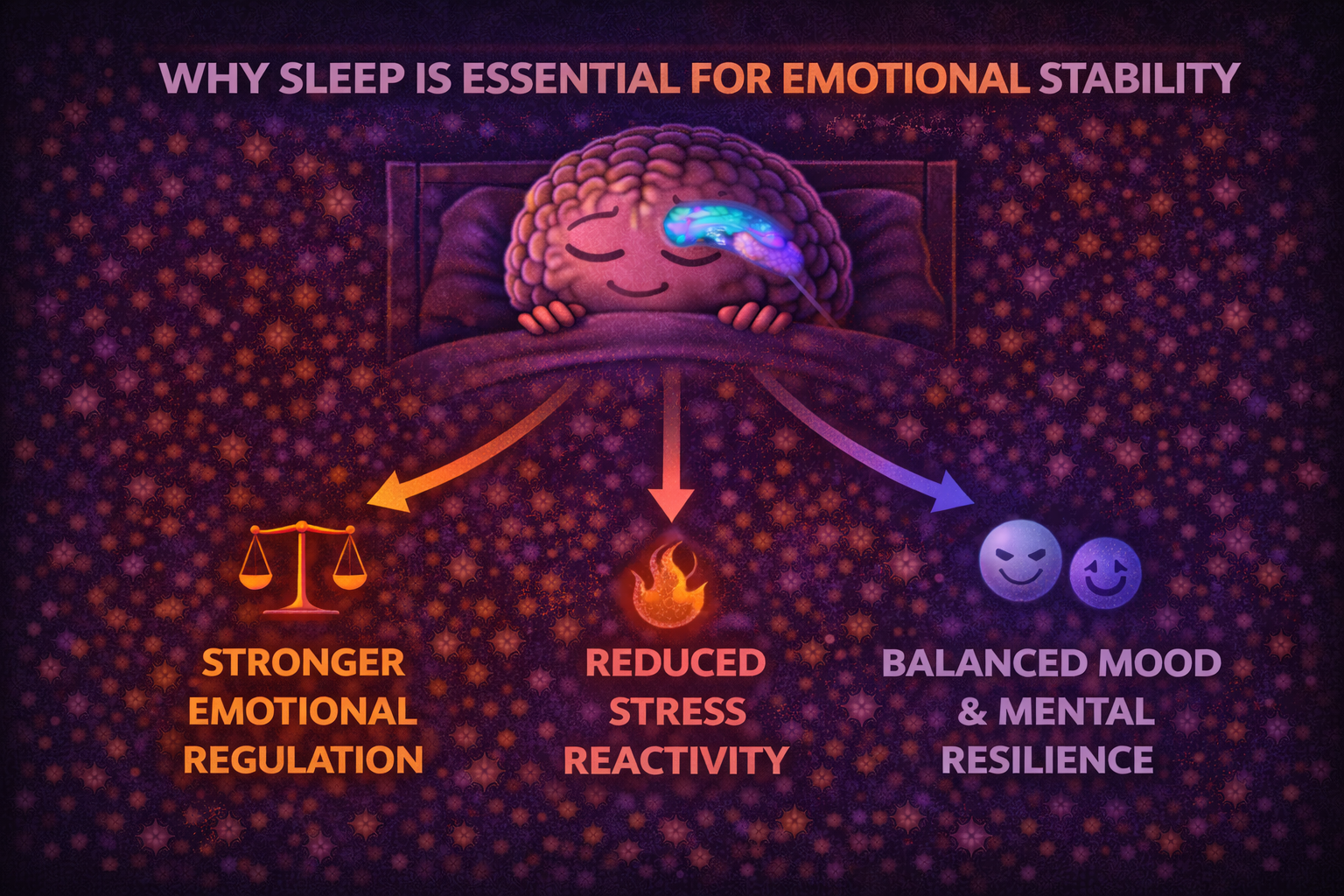
  • Why Sleep Is Essential for Emotional Stability

    Why Sleep Is Essential for Emotional Stability

    How sleep keeps emotions balanced, proportional, and easier to regulate

    Emotional stability is often described as a personality trait or a learned skill. When emotions feel intense or unpredictable, people tend to search for psychological explanations or coping techniques.

    In reality, emotional stability is strongly biological. The brain’s ability to keep emotions proportional, recover from stress, and maintain balance depends heavily on sleep quality. When sleep is disrupted, emotional regulation weakens. When sleep is protected, emotional stability becomes the default state rather than a constant effort.


    Emotional Stability Begins in the Brain

    Emotions are generated and regulated by interconnected brain systems.

    Some regions produce emotional responses, while others evaluate context, apply control, and reduce intensity. Emotional stability depends on smooth coordination between these systems.

    Sleep is the main period when this coordination is restored. Without it, emotional balance becomes fragile.


    How Sleep Resets Emotional Thresholds

    Every day raises emotional load.

    During sleep, the brain lowers emotional sensitivity and resets response thresholds. This recalibration allows emotions to rise without becoming overwhelming.

    Poor sleep leaves emotional thresholds elevated, making reactions stronger and harder to control.


    The Role of Deep Sleep in Emotional Balance

    Deep sleep supports emotional baseline stability.

    During slow-wave sleep, neural noise decreases and core regulatory networks recover. This creates a calm emotional baseline the next day.

    When deep sleep is reduced, emotional responses become more reactive and less predictable.


    REM Sleep and Emotional Integration

    REM sleep plays a critical role in processing emotional experiences.

    During REM, emotional memories are revisited in a low-stress chemical environment. This allows the brain to integrate emotions without maintaining high emotional intensity.

    Disrupted REM sleep leaves emotions unresolved, increasing emotional volatility.


    Why Poor Sleep Leads to Mood Swings

    Mood swings often reflect unstable emotional regulation.

    Without sufficient sleep, emotional responses fluctuate rapidly. Irritability, sadness, anxiety, and frustration appear with little provocation.

    These shifts are not random — they reflect reduced overnight emotional regulation.


    Sleep Loss and Reduced Emotional Control

    Sleep deprivation weakens impulse control.

    The brain becomes less able to pause, evaluate, and modulate emotional reactions. Responses feel automatic rather than chosen.

    This loss of control explains why people often regret emotional reactions after poor sleep.


    Why Small Stressors Feel Overwhelming

    Sleep loss lowers emotional tolerance.

    With reduced regulatory capacity, even minor stressors consume disproportionate emotional energy. Situations that normally feel manageable become draining.

    Emotional instability increases not because problems are bigger, but because regulation is weaker.


    Emotional Recovery Depends on Sleep

    Stability is not just about reaction — it’s about recovery.

    After emotional events, a well-rested brain returns to baseline quickly. Poor sleep slows this recovery, allowing emotions to linger and accumulate.

    Sleep determines how fast emotional balance is restored.


    Cumulative Effects of Chronic Poor Sleep

    Repeated sleep disruption compounds emotional instability.

    Over time, irritability becomes baseline, stress tolerance drops, and emotional fatigue sets in. These changes are often mistaken for personality or mental health issues.

    Restoring sleep often restores emotional balance people assumed was lost.


    Why Effort Alone Can’t Create Emotional Stability

    Trying harder to stay calm does not fix regulation.

    Emotional control requires neural resources replenished during sleep. Without recovery, effort increases strain without improving stability.

    Sleep supports emotional regulation at the biological level.


    Why Emotional Stability Returns After Good Sleep

    After high-quality sleep, emotions feel steadier.

    Reactions are more proportional, patience increases, and stress feels manageable. This shift reflects restored regulation, not changes in life circumstances.

    Sleep allows the brain to regulate emotions before the day begins.


    The Core Idea to Remember

    Sleep is essential for emotional stability because it restores emotional regulation.

    Through deep sleep and REM sleep, the brain resets emotional thresholds, integrates experiences, and reduces reactivity. Without sleep, emotional balance becomes fragile.

    Emotional stability is not forced — it is supported overnight by sleep.

  • The Biological Cost of Ignoring Sleep

    The Biological Cost of Ignoring Sleep

    How chronic sleep neglect quietly damages brain function, metabolism, and resilience

    Sleep is often treated as optional — something to sacrifice in the name of productivity, deadlines, or lifestyle. Skipping sleep is normalized, and its consequences are usually framed as short-term tiredness that can be fixed later.

    Biologically, however, sleep is not optional. Ignoring it carries a real cost that accumulates silently over time. When sleep is consistently reduced, mistimed, or disrupted, the body begins to pay that cost across multiple systems, often long before serious symptoms are recognized.


    Sleep Is a Core Biological Requirement

    Sleep is not a passive break from wakefulness.

    It is an active biological state during which the brain and body perform essential maintenance. Neural repair, metabolic regulation, immune coordination, and emotional processing all depend on adequate sleep.

    When sleep is ignored, these processes do not simply pause — they degrade. The body continues to function, but with reduced efficiency and increased strain.


    The Brain Pays the First Price

    The brain is especially sensitive to sleep loss.

    Even modest, chronic sleep reduction impairs attention, memory formation, decision-making, and emotional regulation. Reaction times slow, mental flexibility decreases, and cognitive errors increase.

    Importantly, these changes often occur before a person feels severely tired. Performance declines silently, while subjective awareness lags behind.


    Metabolic Disruption and Energy Dysregulation

    Sleep plays a critical role in regulating metabolism.

    Ignoring sleep disrupts glucose processing, appetite hormones, and energy balance. Hunger cues become less reliable, cravings intensify, and energy levels fluctuate unpredictably.

    Over time, metabolic efficiency declines, increasing biological stress even in people who appear otherwise healthy.


    Hormonal Imbalance and Stress Load

    Sleep regulates hormonal systems that control stress and recovery.

    When sleep is reduced or irregular, stress hormones remain elevated longer than they should. Recovery signals weaken, and the body remains in a state of heightened alertness.

    This imbalance increases physiological wear and reduces the ability to recover from daily demands, even when stress levels appear manageable on the surface.


    Immune Function Under Sleep Debt

    The immune system depends on sleep to function properly.

    During sleep, immune signaling is coordinated and inflammatory responses are regulated. Ignoring sleep weakens this coordination, reducing resilience to illness and slowing recovery.

    Chronic sleep neglect does not always result in immediate sickness, but it lowers the body’s margin of safety over time.


    Emotional Regulation and Psychological Cost

    Sleep is essential for emotional stability.

    Insufficient or mistimed sleep amplifies emotional reactivity, reduces tolerance for stress, and weakens mood regulation. Small challenges feel larger, and emotional recovery becomes slower.

    These effects are often misattributed to personality or external stress rather than biological fatigue.


    Why the Body Can’t Fully Adapt to Sleep Loss

    Many people believe the body adapts to reduced sleep.

    While short-term compensation is possible, true adaptation is limited. The brain can mask symptoms temporarily, but underlying biological costs continue to accumulate.

    Performance may feel “normal,” but efficiency declines, and the margin for error shrinks.


    The Illusion of Functioning Normally

    One of the most dangerous aspects of chronic sleep neglect is reduced self-awareness.

    Sleep-deprived individuals often underestimate the degree of their impairment. The brain’s ability to evaluate its own performance declines alongside performance itself.

    This creates the illusion of coping while biological strain increases.


    Long-Term Accumulation of Biological Cost

    The cost of ignoring sleep is cumulative.

    Each night of inadequate or mistimed sleep adds to an ongoing deficit. Over months and years, this deficit affects cognitive resilience, emotional balance, metabolic health, and overall biological stability.

    The body does not forget missed sleep — it carries the consequences forward.


    Why Recovery Takes Time

    Recovering from chronic sleep neglect is not immediate.

    The circadian rhythm, hormonal systems, and neural processes require time to stabilize once sleep is restored. Short bursts of extra sleep cannot fully erase long-term disruption.

    Biological systems heal gradually when consistent, well-timed sleep returns.


    The Core Idea to Remember

    Ignoring sleep carries a real biological cost.

    That cost is paid in reduced brain efficiency, metabolic instability, emotional fragility, and diminished resilience — often long before obvious symptoms appear.

    Sleep is not a luxury or a reward for productivity. It is a foundational biological process. Protecting it protects the systems that allow the body and brain to function at all.