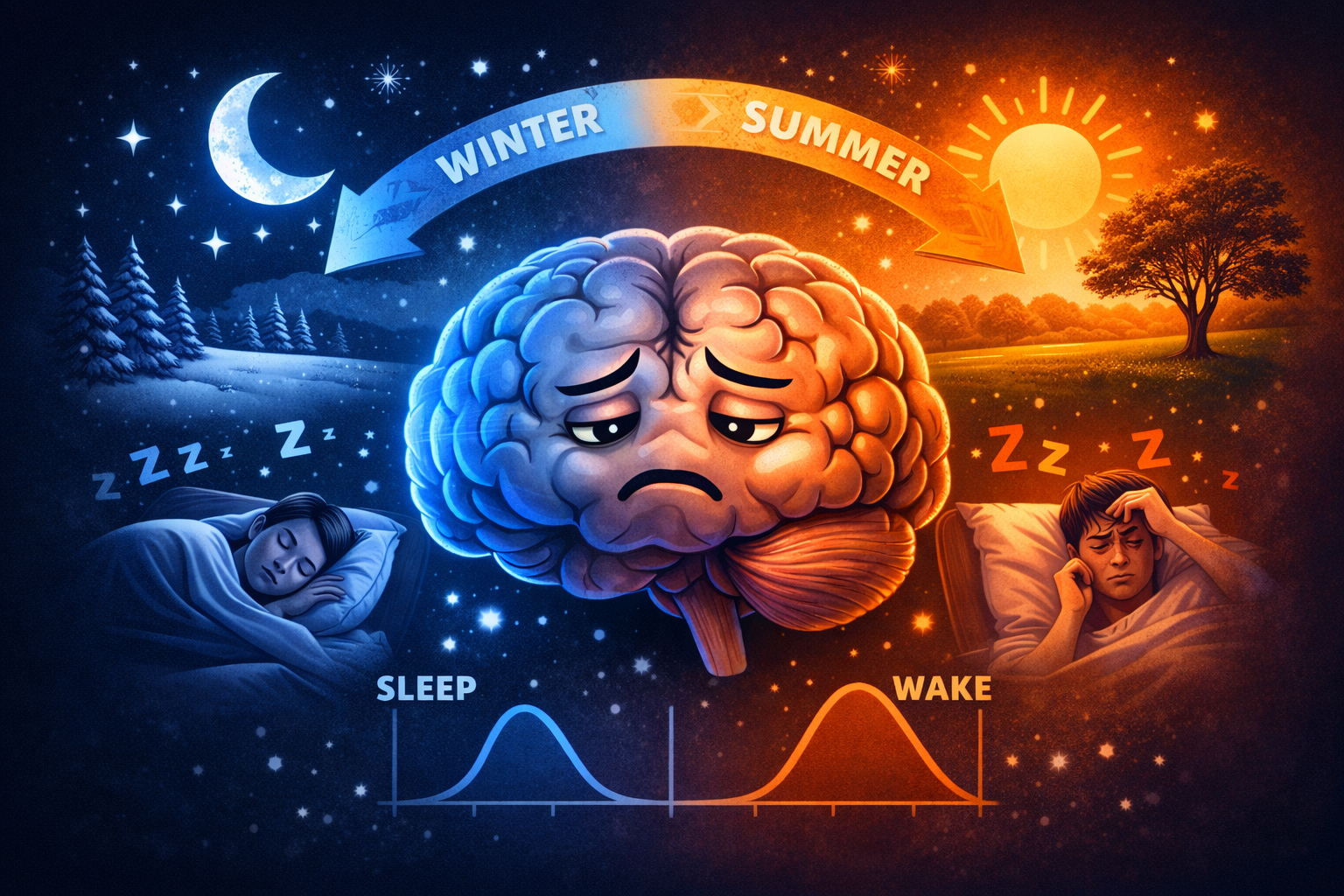
Why shifts in daylight across the year change sleep timing, depth, and energy
Sleep does not exist in a vacuum. It is regulated by the same environmental signals that change with the seasons—most importantly, light. As daylight hours expand and contract across the year, the brain’s internal clock adjusts. When these adjustments are smooth, sleep adapts naturally. When they are abrupt or poorly supported, sleep becomes unstable.
Seasonal light changes influence when you feel sleepy, how deeply you sleep, and how rested you feel during the day. Understanding this relationship explains why sleep often feels different in summer and winter—and how to reduce seasonal disruption.
The Circadian Clock Tracks Seasonal Light
The circadian system evolved to track day length.
Specialized light-sensitive cells in the eyes signal not only time of day, but also changes in daylight duration. Longer days and shorter nights in summer, and the reverse in winter, provide information that subtly shifts sleep timing.
These seasonal cues influence melatonin timing and sleep architecture.
Why Longer Summer Days Delay Sleep
Extended evening light pushes the clock later.
In summer, light persists into the evening, delaying melatonin release. This makes it harder to feel sleepy at the usual time, even when wake time remains fixed.
The result is later sleep onset and, often, reduced sleep duration.
How Winter Darkness Changes Sleep Pressure
Short days increase nighttime signaling.
In winter, reduced daylight and earlier darkness can advance melatonin release. Sleepiness may appear earlier, and some people experience longer sleep duration.
However, insufficient daytime light can weaken circadian strength, leading to fragmented or low-quality sleep.
Seasonal Light and Sleep Depth
Light patterns affect sleep structure.
Irregular or insufficient daylight exposure reduces circadian amplitude, which can weaken deep sleep and REM sleep. This is common in winter when outdoor light exposure drops.
Sleep may become longer but less restorative.
Why Energy Levels Shift With the Seasons
Energy follows circadian alignment.
Seasonal changes in light alter alertness rhythms. Reduced winter light can lower daytime alertness, while late summer light can push alertness too late into the night.
These shifts affect mood, focus, and perceived sleep quality.
Daytime Light Exposure Matters More in Winter
Bright daytime light strengthens the clock.
In winter, indoor living and weak daylight reduce circadian input. Without strong daytime light, the brain struggles to differentiate day from night.
Increasing outdoor exposure helps stabilize sleep timing and depth.
Why Seasonal Transitions Are Disruptive
The problem is change, not the season itself.
Transitions between seasons—especially spring and fall—require circadian adjustment. Sudden shifts in light timing can temporarily disrupt sleep.
Consistency and gradual adaptation reduce these effects.
Seasonal Light and Early Morning Awakenings
Changing dawn timing affects wake signals.
Earlier summer sunrises can trigger earlier awakenings, while late winter sunrises may delay morning alertness.
Managing morning light exposure helps regulate wake timing.
Artificial Light Can Worsen Seasonal Misalignment
Artificial light blunts natural seasonal cues.
Excess evening light in summer and insufficient daytime light in winter flatten circadian signals. This prevents proper seasonal adjustment.
Supporting natural light patterns improves adaptation.
How to Support Sleep Across Seasons
Seasonal alignment requires intentional light management.
Increasing outdoor light during the day—especially in winter—and reducing evening light exposure year-round helps stabilize the circadian rhythm.
The goal is clear contrast between day and night, regardless of season.
Why Sleep Quality Changes Feel Personal—but Aren’t
Seasonal sleep changes are biological.
Feeling “off” during certain times of year is often due to light-driven circadian shifts, not personal failure or poor habits.
Understanding this reduces frustration and supports adjustment.
The Core Idea to Remember
Seasonal light changes affect sleep by shifting circadian timing and strength.
Longer summer days delay sleep, while winter darkness can weaken circadian signals without adequate daytime light. Sleep quality improves when light exposure is managed to support clear day–night contrast.
Sleep adapts best when biology—not the calendar—is supported.