How modern lighting disrupts circadian timing and degrades sleep quality
Artificial light has transformed modern life, allowing activity, work, and entertainment to continue long after sunset. While this has improved convenience, it has quietly disrupted one of the most important biological systems regulating sleep.
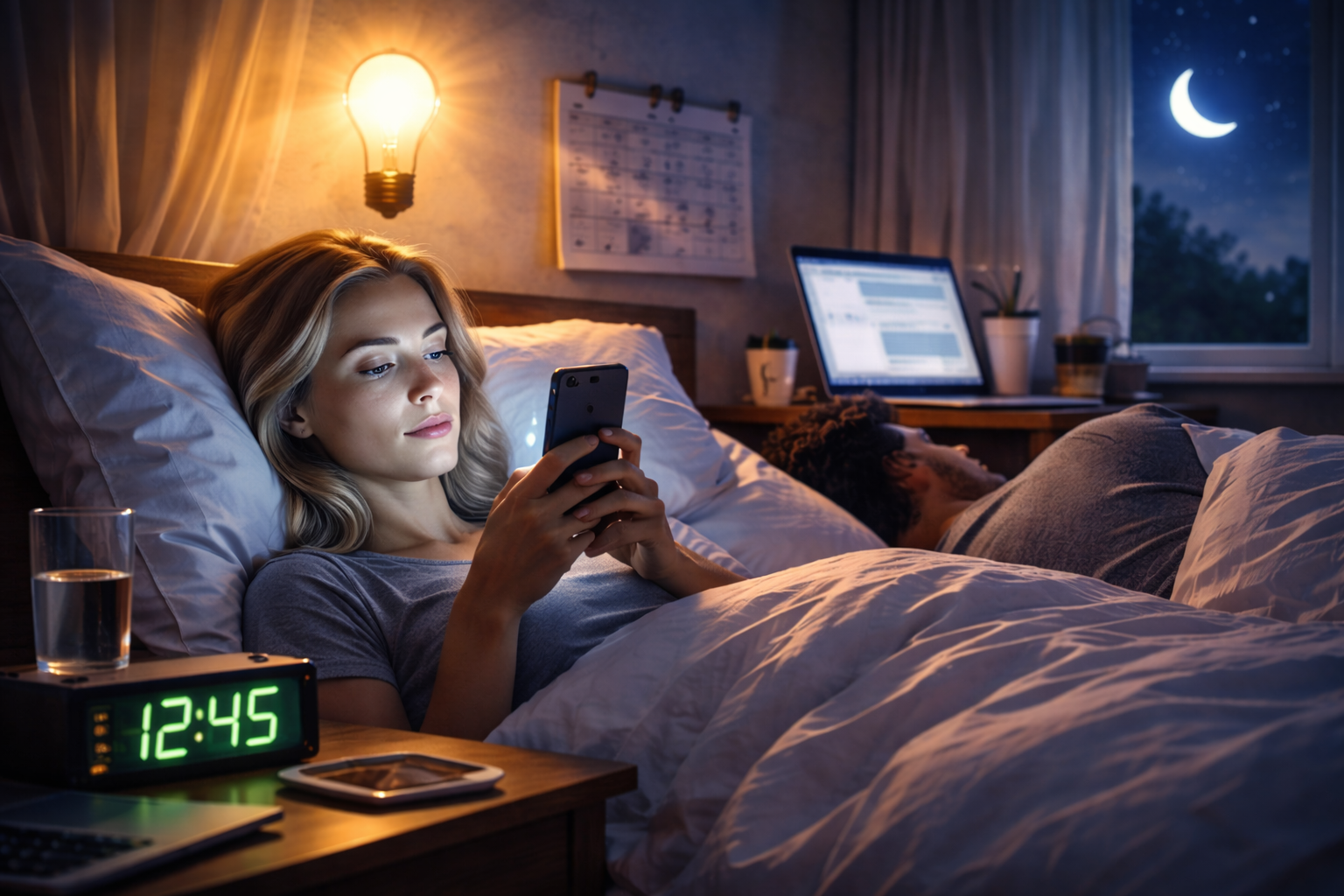
The human brain evolved under conditions of bright daylight and near-total darkness at night. Artificial light breaks this pattern. When light is present at the wrong time, the brain delays sleep signals, weakens sleep depth, and reduces recovery—even when you feel physically tired.
The Brain Interprets Artificial Light as Daytime
The circadian system cannot distinguish natural from artificial light.
Specialized cells in the eyes respond to light intensity and wavelength, not its source. When artificial light is present at night, the brain interprets it as extended daytime.
This delays the transition into nighttime physiology.
How Artificial Light Suppresses Melatonin
Melatonin signals night to the body.
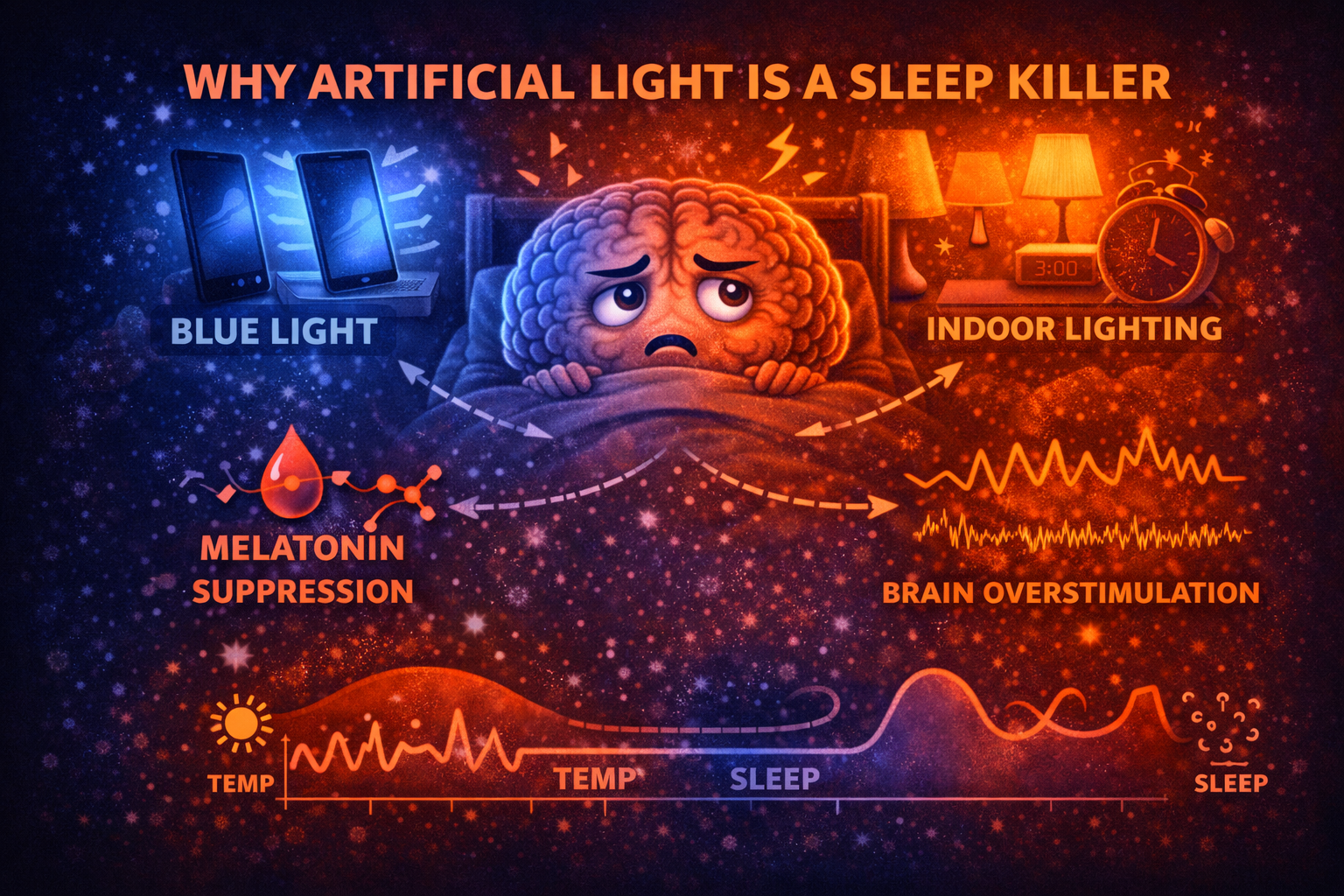
As darkness increases, melatonin rises, promoting sleepiness and initiating recovery processes. Artificial light—especially white and blue-rich light—suppresses melatonin production.
Even moderate evening light can delay melatonin release and push sleep later.
Why Artificial Light Increases Nighttime Alertness
Artificial light does more than block sleep hormones.
It actively stimulates alerting systems in the brain, increasing reaction time, focus, and cognitive activity. This keeps the brain in a semi-awake state even when the body is exhausted.
This mismatch explains why people often feel “wired but tired” at night.
Artificial Light and Circadian Delay
Exposure to light at night shifts the internal clock.
The circadian rhythm gradually moves later, causing sleepiness to appear later and wake times to drift. Over time, this creates chronic misalignment between biological night and social schedules.
Sleep becomes inconsistent and fragmented.
Why Indoor Lighting Is Especially Disruptive
Modern indoor lighting is poorly timed.
During the day, indoor environments are often too dim to provide strong circadian signals. At night, indoor lighting is too bright and persistent.
This reverses natural light cues and confuses the brain’s sense of time.
Artificial Light and Reduced Sleep Depth
Artificial light affects more than sleep onset.
Delayed circadian timing reduces deep sleep and disrupts REM sleep. Sleep may be long but shallow, leading to unrefreshing rest.
Recovery processes remain incomplete.
Nighttime Light and Sleep Fragmentation
Light exposure increases nighttime awakenings.
Even brief exposure to artificial light during the night can partially activate the brain, increasing micro-awakenings and reducing sleep continuity.
Fragmented sleep lowers overall sleep quality.
Why Artificial Light Affects Mood and Stress
Sleep disruption affects emotional regulation.
By degrading sleep depth and timing, artificial light indirectly increases emotional reactivity, stress sensitivity, and mood instability.
The effects accumulate gradually and often go unnoticed.
Why Darkness Matters More Than Comfort
Comfort alone does not guarantee sleep quality.
A quiet, comfortable bed cannot compensate for constant light exposure. The brain requires darkness to fully shut down alert systems.
Without darkness, sleep remains biologically incomplete.
Reducing the Impact of Artificial Light
Managing artificial light requires intention.
Dimming lights in the evening, using warmer lighting, limiting screens, and reducing nighttime exposure help restore biological night signals.
Consistency matters more than perfection.
Why Artificial Light Is Hard to Escape
Artificial light is everywhere.
Streetlights, devices, household lighting, and ambient glow make true darkness rare. The brain is exposed to light far beyond what it evolved to handle.
Recognizing this is the first step toward protecting sleep.
The Core Idea to Remember
Artificial light is a sleep killer because it sends the brain a daytime signal at night.
By suppressing melatonin, increasing alertness, and delaying circadian timing, artificial light weakens sleep quality and recovery—even when sleep duration is adequate.
Sleep improves not by forcing rest—but by restoring darkness where biology expects it.