Tag: brain function

  • What Happens to Your Brain When You Don’t Sleep Enough

    What Happens to Your Brain When You Don’t Sleep Enough

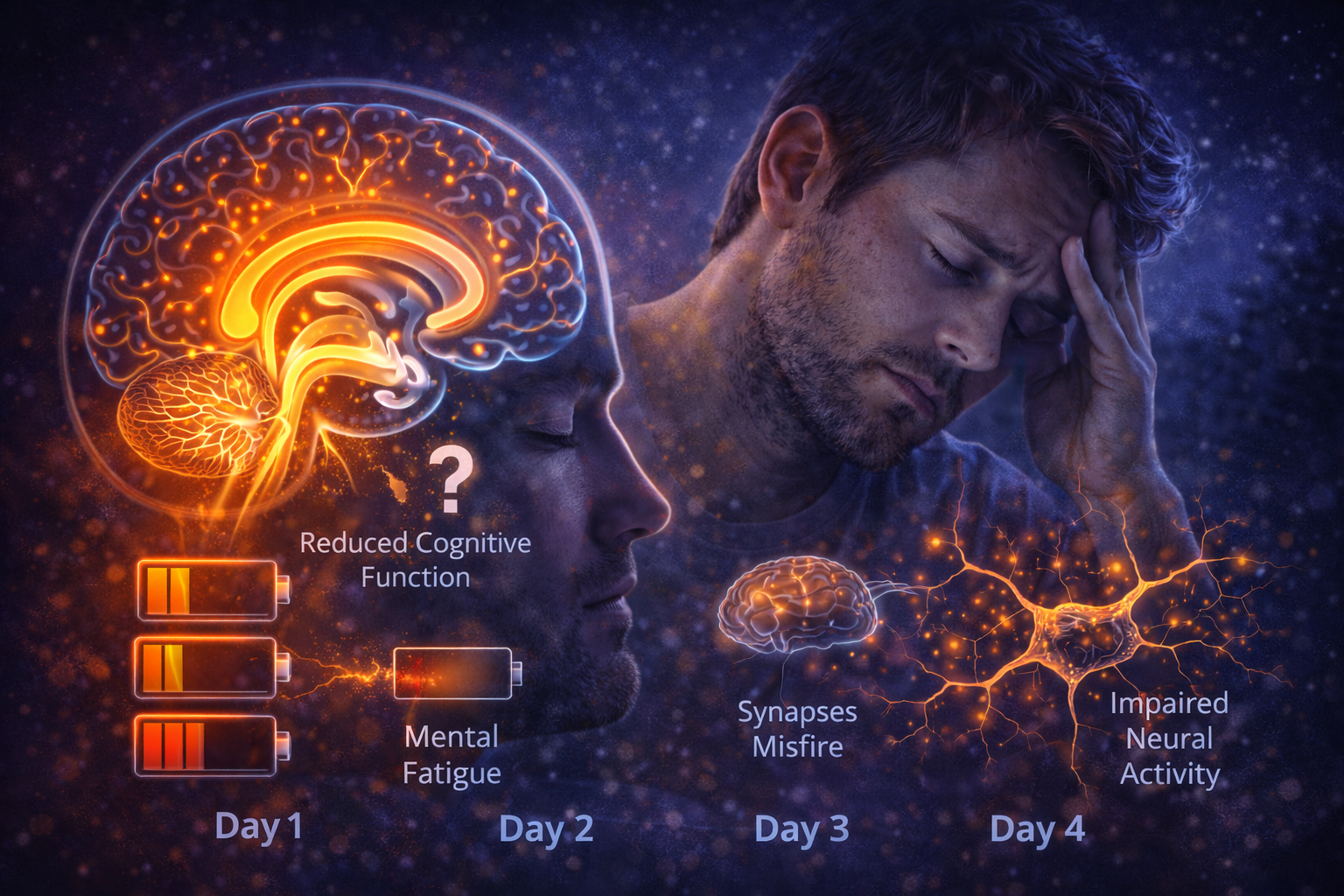
    How insufficient sleep alters brain function, perception, and emotional control

    Lack of sleep is often described as feeling tired or unfocused, but the real effects go much deeper. When you don’t sleep enough, the brain does not simply run on less energy — it begins to operate differently.

    Even short periods of insufficient sleep change how the brain processes information, regulates emotions, and evaluates risk. These changes are biological, predictable, and cumulative, affecting performance long before severe exhaustion is obvious.


    Sleep Is Active Brain Maintenance

    Sleep is not a shutdown state for the brain.

    During sleep, neural networks reorganize, synaptic connections are recalibrated, metabolic waste is cleared, and memory is consolidated. These processes are essential for maintaining efficient brain function.

    When sleep is shortened or disrupted, this maintenance is incomplete. The brain remains functional, but with reduced efficiency and increased strain.


    Attention and Focus Decline First

    One of the earliest effects of insufficient sleep is impaired attention.

    The brain struggles to sustain focus, especially on tasks that require continuous concentration. Reaction times slow, and brief lapses of attention become more frequent.

    These micro-failures often go unnoticed, but they significantly increase error rates and reduce overall cognitive reliability.


    Memory Formation Becomes Less Efficient

    Sleep plays a crucial role in memory consolidation.

    Without enough sleep, the brain struggles to stabilize new information. Learning becomes slower, recall less reliable, and mental clarity reduced.

    This effect is not limited to complex tasks — even simple information processing suffers when sleep is insufficient.


    Decision-Making and Judgment Are Altered

    Sleep deprivation changes how the brain evaluates choices.

    Risk assessment becomes distorted, impulse control weakens, and long-term consequences carry less weight. The brain favors immediate rewards over thoughtful decisions.

    This shift explains why people make poorer choices when sleep-deprived, even while believing they are thinking clearly.


    Emotional Regulation Breaks Down

    The emotional centers of the brain are highly sensitive to sleep loss.

    When sleep is insufficient, emotional responses become stronger and less regulated. Irritability increases, stress tolerance decreases, and negative emotions are amplified.

    At the same time, the brain’s ability to moderate these reactions weakens, creating emotional volatility.


    The Brain’s Error Detection System Weakens

    Sleep-deprived brains are less aware of their own mistakes.

    As performance declines, the brain’s ability to monitor errors also deteriorates. This creates a dangerous gap between perceived and actual functioning.

    People often feel “functional” while objectively performing far below baseline.


    Neural Communication Becomes Less Efficient

    Insufficient sleep disrupts communication between brain regions.

    Signals travel more slowly, coordination weakens, and cognitive processes require more effort. Tasks that once felt automatic become mentally taxing.

    This inefficiency contributes to the heavy, foggy feeling commonly associated with sleep loss.


    Why the Brain Feels Foggy

    Brain fog is not a vague sensation — it reflects real neural changes.

    Reduced sleep impairs waste clearance, disrupts synaptic balance, and weakens network coordination. The result is slowed thinking, reduced clarity, and mental heaviness.

    This fog often persists even after brief recovery sleep.


    Cumulative Effects Over Time

    One night of poor sleep is manageable. Repeated nights are not.

    As insufficient sleep accumulates, deficits compound. Cognitive performance declines progressively, emotional regulation worsens, and resilience erodes.

    The brain does not fully reset between nights unless sleep becomes consistent and sufficient.


    Why Willpower Can’t Override These Changes

    Motivation does not restore neural function.

    While effort can temporarily mask symptoms, it cannot replace the biological processes that occur during sleep. The brain requires sleep to maintain itself, regardless of discipline or intention.

    Ignoring this requirement leads to predictable degradation.


    The Core Idea to Remember

    When you don’t sleep enough, your brain does not simply feel tired — it changes how it operates.

    Attention, memory, decision-making, emotional control, and self-awareness all decline. These effects accumulate quietly, often before you realize how impaired you are.

    Sleep is not optional for the brain. It is the process that keeps thinking clear, emotions stable, and perception accurate.


  • The Biological Cost of Ignoring Sleep

    The Biological Cost of Ignoring Sleep

    How chronic sleep neglect quietly damages brain function, metabolism, and resilience

    Sleep is often treated as optional — something to sacrifice in the name of productivity, deadlines, or lifestyle. Skipping sleep is normalized, and its consequences are usually framed as short-term tiredness that can be fixed later.

    Biologically, however, sleep is not optional. Ignoring it carries a real cost that accumulates silently over time. When sleep is consistently reduced, mistimed, or disrupted, the body begins to pay that cost across multiple systems, often long before serious symptoms are recognized.


    Sleep Is a Core Biological Requirement

    Sleep is not a passive break from wakefulness.

    It is an active biological state during which the brain and body perform essential maintenance. Neural repair, metabolic regulation, immune coordination, and emotional processing all depend on adequate sleep.

    When sleep is ignored, these processes do not simply pause — they degrade. The body continues to function, but with reduced efficiency and increased strain.


    The Brain Pays the First Price

    The brain is especially sensitive to sleep loss.

    Even modest, chronic sleep reduction impairs attention, memory formation, decision-making, and emotional regulation. Reaction times slow, mental flexibility decreases, and cognitive errors increase.

    Importantly, these changes often occur before a person feels severely tired. Performance declines silently, while subjective awareness lags behind.


    Metabolic Disruption and Energy Dysregulation

    Sleep plays a critical role in regulating metabolism.

    Ignoring sleep disrupts glucose processing, appetite hormones, and energy balance. Hunger cues become less reliable, cravings intensify, and energy levels fluctuate unpredictably.

    Over time, metabolic efficiency declines, increasing biological stress even in people who appear otherwise healthy.


    Hormonal Imbalance and Stress Load

    Sleep regulates hormonal systems that control stress and recovery.

    When sleep is reduced or irregular, stress hormones remain elevated longer than they should. Recovery signals weaken, and the body remains in a state of heightened alertness.

    This imbalance increases physiological wear and reduces the ability to recover from daily demands, even when stress levels appear manageable on the surface.


    Immune Function Under Sleep Debt

    The immune system depends on sleep to function properly.

    During sleep, immune signaling is coordinated and inflammatory responses are regulated. Ignoring sleep weakens this coordination, reducing resilience to illness and slowing recovery.

    Chronic sleep neglect does not always result in immediate sickness, but it lowers the body’s margin of safety over time.


    Emotional Regulation and Psychological Cost

    Sleep is essential for emotional stability.

    Insufficient or mistimed sleep amplifies emotional reactivity, reduces tolerance for stress, and weakens mood regulation. Small challenges feel larger, and emotional recovery becomes slower.

    These effects are often misattributed to personality or external stress rather than biological fatigue.


    Why the Body Can’t Fully Adapt to Sleep Loss

    Many people believe the body adapts to reduced sleep.

    While short-term compensation is possible, true adaptation is limited. The brain can mask symptoms temporarily, but underlying biological costs continue to accumulate.

    Performance may feel “normal,” but efficiency declines, and the margin for error shrinks.


    The Illusion of Functioning Normally

    One of the most dangerous aspects of chronic sleep neglect is reduced self-awareness.

    Sleep-deprived individuals often underestimate the degree of their impairment. The brain’s ability to evaluate its own performance declines alongside performance itself.

    This creates the illusion of coping while biological strain increases.


    Long-Term Accumulation of Biological Cost

    The cost of ignoring sleep is cumulative.

    Each night of inadequate or mistimed sleep adds to an ongoing deficit. Over months and years, this deficit affects cognitive resilience, emotional balance, metabolic health, and overall biological stability.

    The body does not forget missed sleep — it carries the consequences forward.


    Why Recovery Takes Time

    Recovering from chronic sleep neglect is not immediate.

    The circadian rhythm, hormonal systems, and neural processes require time to stabilize once sleep is restored. Short bursts of extra sleep cannot fully erase long-term disruption.

    Biological systems heal gradually when consistent, well-timed sleep returns.


    The Core Idea to Remember

    Ignoring sleep carries a real biological cost.

    That cost is paid in reduced brain efficiency, metabolic instability, emotional fragility, and diminished resilience — often long before obvious symptoms appear.

    Sleep is not a luxury or a reward for productivity. It is a foundational biological process. Protecting it protects the systems that allow the body and brain to function at all.

  • What Happens When You Sleep at the Wrong Time

    What Happens When You Sleep at the Wrong Time

    How mistimed sleep disrupts brain function even when duration seems adequate

    Most people think of poor sleep as sleeping too little. But many sleep problems come from something more subtle: sleeping at the wrong time. You can spend enough hours in bed and still wake up feeling foggy, drained, or emotionally off.

    When sleep occurs out of sync with the circadian rhythm, the brain cannot use those hours efficiently. The problem is not rest itself — it is timing. Sleeping at the wrong biological moment changes how the brain recovers, processes information, and regulates energy the next day.


    Sleep Is More Than Time Spent Asleep

    Sleep is not a passive state where recovery happens automatically.

    The brain follows a structured sequence of processes during the night. Hormone release, neural repair, memory consolidation, and metabolic regulation are all timed to occur during specific circadian windows.

    When sleep is mistimed, these processes still occur — but less efficiently. The same number of hours can deliver very different outcomes depending on when they happen.


    Circadian Rhythm and Biological Night

    The circadian rhythm defines a biological night that is not identical to clock time.

    During biological night, alertness drops, body temperature declines, and the brain becomes optimized for deep, restorative sleep. This window is determined by internal timing, not by social schedules.

    Sleeping outside this window means the brain is trying to recover while biological signals still promote wakefulness or early alertness.


    Why Sleep at the Wrong Time Feels Less Restorative

    When sleep is mistimed, deeper stages of sleep become harder to sustain.

    The brain may enter sleep, but transitions between sleep stages are more fragmented. Deep sleep can be shortened or delayed, and REM sleep may be altered.

    As a result, sleep feels lighter and less refreshing, even when duration appears sufficient.


    The Cognitive Effects of Mistimed Sleep

    Sleeping at the wrong time affects daytime brain function.

    Common effects include:

    • reduced attention and slower thinking

    • impaired memory formation

    • increased mental fatigue

    • difficulty sustaining focus

    These symptoms often resemble sleep deprivation, even when total sleep time is adequate. The brain is not fully restored because recovery occurred at a biologically suboptimal moment.


    Emotional Regulation and Timing

    Sleep timing also influences emotional processing.

    Mistimed sleep disrupts neural circuits involved in emotional regulation, making mood more volatile and stress responses stronger. Irritability, anxiety, and emotional sensitivity become more pronounced.

    This helps explain why people can feel emotionally “off” after nights that looked fine on paper.


    Why Sleeping During the Day Is Different

    Daytime sleep is often used to compensate for night work or late schedules.

    However, sleeping during daylight hours occurs when circadian signals promote alertness. Light exposure, elevated body temperature, and hormonal patterns all reduce sleep efficiency.

    Even long daytime sleep episodes rarely provide the same restorative benefit as well-timed nighttime sleep.


    Mistimed Sleep and Long-Term Fatigue

    Occasional mistimed sleep is manageable. Chronic mistiming is not.

    Repeatedly sleeping at the wrong time keeps the circadian rhythm in a state of conflict. Over time, this leads to persistent fatigue, brain fog, and reduced cognitive resilience.

    The body never fully adapts because internal signals remain inconsistent.


    Why Willpower Cannot Override Timing

    Many people attempt to compensate for mistimed sleep through discipline.

    Caffeine, rigid routines, or pushing through fatigue may temporarily mask symptoms, but they do not correct the underlying misalignment. Biological systems respond to timing cues, not effort.

    Without alignment, recovery remains incomplete.


    Restoring Alignment Matters More Than Sleeping Longer

    Fixing mistimed sleep is not primarily about adding hours.

    Improving timing consistency, light exposure, and alignment with biological night often restores sleep quality more effectively than extending sleep duration alone.

    The brain needs sleep at the right time to recover fully.


    The Core Idea to Remember

    Sleeping at the wrong time disrupts recovery even when sleep duration looks adequate.

    The brain is designed to restore itself during specific circadian windows. When sleep falls outside those windows, energy, focus, and emotional balance suffer.

    Sleep quality depends as much on when you sleep as on how long you sleep — and timing is a biological requirement, not a preference.

  • Sleep Debt: What It Is and How It Affects Your Body

    Sleep Debt: What It Is and How It Affects Your Body

    Most people think of sleep as something you can “catch up on.” A late night here, a short night there—no big deal, right? In reality, the body keeps score. When you consistently get less sleep than you need, you accumulate what scientists call sleep debt. And unlike a bad night’s rest, sleep debt doesn’t disappear after one long weekend of sleep.

    Sleep debt quietly alters how your brain, hormones, metabolism, and immune system function. Over time, it affects how you feel, how you perform, and how resilient your body actually is.


    The Science Behind Sleep Debt

    Sleep debt occurs when your sleep duration or quality falls below your biological requirement. For most adults, that requirement sits between 7 and 9 hours per night, but individual needs vary based on genetics, age, and circadian timing.

    From a physiological standpoint, sleep is not passive rest. During sleep—especially deep non-REM sleep—the brain clears metabolic waste through the glymphatic system, restores synaptic balance, and recalibrates neural circuits involved in attention and emotional regulation.

    When sleep is shortened, these processes are incompletely executed. The result is a cumulative deficit that alters brain signaling, stress hormones like cortisol, insulin sensitivity, and inflammatory markers. Importantly, the brain adapts subjectively—you may feel functional—while objective performance continues to decline.


    Main Causes of Sleep Debt

    Sleep debt rarely comes from a single bad night. It is usually the result of chronic patterns:

    • Consistently short sleep due to work schedules, late bedtimes, or early alarms

    • Irregular sleep timing, such as weekday restriction and weekend oversleeping

    • Fragmented sleep, often caused by stress, light exposure, alcohol, or sleep disorders

    • Circadian misalignment, including night shifts or late-night screen exposure

    Even losing 60–90 minutes per night can generate measurable sleep debt within a week.


    How Sleep Debt Affects the Body

    Brain and Cognitive Function
    Sleep debt reduces attention, working memory, decision-making speed, and emotional regulation. Reaction time slows, error rates increase, and mental flexibility declines. Over time, this resembles mild cognitive impairment—even in young adults.

    Hormones and Metabolism
    Insufficient sleep disrupts leptin and ghrelin, hormones that regulate hunger and satiety. This increases appetite, especially for high-calorie foods. Insulin sensitivity decreases, raising the risk of metabolic dysfunction and weight gain.

    Immune Function
    Sleep debt weakens immune response by reducing natural killer cell activity and increasing inflammatory signaling. This makes infections more likely and recovery slower.

    Cardiovascular Stress
    Chronic sleep restriction is associated with elevated blood pressure, impaired vascular function, and increased sympathetic nervous system activity—placing long-term strain on the heart.


    Practical Implications

    The most dangerous aspect of sleep debt is that you don’t feel how impaired you are. Subjective alertness plateaus, while objective performance continues to decline.

    Short-term “recovery sleep” helps, but research shows that repaying sleep debt often requires multiple consecutive nights of adequate sleep—not just one long night.

    The most effective strategy is prevention:

    • Maintain consistent sleep and wake times

    • Protect the last 90 minutes before bed from bright light and stimulation

    • Prioritize sleep duration before optimizing supplements or routines

    Sleep debt is not a productivity problem—it is a biological one.


    Conclusion (Takeaway)

    Sleep debt is not abstract, and it is not optional. It accumulates silently, reshaping how your brain and body function long before obvious symptoms appear. While you can partially recover, the real advantage comes from consistency—not compensation.

    If you want clarity, resilience, and long-term health, sleep cannot remain negotiable.