Tag: darkness and sleep

  • The Role of Darkness in Sleep Quality

    The Role of Darkness in Sleep Quality

    Why darkness determines how deeply and restoratively you sleep

    Sleep quality is often blamed on stress, noise, or sleep duration. While these factors matter, one of the most overlooked influences on sleep quality is darkness.

    Darkness does more than help you fall asleep. It determines how deeply you sleep, how stable your sleep cycles are, and how restored you feel the next day. When darkness is incomplete or inconsistent, sleep becomes lighter, more fragmented, and less restorative—even if total sleep time seems adequate.


    Sleep Quality Depends on Clear Nighttime Signals

    The brain needs certainty to sleep well.

    Sleep quality improves when the brain receives a clear, unambiguous signal that night has arrived. Darkness provides this signal by telling the brain to fully shift into recovery mode.

    When light remains present, the brain hesitates. Sleep still happens, but it is less efficient.


    How Darkness Supports Melatonin Stability

    Melatonin is central to sleep quality.

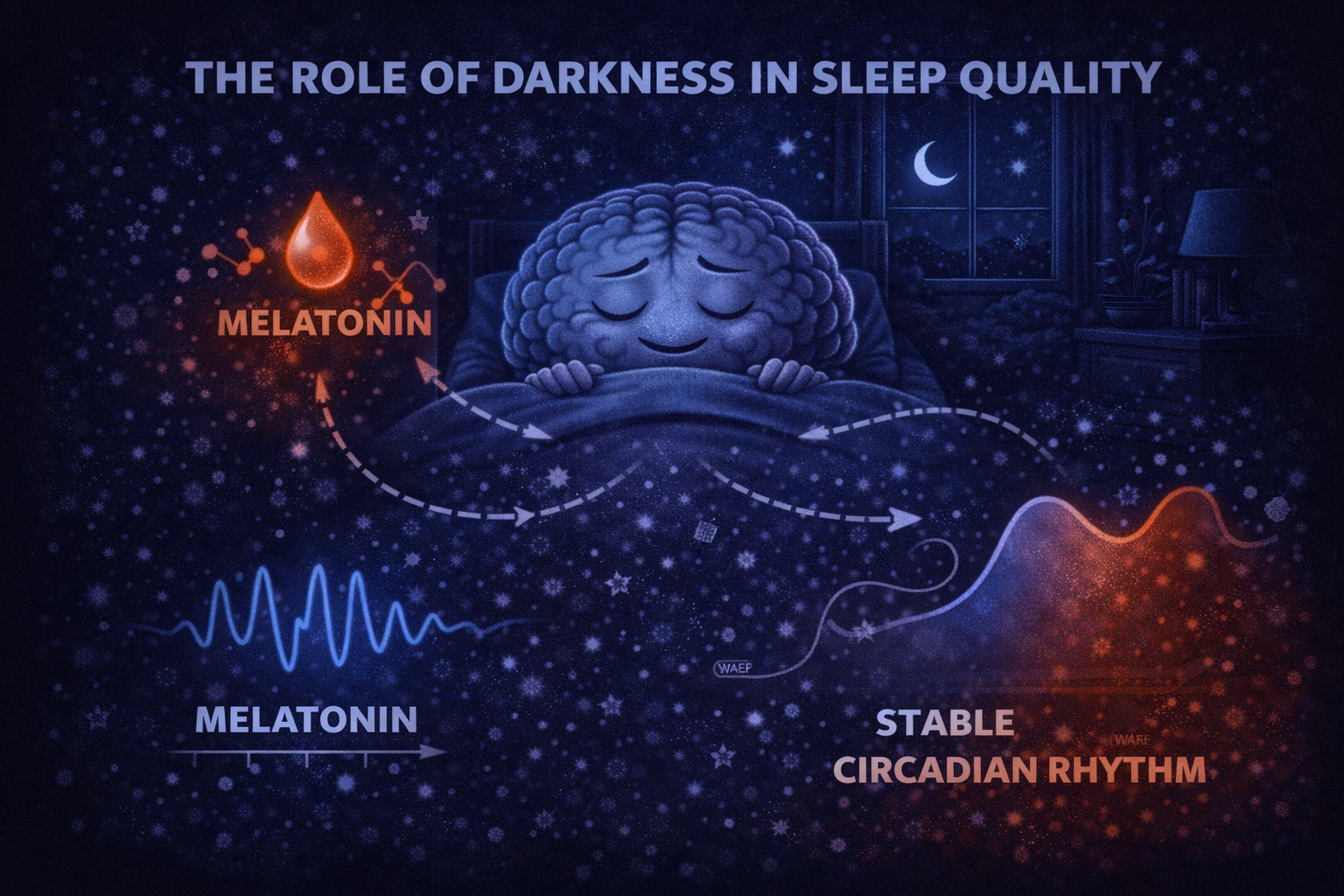
    Darkness allows melatonin levels to rise steadily and remain elevated throughout the night. This stable melatonin signal supports continuous sleep and proper cycling through sleep stages.

    When darkness is interrupted, melatonin production fluctuates, weakening sleep depth and continuity.


    Darkness and Sleep Depth

    Deep sleep depends on environmental signals.

    In darkness, the brain is more likely to enter and maintain deep sleep stages. These stages are responsible for physical recovery, immune support, and neural restoration.

    Exposure to light during the night reduces time spent in deep sleep, making rest feel shallow.


    REM Sleep and Darkness

    REM sleep is sensitive to light disruption.

    Darkness supports stable REM sleep cycles by maintaining circadian alignment and reducing nighttime alertness. When light exposure occurs at night, REM sleep becomes fragmented or shortened.

    Poor REM sleep reduces emotional processing and mental clarity.


    Why Even Low Light Can Reduce Sleep Quality

    The circadian system is highly sensitive.

    Dim light sources—night lights, hallway lighting, electronic indicators—can still interfere with nighttime signaling. The brain does not require bright light to detect disruption.

    Small amounts of light can reduce sleep efficiency over time.


    Darkness and Sleep Continuity

    Quality sleep requires continuity.

    Darkness reduces micro-awakenings and nighttime alertness. When light intrudes, the brain partially reactivates, increasing the likelihood of fragmented sleep.

    Sleep becomes lighter and more easily disturbed.


    How Darkness Reduces Nighttime Arousal

    Darkness quiets alerting systems.

    Heart rate slows, stress signaling decreases, and the nervous system shifts into recovery mode. This physiological downregulation allows sleep to deepen naturally.

    Light exposure prevents full shutdown, keeping the body partially alert.


    Modern Environments and Poor Darkness

    Modern life weakens natural darkness.

    Streetlights, indoor lighting, screens, and ambient glow keep nighttime light levels higher than biology expects. This constant exposure degrades sleep quality gradually.

    People often adapt without realizing sleep depth is declining.


    Why Darkness Matters More Than Sleep Duration

    Long sleep does not guarantee quality sleep.

    Without proper darkness, sleep can be long but inefficient. Deep and REM sleep suffer, and recovery remains incomplete.

    Darkness determines how effectively sleep performs its function.


    Improving Sleep Quality by Improving Darkness

    Enhancing darkness improves sleep quality directly.

    Reducing evening light, eliminating nighttime light sources, and creating a darker sleep environment strengthen nighttime signaling and deepen sleep.

    Consistency is more important than perfection.


    Why Darkness Improves How You Feel the Next Day

    Restorative sleep depends on depth.

    When darkness supports deep and REM sleep, the brain completes recovery processes. Energy, mood, and clarity improve without extra effort.

    Darkness allows sleep to do its work fully.


    The Core Idea to Remember

    Darkness plays a central role in sleep quality by supporting depth, continuity, and recovery.

    By stabilizing melatonin, reducing alertness, and reinforcing circadian timing, darkness allows sleep to become truly restorative. Without it, sleep becomes lighter and less effective.

    Improving sleep quality often starts by improving darkness.
  • How Darkness Signals the Brain to Sleep

    How Darkness Signals the Brain to Sleep

    Why the absence of light actively triggers the body’s night mode

    Sleep does not start simply because the body is tired. It starts when the brain receives a clear biological signal that night has arrived. That signal is darkness.

    Darkness is not passive. It actively tells the brain to shut down alert systems, release sleep-promoting hormones, and shift the body into recovery mode. When darkness is delayed or incomplete, sleep timing and quality suffer—even if exhaustion is present.


    Darkness Is a Biological Signal, Not Just a Lack of Light

    The brain treats darkness as information.

    Specialized light-sensitive cells in the eyes continuously monitor ambient light levels. When light decreases, signaling to the brain’s internal clock changes. This shift tells the brain that daytime has ended.

    Darkness initiates a chain reaction that prepares the body for sleep.


    How Darkness Triggers Melatonin Release

    Melatonin is the hormone of night.

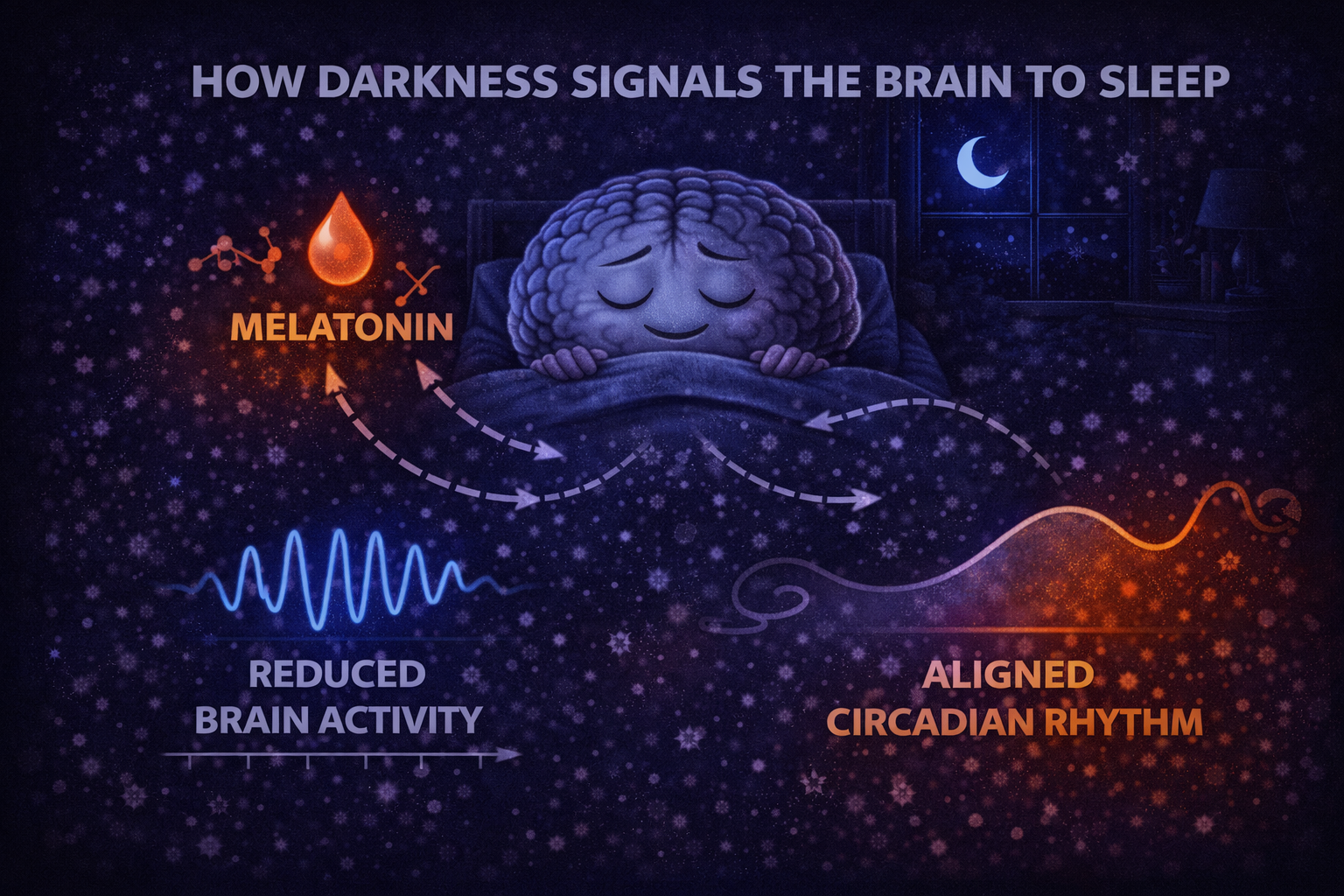
    As darkness increases, melatonin production rises. This hormone signals sleepiness, lowers body temperature, and coordinates nighttime physiology.

    Without sufficient darkness, melatonin release is delayed or suppressed, making sleep harder to initiate.


    Darkness and the Circadian Clock

    The circadian rhythm relies on contrast.

    Bright light during the day and darkness at night create a clear day–night pattern. Darkness anchors the nighttime phase of this rhythm.

    When darkness is weak or inconsistent, circadian timing becomes unstable, leading to delayed sleep and fragmented rest.


    Why Even Dim Light Can Disrupt the Signal

    The circadian system is highly sensitive.

    Low levels of light in the evening—especially blue or white light—can weaken the darkness signal. The brain interprets this as extended daytime.

    As a result, alertness remains elevated and sleep onset is delayed.


    Darkness and Sleep Depth

    Darkness affects more than sleep onset.

    Proper darkness supports deeper sleep stages, including deep sleep and REM sleep. When darkness is incomplete, sleep may feel lighter and less restorative.

    Sleep duration may be adequate, but quality declines.


    How Darkness Reduces Nighttime Alertness

    Alertness systems depend on light.

    In darkness, neural alerting systems quiet down. Heart rate slows, stress signaling decreases, and the brain shifts into recovery mode.

    Light exposure at night prevents this shutdown, keeping the brain partially alert.


    Why Modern Environments Reduce Darkness

    Modern life minimizes natural darkness.

    Streetlights, indoor lighting, screens, and ambient glow keep light levels elevated well into the night. This blurs the boundary between day and night.

    The brain struggles to identify when sleep should begin.


    Darkness and Emotional Regulation

    Darkness supports emotional recovery.

    By enabling melatonin release and proper sleep architecture, darkness indirectly improves emotional regulation, stress recovery, and mood stability.

    Poor darkness contributes to emotional reactivity and mental fatigue.


    Why Total Darkness Is Not Always Necessary

    The goal is clarity, not perfection.

    The brain does not require absolute darkness, but it does require a clear reduction in light. Gradual dimming and consistency matter more than extreme measures.

    Biology responds to patterns, not absolutes.


    How to Strengthen the Darkness Signal

    Supporting darkness means reducing competing signals.

    Dimming lights, avoiding screens late at night, and minimizing ambient glow allow the brain to recognize nighttime properly.

    Consistency trains the circadian system to respond more effectively.


    Why Darkness Makes Falling Asleep Easier

    When darkness is clear, sleep feels natural.

    Sleepiness increases without effort, alertness fades, and the body transitions smoothly into rest. This reflects proper biological signaling rather than forced relaxation.

    Darkness tells the brain that it is safe to sleep.


    The Core Idea to Remember

    Darkness signals the brain to sleep by activating nighttime biology.

    By allowing melatonin to rise and alert systems to quiet down, darkness initiates sleep timing, depth, and recovery. Without sufficient darkness, the brain delays sleep even when tired.

    Sleep improves not by forcing rest—but by allowing darkness to do its job.