Tag: energy levels

  • Are You Fighting Your Chronotype?

    Are You Fighting Your Chronotype?

    Why your natural sleep timing may be working against your daily energy and mental clarity

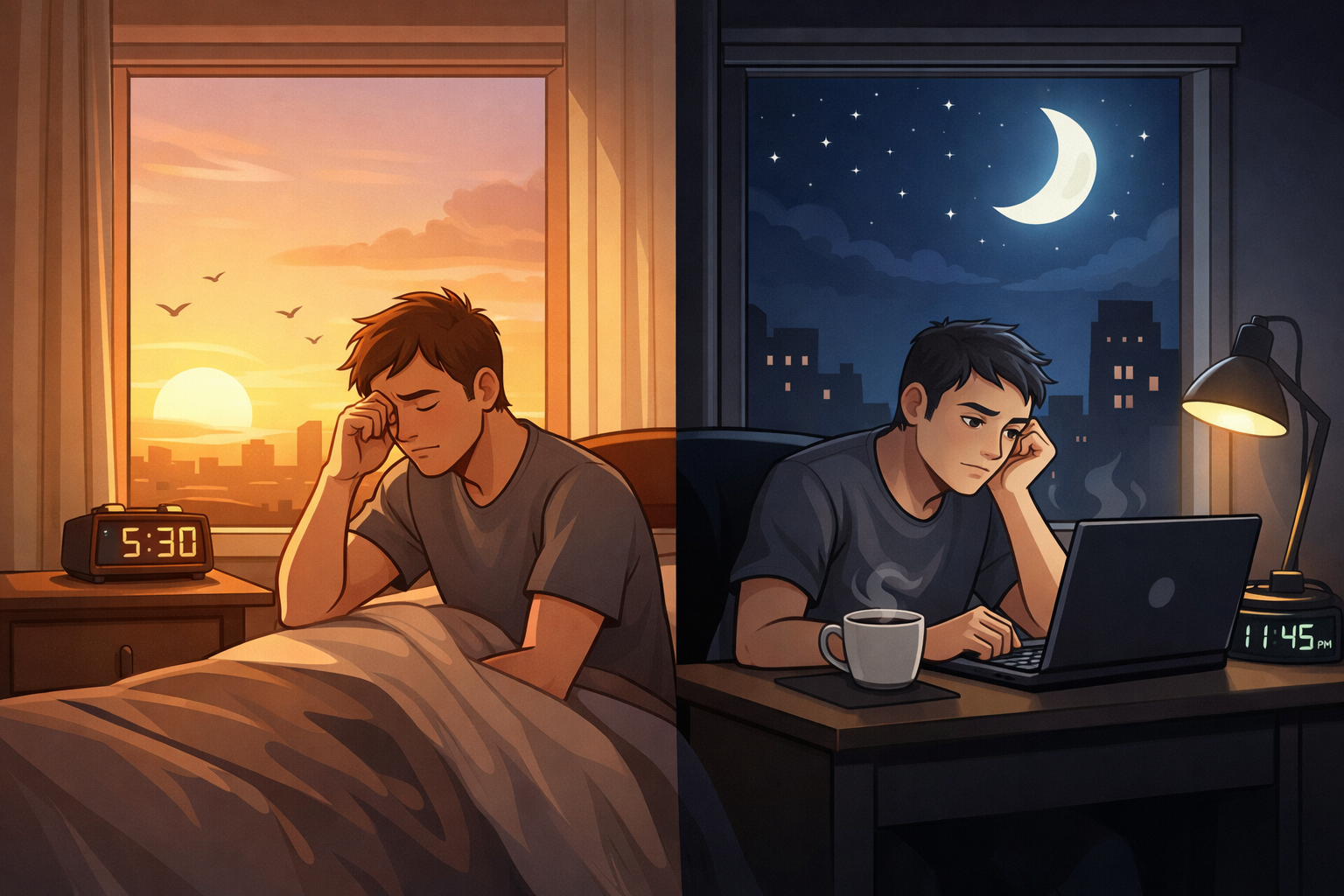
    Most people struggle with low energy, poor focus, and inconsistent sleep without realizing that the problem is not discipline or lifestyle. Waking up early may feel unnaturally difficult, while mental clarity appears later in the day—often when obligations are already ending.

    When this happens consistently, the instinct is to push harder, drink more coffee, or force earlier bedtimes. Yet for many people, these strategies fail because they are fighting their chronotype rather than working with it.

    Understanding chronotype helps explain why effort alone does not always lead to better energy, focus, or sleep quality.


    What a Chronotype Really Is

    A chronotype describes your body’s natural timing for sleep, wakefulness, and peak cognitive performance. It reflects when your brain is biologically prepared to be alert, focused, and mentally efficient, and when it naturally shifts toward rest.

    Chronotype is closely linked to the circadian rhythm, the internal timing system that regulates alertness, hormone release, sleep pressure, and brain performance across the day. While the circadian rhythm defines the overall 24-hour structure, chronotype determines how your body fits within that structure.

    Importantly, chronotype is not a habit you chose or a routine you developed. It is largely biological, shaped by genetics and internal brain timing mechanisms rather than motivation or lifestyle.


    Chronotype Is Not a Preference

    A common misconception is that chronotype is simply a preference that can be trained away. In reality, chronotype tends to remain relatively stable across adulthood, even when schedules change.

    You can force yourself to wake early for years and still feel misaligned. You can adopt late-night habits and still struggle with evening focus. Preferences may adapt, but biological timing resists rapid change.

    This is why some people feel persistently tired or unfocused despite maintaining consistent sleep schedules and “doing everything right.”


    The Biology Behind Different Chronotypes

    Chronotype differences arise from how the brain’s internal clock responds to light and darkness.

    Later chronotypes experience delayed melatonin release, meaning alertness remains elevated later into the evening and rises more slowly in the morning. Earlier chronotypes show the opposite pattern, with earlier sleep pressure and faster morning activation.

    Neither pattern is abnormal. Human populations naturally include a range of chronotypes, each representing a valid expression of circadian biology.


    What Happens When You Fight Your Chronotype

    When daily schedules consistently oppose biological timing, the brain operates under chronic strain.

    Sleep often becomes less restorative, even if duration appears sufficient. Morning grogginess intensifies, focus requires more effort, and emotional regulation becomes more difficult. Over time, this misalignment can lead to persistent fatigue, brain fog, and reduced cognitive performance.

    Crucially, these effects can occur even in people who believe they are sleeping enough. The issue is not always how long you sleep, but when your brain is being asked to perform.


    Why Willpower Doesn’t Fix Chronotype Mismatch

    Many people respond to chronotype conflict with discipline: stricter alarms, more caffeine, tighter routines.

    While these approaches can temporarily override biological signals, they come at a cost. The brain must expend additional cognitive resources to function outside its optimal timing window, reducing efficiency and increasing perceived fatigue.

    Biological timing systems do not respond to motivation alone. They adapt slowly to consistent timing cues, not determination. This is why forcing productivity against chronotype often feels exhausting rather than empowering.


    Can You Change Your Chronotype?

    Chronotype is not entirely fixed, but it is not easily rewritten.

    Research suggests a strong genetic component, meaning that while environmental factors such as light exposure and routines can shift timing slightly, the underlying preference usually remains stable.

    Most people can adjust their chronotype within limits, but attempts to force large changes often result in ongoing misalignment rather than lasting adaptation. Understanding this limitation reframes the goal from changing yourself to working more intelligently with your biology.


    Working With Your Chronotype Instead of Against It

    The first step toward alignment is awareness. Observing when your energy, focus, and mental clarity naturally rise and fall provides valuable insight into your internal timing.

    Rather than forcing immediate change, recognizing these patterns allows for gradual adjustments that reduce friction instead of increasing pressure. Even small shifts toward biological alignment can significantly improve how effortful daily tasks feel.

    Energy is not something you create through willpower. It emerges when timing and biology work together.


    The Core Idea to Remember

    Feeling out of sync is often interpreted as a personal failure. In reality, it is frequently a biological timing issue.

    Chronotype shapes when your brain is ready to perform, recover, and rest. Fighting it repeatedly drains energy, while understanding it creates clarity.

    Recognizing your chronotype does not solve every sleep or energy problem, but it provides a critical framework for understanding why effort alone is not always enough—and that understanding is a powerful starting point.
  • Circadian Rhythm: The Hidden Clock That Controls Your Energy

    Circadian Rhythm: The Hidden Clock That Controls Your Energy

    Most people assume their daily energy depends on how motivated they feel, how busy their schedule is, or how many hours they slept the night before. When energy drops, the instinctive solution is simple: sleep more, push harder, drink more coffee.
    But energy is not random — and it’s not controlled by willpower.

    Behind every moment of mental clarity or exhaustion, there is a biological system quietly working in the background: the circadian rhythm.

    This internal clock doesn’t just decide when you feel sleepy. It regulates alertness, focus, reaction time, mood, and how efficiently your brain functions throughout the day. Understanding how it works is the first step to understanding why you feel energized at some times — and completely drained at others.


    What the circadian rhythm really is

    The circadian rhythm is a roughly 24-hour biological cycle that exists in every human being. It evolved to synchronize your body with the natural light–dark cycle of the planet.

    At its core, it’s a timing system. It tells your body when to be alert, when to rest, when to release certain hormones, and when to conserve energy. While a central “clock” in the brain helps coordinate this rhythm, the system is much broader. Cells throughout your body follow circadian signals, meaning your entire physiology runs on time.

    This is why the circadian rhythm affects far more than sleep alone. It influences digestion, body temperature, cognitive performance, and emotional regulation. Sleep is just one visible output of a deeper timing mechanism.


    How your internal clock controls energy and focus

    Your energy levels follow a predictable biological curve each day. You are not designed to feel equally alert at all hours.

    During certain windows, your brain is biologically primed for focus, learning, and decision-making. At other times, mental fog, slower reaction time, and fatigue are normal — even if you slept “enough.”

    This explains why energy crashes often happen at similar times each day, such as the early afternoon. It also explains why forcing productivity outside your natural rhythm often feels harder than it should.

    When your circadian rhythm is aligned, energy feels effortless. When it’s misaligned, everything requires more effort — even simple mental tasks.


    Why sleep duration alone doesn’t guarantee energy

    One of the most common misconceptions about sleep is that more hours automatically mean more energy. In reality, timing matters just as much as duration.

    You can sleep eight hours and still wake up exhausted if those hours occurred at the wrong biological time. Sleeping out of sync with your circadian rhythm disrupts the natural progression of sleep stages and reduces the restorative value of rest.

    This is why some people feel better after six well-timed hours than after nine poorly timed ones. Energy is not just about quantity — it’s about biological alignment.


    What happens when the circadian rhythm is disrupted

    When your internal clock is consistently misaligned, the effects accumulate. At first, the symptoms may seem subtle: difficulty concentrating, low motivation, or feeling “off” during the day.

    Over time, disruption can lead to persistent brain fog, unrefreshing sleep, emotional instability, and a sense of constant fatigue that doesn’t resolve with rest. Importantly, these effects often appear even in people who believe they are sleeping enough.

    The problem isn’t always sleep itself — it’s timing.


    Why modern life pushes the body out of sync

    The circadian rhythm evolved under conditions very different from modern life. Natural light exposure during the day and darkness at night were once reliable signals for the brain.

    Today, artificial lighting, screens, irregular schedules, and constant stimulation blur those signals. Evening light delays the internal clock, while inconsistent sleep times prevent it from stabilizing.

    The result is a body that never fully knows when to be alert and when to rest. Energy becomes unpredictable, and fatigue becomes chronic.


    Understanding energy through biology, not discipline

    One of the most important shifts in perspective is realizing that low energy is not always a personal failure. It’s often a biological signal.

    The circadian rhythm doesn’t respond to motivation or discipline. It responds to timing cues. When those cues are consistent and aligned, energy follows naturally. When they are chaotic, effort alone can’t compensate.

    Understanding this changes how you interpret tiredness. Instead of asking, “Why am I so unmotivated?” the better question becomes, “What is my body being timed to do right now?”


    The key idea to remember

    The circadian rhythm is invisible, but it’s powerful. It shapes how your brain feels long before you consciously notice it.

    Energy is not something you force — it’s something that emerges when biology and timing work together. Once you understand that your internal clock controls energy more than sleep duration or willpower, many daily struggles suddenly make sense.

    Learning how this clock works is the foundation for understanding sleep quality, mental clarity, and long-term well-being.

  • Circadian Rhythm: The Hidden Clock That Controls Your Energy

    Circadian Rhythm: The Hidden Clock That Controls Your Energy

    Circadian Rhythm: The Hidden Clock That Controls Your Energy

    Your energy levels are not random.

    They are regulated by an internal biological clock called the circadian rhythm.

    This clock influences when you feel alert, tired, focused, or mentally foggy — often more than sleep duration itself.


    What the Circadian Rhythm Really Is

    The circadian rhythm is a roughly 24-hour cycle that regulates essential bodily functions.

    It affects:

    • sleep and wakefulness

    • body temperature

    • hormone release

    • mental performance

    Unlike habits, this clock is driven by biology, not willpower.


    Why Energy Depends on Timing, Not Just Sleep

    Many people sleep enough hours but still feel drained.

    That’s because sleep quality depends on when sleep happens, not only how long it lasts.

    When sleep occurs out of sync with the circadian rhythm, recovery suffers.

    Energy drops.
    Focus fades.
    Mental clarity declines.


    Light Is the Main Reset Signal

    The circadian rhythm resets daily using light exposure.

    Morning light strengthens the biological day.

    Evening light delays the biological night.

    When light timing is inconsistent, the internal clock drifts — and energy becomes unstable.


    How Modern Life Disrupts the Internal Clock

    Late nights, artificial lighting, and irregular schedules confuse circadian timing.

    The brain receives mixed signals:

    • daytime stimulation at night

    • insufficient light during the morning

    Over time, this mismatch leads to fatigue, poor sleep, and reduced cognitive performance.


    How to Support a Healthy Circadian Rhythm

    Supporting circadian alignment doesn’t require extreme routines.

    What helps most:

    • consistent wake-up times

    • exposure to natural light early in the day

    • dimmer lighting in the evening

    • predictable daily patterns

    Small signals, repeated daily, create stability.


    Final Thoughts

    Your circadian rhythm quietly controls how you feel every day.

    When it’s aligned, energy feels natural.

    When it’s disrupted, fatigue follows — regardless of how long you sleep.

    Understanding this clock is the first step toward real recovery.

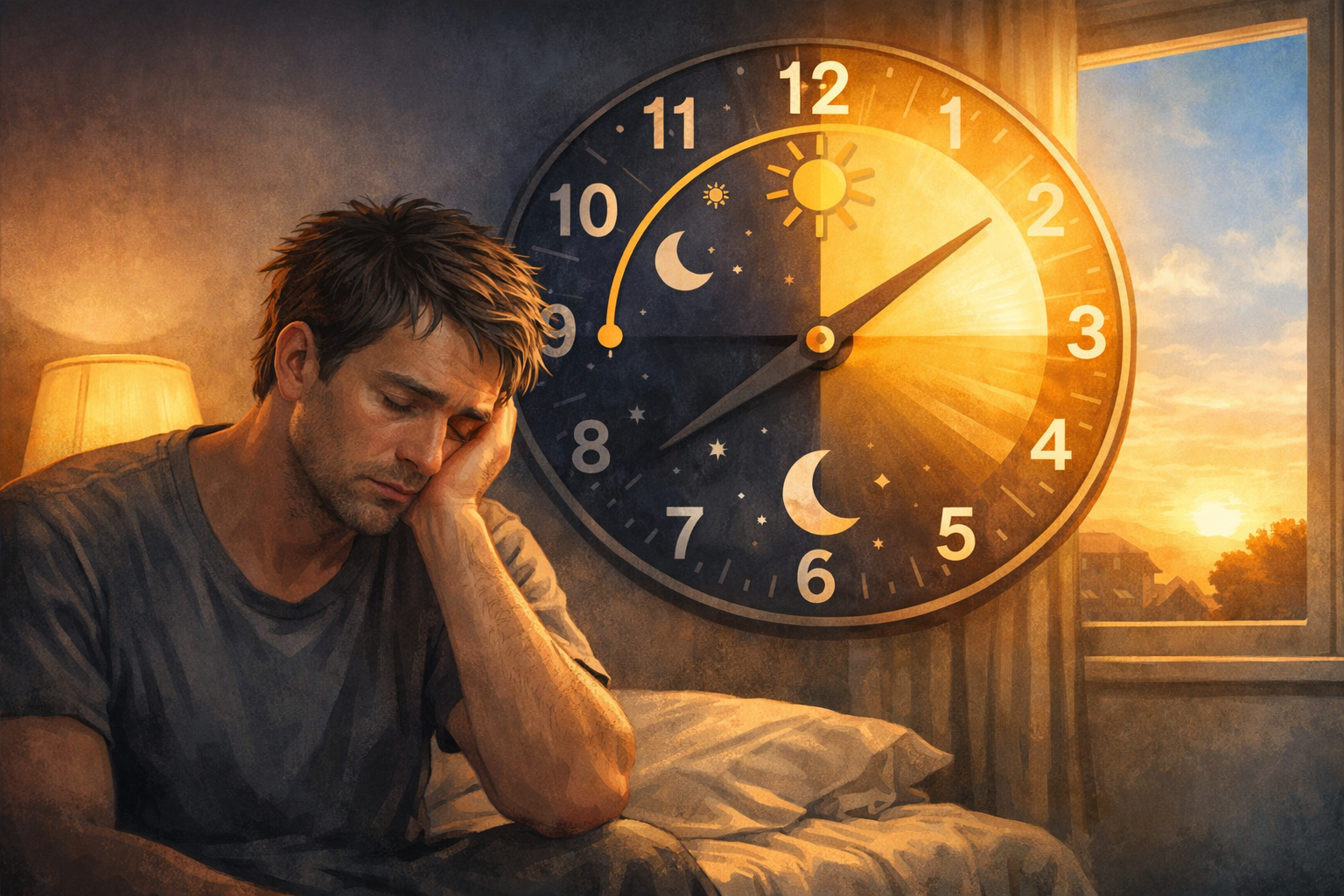
    When the circadian rhythm is misaligned, overall sleep quality and daily energy levels decline.