Tag: insomnia

  • Why Insomnia Is Often Not a Sleep Problem

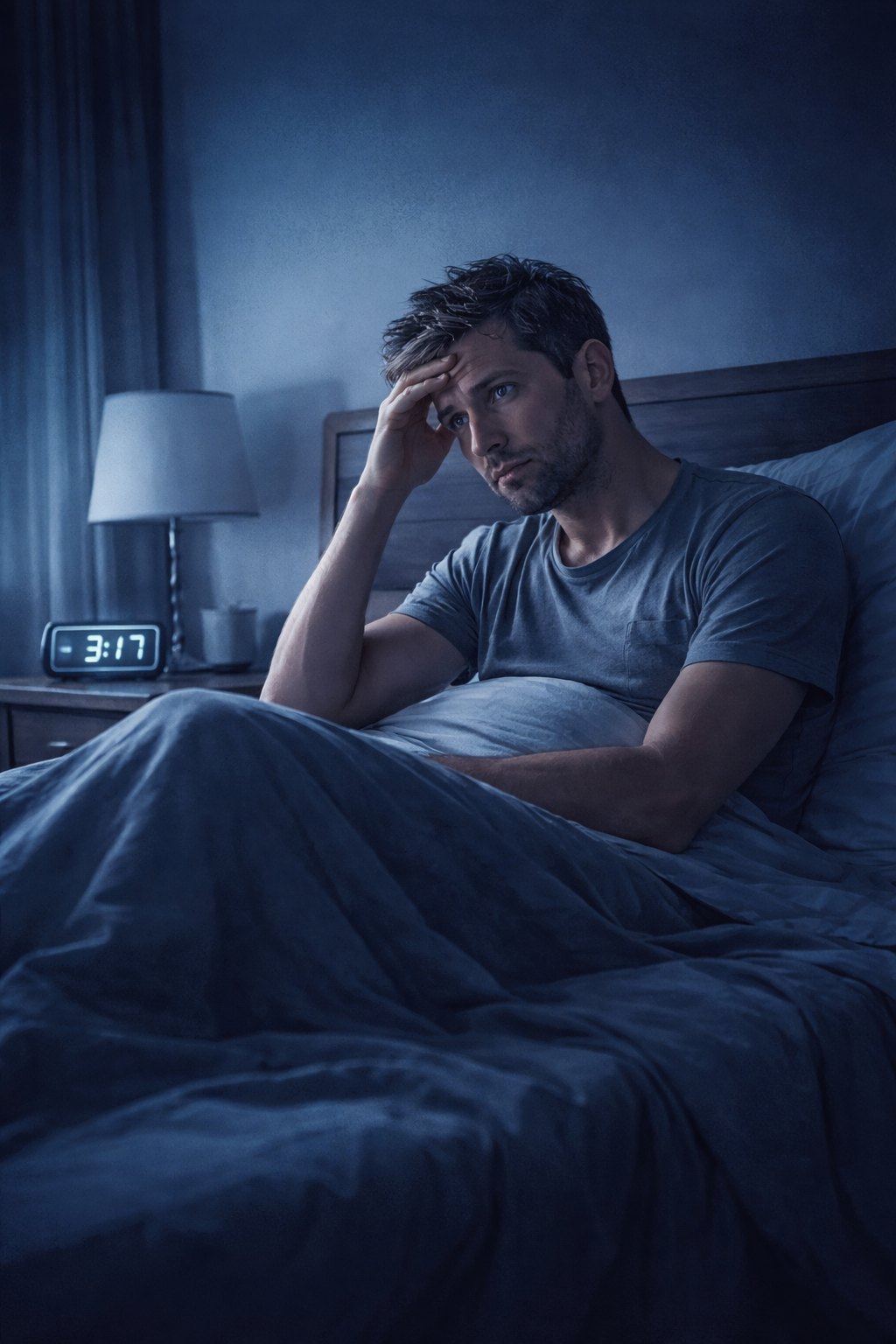
    Why Insomnia Is Often Not a Sleep Problem

    Insomnia is commonly framed as a failure to sleep. If you can’t fall asleep, wake up repeatedly, or lie awake for hours, the assumption is simple: something must be wrong with your sleep.
    Scientifically, however, this assumption is incomplete.

    In many cases, insomnia is not caused by an inability to sleep, but by an inability to disengage from wakefulness. The problem lies not in sleep itself, but in how the brain regulates arousal, timing, and safety signals.


    Sleep is a passive process, wakefulness is active

    Sleep does not require effort. In a healthy nervous system, sleep emerges naturally when wakefulness shuts down. Insomnia appears when this shutdown does not occur.

    From a biological perspective, insomnia reflects excessive activation of wake-promoting systems. The brain remains alert when it should be transitioning into rest. This is why people with insomnia often feel exhausted yet unable to sleep.

    The issue is not missing sleep pressure — it is excessive arousal.


    The hyperarousal model of insomnia

    Modern sleep science increasingly explains insomnia through the hyperarousal model. According to this model, the brain of someone with insomnia remains in a heightened state of alertness, even at night.

    This hyperarousal can be:

    • cognitive (racing thoughts)

    • emotional (worry, frustration)

    • physiological (elevated heart rate, stress hormones)

    Importantly, these states can exist even when a person feels calm or tired. The nervous system itself remains primed for wakefulness.


    Why trying harder to sleep backfires

    Because insomnia feels like a sleep problem, people often respond by trying to force sleep. They go to bed earlier, stay in bed longer, or monitor sleep obsessively.

    Paradoxically, these behaviors increase arousal. The bed becomes associated with effort, monitoring, and frustration rather than safety and rest. Over time, the brain learns that nighttime is a period of vigilance.

    This explains why insomnia often persists even when external stressors improve.


    The role of the nervous system

    Sleep requires a shift from sympathetic (alert) nervous system dominance to parasympathetic (rest) dominance. In insomnia, this shift is incomplete.

    The nervous system continues to interpret nighttime as a period requiring readiness rather than recovery. This state may originate from stress, irregular schedules, or past sleep disruption, but it becomes self-sustaining.

    Insomnia, therefore, is better understood as a regulation problem rather than a sleep deficit.


    Circadian rhythm and insomnia perception

    Circadian misalignment can amplify this issue. When sleep timing does not align with the internal clock, sleep pressure builds inefficiently. The brain remains alert not because it refuses sleep, but because timing signals are confused.

    In these cases, insomnia feels psychological, but it is driven by biological timing rather than conscious resistance.


    Why insomnia often coexists with mental strain

    Insomnia frequently overlaps with anxiety and emotional stress, but this does not mean it is purely psychological. Instead, it reflects shared biological pathways.

    Both anxiety and insomnia involve heightened arousal and impaired downregulation. Improving sleep often reduces emotional symptoms, not because sleep “fixes” thoughts, but because it restores nervous system balance.


    Reframing insomnia changes the solution

    When insomnia is seen only as a sleep problem, solutions focus narrowly on sleep itself. When it is understood as an arousal regulation problem, the approach broadens.

    The goal shifts from “trying to sleep” to restoring the conditions under which sleep can occur naturally. This reframing alone often reduces fear and frustration, which are major drivers of persistent insomnia.


    The scientific takeaway

    Insomnia is rarely caused by an inability to sleep. It is more often caused by an inability to turn off wakefulness.

    By understanding insomnia as a problem of arousal, timing, and nervous system regulation, it becomes possible to approach sleep restoration with clarity rather than force.


    The key takeaway

    If insomnia feels like a battle, it is because the brain is fighting wakefulness rather than lacking sleep. Recognizing this distinction is the first step toward restoring natural sleep.

    Sleep returns when wakefulness stands down — not when it is overpowered.
  • The Science Behind Insomnia

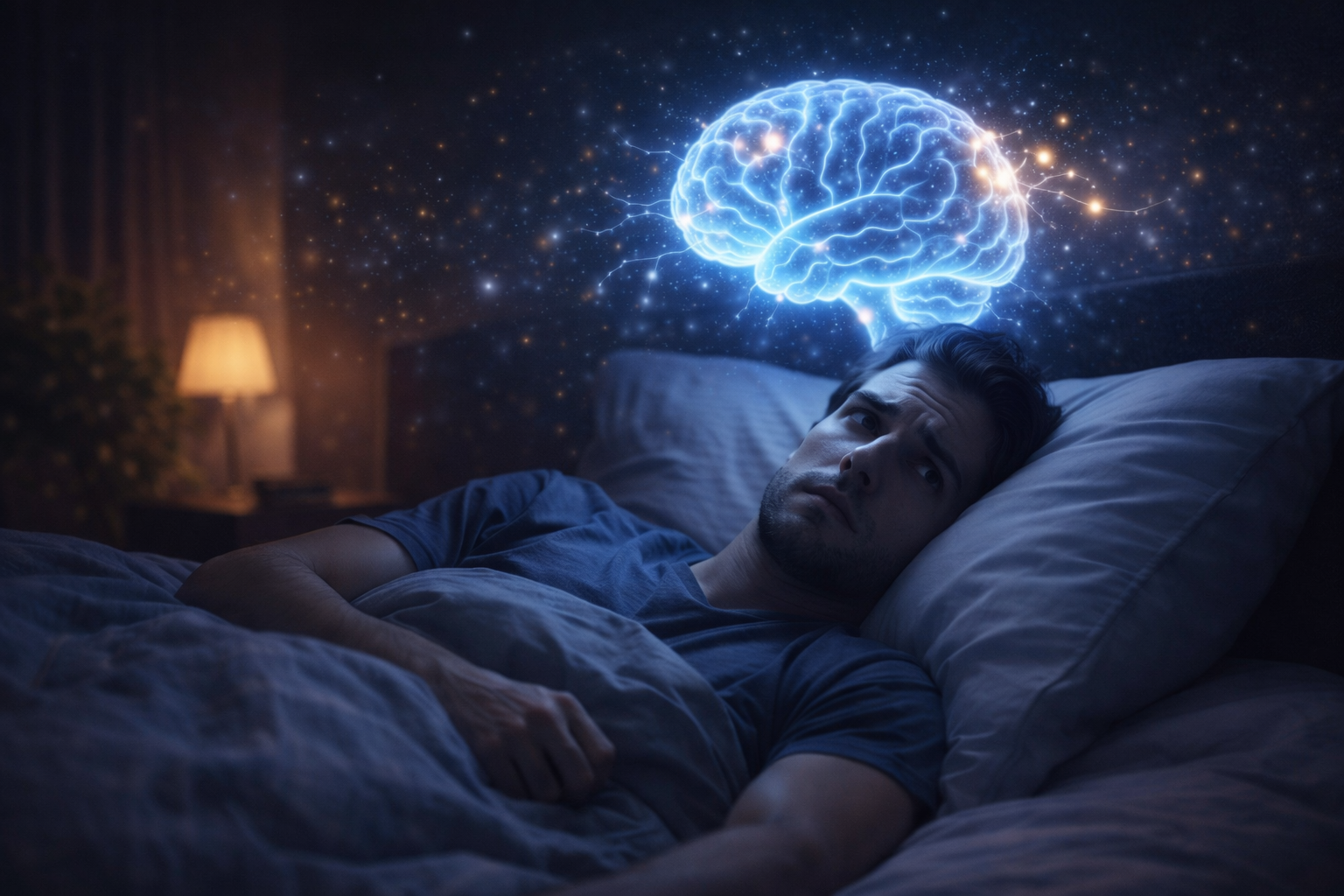
    The Science Behind Insomnia

    Insomnia is often described as a simple inability to fall asleep. In reality, it is far more complex. Insomnia is not just a nighttime problem — it is a condition rooted in how the brain regulates arousal, timing, and recovery.

    From a scientific perspective, insomnia reflects a state in which the brain struggles to disengage from wakefulness. Understanding why this happens requires looking at the nervous system, circadian rhythm, and stress regulation together.


    Insomnia is not just “lack of sleep”

    Many people assume insomnia means sleeping too little. While reduced sleep time is a consequence, it is not the core issue. Insomnia is defined by difficulty falling asleep, staying asleep, or waking too early despite adequate opportunity to sleep.

    What distinguishes insomnia from occasional poor sleep is persistence. The brain remains alert when it should be resting, creating a mismatch between intention and physiology.


    The hyperarousal model

    One of the most widely accepted scientific explanations for insomnia is the hyperarousal model. According to this model, the brain of someone with insomnia remains in a heightened state of activation, even at night.

    This activation can be cognitive (racing thoughts), emotional (worry, frustration), or physiological (elevated heart rate, stress hormones). The result is a nervous system that does not fully downshift into sleep mode.

    Importantly, this state can persist even when the person feels exhausted.


    The role of the nervous system

    Sleep requires a shift from sympathetic nervous system dominance (alertness) to parasympathetic dominance (rest). In insomnia, this shift is incomplete.

    Stress, irregular schedules, and conditioned arousal can keep the nervous system primed for wakefulness. Over time, the bed itself can become associated with alertness rather than rest, reinforcing the problem.

    This explains why many people with insomnia feel tired during the day but unable to sleep at night.


    Circadian rhythm and insomnia

    Circadian misalignment plays a significant role in many forms of insomnia. When sleep timing does not match the brain’s internal clock, sleep pressure builds inefficiently.

    Late light exposure, inconsistent schedules, and irregular wake times confuse circadian signals. As a result, the brain may not produce the proper hormonal cues for sleep at the intended time.

    In these cases, insomnia is not a failure to sleep but a failure of timing.


    Stress hormones and sleep onset

    Stress hormones such as cortisol interfere with sleep initiation. Elevated cortisol levels in the evening signal alertness rather than rest.

    Chronic stress, whether psychological or physiological, can flatten normal cortisol rhythms. Instead of declining at night, cortisol remains elevated, delaying sleep onset and increasing nighttime awakenings.

    This hormonal pattern is common in chronic insomnia and contributes to its persistence.


    Why insomnia becomes self-reinforcing

    Insomnia often develops a feedback loop. Poor sleep increases daytime fatigue and stress. Increased stress heightens nighttime arousal. Heightened arousal worsens sleep.

    Over time, fear of not sleeping becomes part of the problem. The brain begins to associate nighttime with frustration rather than rest, strengthening the hyperarousal response.

    This does not mean insomnia is “all in the head.” It means the brain has learned a pattern that must be gently unlearned.


    Insomnia and mental health

    Insomnia and mental health are closely linked. Sleep disruption increases vulnerability to anxiety, depression, and emotional instability. At the same time, these conditions can worsen insomnia.

    Importantly, insomnia can exist independently of mental health disorders. Treating sleep directly often improves emotional symptoms, even without targeted psychological intervention.

    This highlights sleep’s foundational role in brain regulation.


    The scientific takeaway

    Insomnia is not simply a lack of willpower or a bad habit. It is a biological state characterized by hyperarousal, disrupted timing, and impaired nervous system regulation.

    Understanding insomnia scientifically removes blame and opens the door to more effective strategies. Restoring sleep requires addressing arousal and timing — not forcing sleep to happen.


    The key takeaway

    Insomnia reflects a brain that has difficulty disengaging from wakefulness. It is shaped by nervous system activation, circadian misalignment, and stress regulation.

    By understanding the mechanisms behind insomnia, it becomes possible to approach sleep restoration with clarity rather than frustration.

  • Why You Wake Up During the Night and Can’t Fall Back Asleep

    Why You Wake Up During the Night and Can’t Fall Back Asleep

    Waking up in the middle of the night and struggling to fall back asleep is one of the most common sleep problems.

    You may fall asleep easily, but around 2–4 a.m. your mind turns on, your body feels alert, and sleep disappears.

    This isn’t random — and it’s not insomnia in the traditional sense.


    H2 – Why Nighttime Awakenings Happen

    Night awakenings are often caused by internal biological signals, not external noise or discomfort.

    Common triggers include:

    • Cortisol rising too early

    • Circadian rhythm misalignment

    • Nervous system overstimulation

    • Inconsistent sleep timing

    Your brain may think it’s time to wake up — even if it isn’t.


    H2 – The Cortisol Spike Effect

    Cortisol is your alertness hormone.

    In healthy sleep, cortisol rises after waking up.
    In disrupted sleep, cortisol can rise too early, waking you suddenly.

    This often happens due to:

    • Chronic stress

    • Overthinking before bed

    • Poor light exposure during the day


    H2 – Why Your Mind Feels “Wide Awake”

    At night, there are fewer distractions.

    When the nervous system is slightly activated, thoughts rush in:

    • Worries

    • Planning

    • Replaying conversations

    This is not anxiety — it’s sleep-state instability.


    H2 – What Actually Helps

    Instead of forcing sleep, focus on stability.

    Helpful strategies include:

    • Consistent wake-up time (even after bad nights)

    • Morning daylight exposure

    • Avoid checking the time at night

    • Low stimulation if awake (no phone, no bright light)

    Sleep returns when pressure rebuilds naturally.


    Conclusion

    Waking up at night doesn’t mean something is “wrong” with you.

    It usually means your sleep system needs better timing and regulation — not more effort.

    Fix the structure, and sleep follows.

    This issue is often connected to overall sleep quality and how sleep is structured.

  • Why You Can’t Fall Asleep Even When You’re Exhausted

    Why You Can’t Fall Asleep Even When You’re Exhausted

    Feeling completely exhausted but unable to fall asleep is deeply frustrating.

    Your body is tired.
    Your energy is gone.
    But your mind refuses to shut down.

    This isn’t a lack of discipline.

    It’s a biological mismatch between sleep pressure and nervous system activation.


    Why Being Tired Doesn’t Automatically Lead to Sleep

    Sleep happens when two systems work together.

    Sleep pressure builds the longer you stay awake.
    Circadian rhythm determines when your body is ready to sleep.

    You can be physically exhausted, but if your brain stays alert, sleep won’t come.

    Tiredness alone is not enough.


    The Nervous System Keeps You Awake

    When stress hormones remain elevated, your body stays in a defensive state.

    The brain interprets bedtime as unsafe.

    Instead of slowing down, it stays in problem-solving mode.

    This often shows up as:

    • racing thoughts

    • restlessness in bed

    • shallow breathing

    • sudden alertness at night

    • For individuals who struggle with racing thoughts, a consistent background sound — such as a white noise machine — may reduce sensory distractions and support a more stable sleep environment.

    Your body is tired.
    Your nervous system is not.

    In some cases, gentle nervous system support — such as magnesium glycinate — may help promote relaxation before bedtime, particularly for individuals experiencing persistent hyperarousal.


    Why Relaxation Techniques Often Don’t Work

    Many people try breathing exercises or meditation right before bed.

    Sometimes they help.
    Often, they don’t.

    Sleep is not a switch you flip at night.

    It’s the result of how your nervous system was regulated all day long.

    A single technique can’t undo an overstimulating day.

    This pattern is often linked to disruptions in the circadian rhythm.


    What Actually Helps You Fall Asleep

    Falling asleep improves when safety signals increase.

    Not force.

    The most effective principles are simple:

    • consistent wake-up times

    • morning light exposure

    • reduced evening stimulation

    • Creating a completely dark sleep environment can further support melatonin production. Some individuals use a 100% blackout sleep mask to eliminate residual light exposure.

    • predictable daily rhythms

    When the nervous system feels safe, sleep follows naturally.


    Final Thoughts

    If you’re exhausted but can’t sleep, your body isn’t broken.

    It’s responding logically to the signals it received.

    Sleep improves when biology is supported — not when it’s forced.

    Nighttime awakenings and difficulty falling asleep are often connected.