Tag: oversleeping

  • Can Sleeping Too Much Make You Tired?

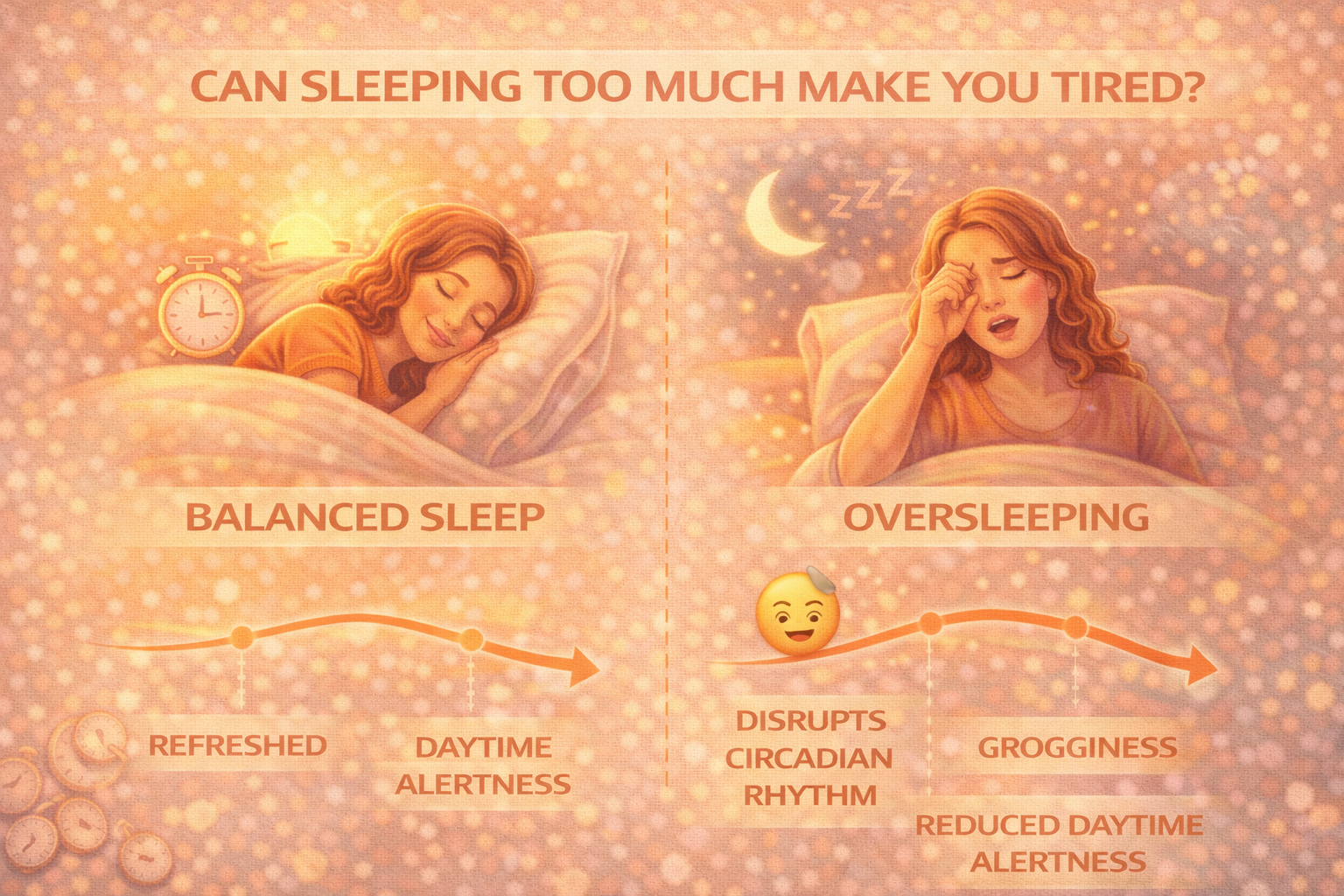
    Can Sleeping Too Much Make You Tired?

    Why excessive or poorly timed sleep can leave you feeling drained instead of restored

    Sleep is usually seen as the cure for fatigue. When energy drops, the natural response is to sleep longer, stay in bed more, or “catch up” on rest. Yet many people discover an uncomfortable paradox: after sleeping a lot, they feel heavier, foggier, and less motivated.

    This does not mean sleep is harmful. It means that more sleep is not always better sleep. When sleep duration exceeds what the brain can use efficiently — or when it occurs at the wrong time — it can actually worsen how rested you feel.


    Sleep Restores Through Quality, Not Quantity

    Sleep works through efficiency, not accumulation.

    The brain restores itself during specific sleep stages that occur at biologically appropriate times. Once those processes are completed, additional time in bed adds little benefit.

    When sleep extends beyond the optimal window, recovery does not increase proportionally. Instead, sleep quality can decline.


    Circadian Rhythm and Oversleeping

    The circadian rhythm determines when the brain is ready to wake up.

    If you continue sleeping past this natural wake window, the brain begins shifting toward alertness even while you remain asleep. This creates internal conflict between sleep and wake systems.

    As a result, waking up after oversleeping often feels sluggish and disorienting rather than refreshing.


    Why Oversleeping Increases Sleep Inertia

    Sleep inertia is the groggy, heavy feeling after waking.

    Long sleep episodes increase the likelihood of waking from deep sleep stages. When this happens, the brain requires more time to fully transition into alertness.

    Instead of easing the wake-up process, oversleeping can intensify inertia and reduce mental clarity.


    Long Sleep Often Signals Poor Sleep Quality

    Sleeping too much is frequently a response to inadequate recovery.

    Fragmented sleep, reduced deep sleep, or circadian misalignment can leave the brain under-restored. In response, sleep pressure remains high, driving longer sleep durations without improving how rested you feel.

    In these cases, long sleep is a symptom, not a solution.


    Oversleeping and Circadian Drift

    Regularly sleeping in can shift the circadian rhythm later.

    This delay makes it harder to fall asleep the following night, creating a cycle of late bedtimes and late wake-ups. Over time, this pattern increases fatigue rather than resolving it.

    What feels like recovery may quietly reinforce misalignment.


    Mental and Emotional Effects of Excessive Sleep

    Oversleeping affects more than physical energy.

    It is often associated with:

    • reduced mental sharpness

    • lower motivation

    • emotional flatness

    • difficulty initiating tasks

    These effects reflect circadian disruption and incomplete recovery rather than restfulness.


    Why More Sleep Doesn’t Fix Chronic Fatigue

    Chronic fatigue is rarely caused by insufficient sleep alone.

    When fatigue results from stress, disrupted sleep architecture, or circadian instability, extending sleep duration does not address the underlying cause. The brain remains out of sync.

    This is why some people feel better with slightly less but better-timed sleep.


    When Longer Sleep Is Actually Appropriate

    There are situations where longer sleep is necessary.

    Acute sleep deprivation, illness, intense physical exertion, or recovery periods can legitimately increase sleep needs. In these contexts, longer sleep supports healing rather than undermines energy.

    The key difference is whether longer sleep restores clarity or perpetuates fatigue.


    Finding the Right Amount of Sleep

    The optimal amount of sleep is individual and timing-dependent.

    When sleep is well-aligned, duration often stabilizes naturally. The body wakes more easily, and energy feels more consistent throughout the day.

    The goal is not maximizing hours in bed, but matching sleep duration to biological need and timing.


    The Core Idea to Remember

    Sleeping too much can make you feel tired when it disrupts circadian timing or reflects poor sleep quality.

    Energy does not come from accumulating hours in bed. It comes from sleep that is efficient, well-timed, and biologically aligned.

    When sleep timing is right, the brain takes what it needs — and more sleep stops being necessary.

  • Can Sleeping Too Much Make You Tired?

    Can Sleeping Too Much Make You Tired?

    Why excessive or mistimed sleep can reduce energy instead of restoring it

    Sleep is usually seen as the solution to fatigue. When people feel exhausted, the instinctive response is to sleep more. Yet many discover a paradox: after long nights or extended time in bed, they feel even more sluggish, foggy, or unmotivated.

    This experience is not a contradiction. Sleeping too much can make you feel tired — not because sleep is harmful, but because sleep duration alone does not guarantee biological alignment. Energy depends on how sleep fits into the brain’s timing systems.


    More Sleep Is Not Always Better Sleep

    Sleep is restorative only when it is efficient and well-timed.

    Beyond a certain point, additional sleep does not provide extra recovery. Instead, it can dilute sleep quality, fragment sleep stages, and interfere with circadian timing.

    Long sleep episodes often reflect underlying disruption rather than optimal rest.


    The Role of Circadian Rhythm in Feeling Rested

    The circadian rhythm determines when the brain is prepared for sleep and when it is prepared for wakefulness.

    When sleep extends beyond the natural wake window, the brain begins transitioning toward alertness even while the body remains in bed. This creates a mismatch between internal signals and behavior.

    As a result, waking up after excessive sleep can feel heavy and disorienting rather than refreshing.


    Sleep Inertia and Oversleeping

    One common effect of oversleeping is intensified sleep inertia.

    Sleep inertia refers to the grogginess and reduced mental clarity that occur immediately after waking. Longer sleep episodes increase the chance of waking from deeper sleep stages, which amplifies inertia.

    Instead of easing the transition to wakefulness, excessive sleep can make it harder.


    Why Long Sleep Often Signals Poor Sleep Quality

    Sleeping too much is often a response to non-restorative sleep.

    Fragmented sleep, reduced deep sleep, or circadian misalignment can leave the brain under-recovered. In response, sleep pressure remains high, driving longer sleep durations without improving quality.

    In this context, long sleep is a symptom, not a solution.


    Oversleeping and Circadian Drift

    Extended sleep times can push the circadian rhythm later.

    Sleeping in regularly delays internal timing, making it harder to fall asleep at a consistent hour the following night. This drift creates a cycle of late nights, late mornings, and persistent fatigue.

    What feels like recovery can quietly reinforce misalignment.


    Mental and Emotional Effects of Excessive Sleep

    Sleeping too much affects more than physical energy.

    Extended time in bed is associated with:

    • reduced mental sharpness

    • lower motivation

    • emotional flatness or irritability

    • difficulty initiating tasks

    These effects often overlap with symptoms of circadian disruption rather than simple rest needs.


    Why Sleeping More Doesn’t Fix Chronic Fatigue

    Chronic fatigue rarely results from sleep deprivation alone.

    When fatigue is driven by timing instability, stress, or disrupted sleep architecture, adding more sleep hours does not correct the underlying problem. The brain remains out of sync, and energy does not return.

    This explains why some people feel better with slightly less but better-timed sleep.


    When Longer Sleep Is Actually Appropriate

    There are situations where longer sleep is necessary.

    Illness, acute sleep deprivation, intense physical demands, and recovery periods may require extended rest. In these cases, increased sleep supports healing rather than undermines energy.

    The difference lies in context and consistency, not in the number of hours alone.


    Finding the Right Balance

    Restorative sleep occurs when duration, timing, and quality align.

    Consistent wake times, appropriate light exposure, and stable routines help regulate how much sleep the body truly needs. When alignment improves, sleep duration often shortens naturally without reducing energy.

    The goal is not maximizing sleep, but optimizing it.


    The Core Idea to Remember

    Sleeping too much can make you feel tired when it disrupts circadian timing or reflects poor sleep quality.

    Energy does not come from accumulating hours in bed. It comes from sleep that occurs at the right time, with sufficient depth and consistency.

    When sleep is aligned with biology, less can feel like more — and waking up no longer feels like a struggle.