Tag: sleep consistency

  • Can White Noise Improve Sleep Consistency?

    Can White Noise Improve Sleep Consistency?

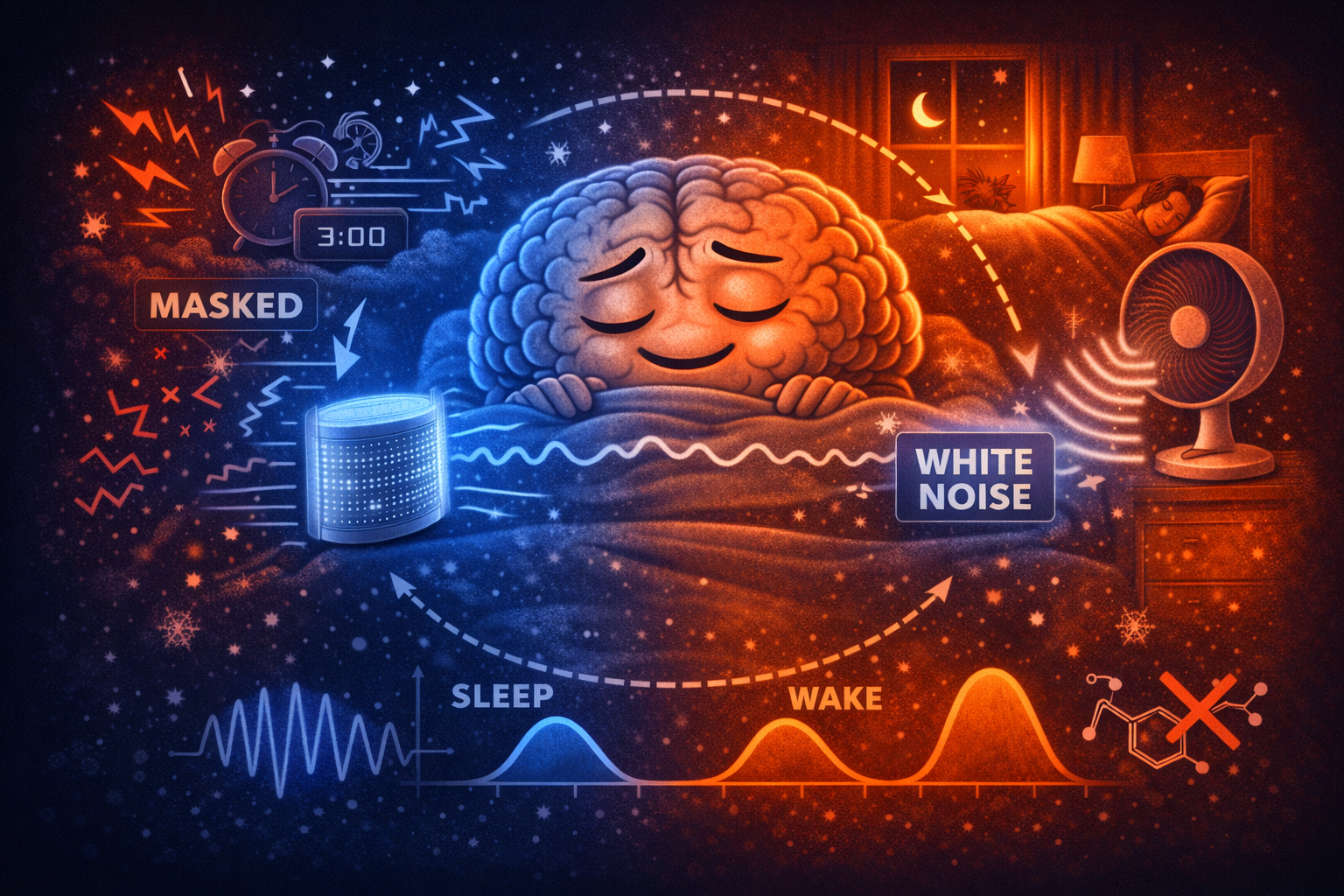
    How steady sound can reduce sleep disruptions and stabilize nightly rest

    Sleep consistency depends on more than bedtime routines or sleep duration. Many people sleep poorly not because they can’t fall asleep, but because their sleep is repeatedly interrupted throughout the night.

    White noise is often suggested as a solution—but does it actually help? In many cases, white noise can improve sleep consistency by stabilizing the auditory environment and reducing disruptive sound contrasts. Its effectiveness depends on how and why sleep is being disrupted.


    Sleep Consistency Depends on Stability

    Consistent sleep requires predictable conditions.

    The brain sleeps best when the environment remains stable across the night. Sudden changes—especially in sound—trigger brief alert responses that fragment sleep.

    White noise works by reducing variability, not by forcing sleep.


    Why Sudden Sounds Disrupt Sleep

    The sleeping brain remains vigilant.

    Even during deep sleep, the brain monitors sounds for potential threats. Sudden or irregular noises activate alert systems, causing micro-arousals that pull the brain out of deeper sleep stages.

    These disruptions often go unnoticed but reduce sleep quality.


    How White Noise Works

    White noise creates a constant auditory backdrop.

    By filling the sound spectrum evenly, white noise masks sudden changes in volume or pitch. This reduces the contrast between background silence and intrusive sounds.

    The brain responds more calmly to steady input than to unpredictability.


    White Noise and Micro-Arousals

    Reducing micro-arousals improves consistency.

    When sudden sounds are masked, the brain is less likely to shift into alert mode. Sleep stages become more stable, and transitions are smoother.

    Over time, this improves sleep continuity.


    Why White Noise Helps Some People More Than Others

    Effectiveness depends on the cause of disruption.

    White noise is most helpful when sleep is disturbed by environmental sounds such as traffic, voices, or household noise. It is less effective for sleep problems driven by stress, anxiety, or circadian misalignment.

    It supports stability—it doesn’t fix timing.


    White Noise and Deep Sleep

    Deep sleep benefits from uninterrupted conditions.

    By reducing auditory disruptions, white noise can indirectly increase time spent in deep sleep. This improves physical recovery and next-day energy.

    However, volume and consistency matter.


    REM Sleep and Sound Masking

    REM sleep is sensitive to noise.

    White noise can help protect REM cycles by preventing sudden sounds from triggering awakenings or stage shifts. More stable REM sleep supports emotional regulation and mental clarity.

    Poor masking weakens this benefit.


    Why Volume Matters

    Louder is not better.

    White noise should be set just loud enough to mask disruptive sounds. Excessive volume can itself become stimulating or stressful.

    The goal is background presence, not dominance.


    White Noise vs Total Silence

    Silence increases contrast.

    In very quiet environments, sudden sounds stand out sharply. White noise reduces this contrast, making the auditory environment more predictable.

    Sleep improves with predictability, not absolute silence.


    When White Noise Does Not Help

    White noise is limited.

    It does not correct poor sleep timing, light exposure, or emotional arousal. In some people, constant sound can feel irritating rather than soothing.

    Individual preference matters.


    Consistency Is More Important Than Sound Type

    Predictability matters more than the specific sound.

    Some people prefer white noise, others pink noise, brown noise, or steady environmental sounds. What matters is that the sound remains stable throughout the night.

    The brain adapts to consistency.


    Using White Noise to Support Long-Term Sleep Consistency

    White noise works best as part of a system.

    When combined with consistent sleep timing, proper light exposure, and a calm sleep environment, white noise can significantly improve sleep stability.

    It supports—not replaces—good sleep biology.


    The Core Idea to Remember

    White noise can improve sleep consistency by stabilizing the auditory environment.

    By masking sudden sounds and reducing micro-arousals, it helps the brain remain in deeper sleep stages. Its benefit depends on proper volume, consistency, and the source of sleep disruption.

    Sleep becomes more consistent when the night feels predictable.

  • How Long It Takes to Fix a Broken Sleep Schedule

    How Long It Takes to Fix a Broken Sleep Schedule

    Why restoring sleep timing is a gradual biological process, not a quick reset

    When sleep schedules fall apart, the first question is almost always the same: How long will this take to fix? After weeks or months of late nights, irregular wake-ups, or shifting routines, many people expect recovery to happen after a few “good” nights.

    Biologically, sleep timing does not reset instantly. Fixing a broken sleep schedule means retraining the brain’s internal clock — a process that unfolds gradually and follows biological constraints rather than motivation or effort.


    What a Broken Sleep Schedule Actually Means

    A sleep schedule is considered broken when sleep and wake times lose consistency.

    This often happens due to late nights, rotating schedules, stress, travel, illness, or prolonged irregular routines. Over time, the circadian rhythm loses its ability to predict when sleep should occur.

    The core issue is not just lost sleep. It is lost timing stability. The brain no longer knows when to prepare for rest or when to support alertness.


    Why Sleep Timing Can’t Be Fixed Overnight

    The circadian rhythm does not respond like a switch.

    It adjusts slowly based on repeated cues, especially light exposure and consistent wake times. When sleep schedules change abruptly, the internal clock moves in small increments rather than large jumps.

    This is why one or two early nights rarely solve the problem. The brain needs repetition to believe the new timing is reliable.


    The Typical Timeline for Repair

    For most people, noticeable improvement begins within one to two weeks of consistent timing.

    Full stabilization often takes two to four weeks, depending on how disrupted the schedule was. Long-standing irregularity or shift-like patterns may take longer.

    There is no universal timeline. Chronotype, stress levels, light exposure, and prior sleep debt all influence recovery speed.


    Why Some People Recover Faster Than Others

    Not everyone’s internal clock adjusts at the same rate.

    Earlier chronotypes generally shift earlier more easily, while later chronotypes tend to adapt more slowly. Stress, anxiety, and inconsistent routines further slow the process.

    This explains why two people following similar strategies can experience very different timelines.


    Why “Catching Up on Sleep” Doesn’t Fix Timing

    Sleeping longer reduces sleep pressure, but it does not reset circadian timing.

    If extra sleep occurs at inconsistent or biologically inappropriate hours, the internal clock remains unstable. You may feel less exhausted but still out of sync.

    Timing consistency — not extra hours — is what teaches the brain when sleep should happen.


    The Role of Wake-Up Time in Resetting Sleep

    Wake-up time is the strongest anchor for sleep timing.

    A consistent wake-up time sends a clear signal to the circadian rhythm, helping it re-align day by day. Bedtime often adjusts naturally once wake time stabilizes.

    Frequent changes in wake-up time delay this adjustment and prolong recovery.


    Why the Adjustment Phase Often Feels Worse

    During the reset period, many people feel temporarily worse.

    Sleep may feel lighter, fatigue may increase, and alertness can fluctuate. This does not mean the process is failing — it means the circadian rhythm is reorganizing.

    Abandoning consistency during this phase resets progress and extends recovery time.


    Why Forcing Early Bedtimes Slows Progress

    Trying to force sleep rarely accelerates repair.

    If bedtime is imposed before the brain is ready, sleep onset becomes difficult and fragmented. This creates frustration and conditions the brain to associate bed with wakefulness.

    Letting sleep arrive naturally — guided by consistent wake timing — is more effective than pushing bedtime earlier.


    How Long “Fully Fixed” Really Is

    A sleep schedule is considered fully restored when timing feels stable and sleep arrives easily most nights.

    For mild disruption, this may take a couple of weeks. For chronic disruption, it can take several weeks of steady routines before sleep feels reliably normal again.

    The brain continues fine-tuning even after sleep starts improving.


    The Core Idea to Remember

    Fixing a broken sleep schedule takes time because the circadian rhythm changes slowly.

    The brain needs repeated, consistent signals to relearn when to sleep and wake. Quick fixes rarely work, but steady alignment does.

    Patience is not optional here — it is part of the biology. When timing is respected, recovery follows.

  • How to Support Natural Sleep Cycle

    How to Support Natural Sleep Cycle

    Why aligning with biological timing matters more than forcing sleep

    Many people try to improve sleep by focusing on techniques, routines, or products, yet continue to feel tired or out of sync. Bedtimes are forced, alarms are rigid, and sleep becomes something to control rather than something that happens naturally.

    Supporting the natural sleep cycle requires a different approach. Instead of forcing sleep, the goal is to align daily signals with the brain’s internal timing system. When this alignment is present, sleep becomes easier, deeper, and more restorative without excessive effort.


    What the Natural Sleep Cycle Actually Is

    The natural sleep cycle is governed by the circadian rhythm, the internal clock that organizes sleep and wakefulness across a roughly 24-hour period.

    This cycle regulates when sleep pressure builds, when alertness fades, and when the brain is biologically prepared to rest. It also coordinates hormone release, body temperature changes, and neural activity patterns that support sleep depth and recovery.

    When the circadian rhythm is stable, sleep unfolds smoothly. When it is disrupted, sleep becomes fragmented, delayed, or unrefreshing.


    Why the Brain Needs Clear Timing Signals

    The circadian system relies on consistent external cues to stay aligned.

    Light exposure, regular wake times, and predictable daily routines act as signals that tell the brain what time it is. When these cues are clear and consistent, the internal clock remains synchronized.

    When cues are weak, conflicting, or irregular, the brain struggles to determine when to initiate sleep-related processes, making rest feel effortful instead of automatic.


    The Role of Wake-Up Time in Sleep Regulation

    Wake-up time plays a central role in shaping the sleep cycle.

    A consistent wake-up time anchors the circadian rhythm and helps regulate when sleep pressure builds later in the day. Even when bedtime varies slightly, a stable wake time allows the internal clock to recalibrate.

    In contrast, irregular wake-up times weaken circadian alignment and delay the natural onset of sleep, often leading to late nights and fragmented rest.


    How Light Exposure Supports the Sleep Cycle

    Light is the strongest signal the circadian rhythm uses to stay synchronized.

    Exposure to daylight during the morning and early afternoon reinforces alertness and anchors the internal clock. As light fades in the evening, the brain begins preparing for rest.

    Excessive evening light, especially artificial lighting and screens, can delay this transition by signaling daytime to the brain at the wrong moment. Supporting the natural sleep cycle involves respecting this light–dark contrast.


    Why Forcing Sleep Often Backfires

    Trying to force sleep through early bedtimes or strict rules often increases frustration.

    Sleep is not an action the brain performs on command. It is a state that emerges when timing, pressure, and environment align. When bedtime is imposed before the brain is ready, alertness remains high and sleep feels elusive.

    Supporting the sleep cycle means allowing sleep to arrive naturally rather than attempting to control it directly.


    Consistency Over Intensity

    Many people overestimate the impact of isolated sleep efforts.

    A single early night or a strict routine followed inconsistently does little to support circadian alignment. The brain responds to repeated patterns, not isolated actions.

    Small but consistent timing behaviors—especially around wake-up time and light exposure—are more effective than dramatic but short-lived changes.


    How Stress and Stimulation Interfere with Sleep Timing

    Stress does not just affect sleep quality; it affects sleep timing.

    Mental stimulation, emotional arousal, and cognitive load late in the day can delay the brain’s transition into rest. Even when physical fatigue is present, heightened alertness can override sleep pressure.

    Supporting the natural sleep cycle involves creating predictable periods of reduced stimulation that allow alertness to decline gradually.


    Why the Body Resists Rapid Schedule Changes

    The circadian rhythm adapts slowly.

    Rapid shifts in sleep timing, such as sudden early bedtimes or drastic schedule changes, often fail because the internal clock cannot adjust at the same pace. This mismatch leads to temporary insomnia, fragmented sleep, and daytime fatigue.

    Gradual alignment, rather than abrupt change, respects the biological limits of the timing system.


    Letting the Sleep Cycle Stabilize Naturally

    Once consistent signals are in place, the sleep cycle begins to stabilize on its own.

    Sleep pressure builds more predictably, sleep onset becomes easier, and deeper stages of sleep emerge more reliably. Over time, this stability improves both nighttime rest and daytime energy.

    The key is not perfection, but predictability the brain can learn.


    The Core Idea to Remember

    Supporting the natural sleep cycle means working with biology instead of fighting it.

    Sleep becomes easier when timing cues are clear, consistent, and aligned with the circadian rhythm. Forcing sleep rarely works, but creating the conditions for sleep allows it to emerge naturally.

    When the internal clock is supported, rest no longer feels like a struggle—it becomes a biological response to the right signals.

  • How Long It Takes to Fix a Broken Sleep Schedule

    How Long It Takes to Fix a Broken Sleep Schedule

    Why resetting sleep timing is slower than expected—and why patience matters

    When sleep schedules fall apart, the instinctive question is simple: How long will it take to fix this?
    After weeks or months of late nights, irregular wake-ups, or shifting routines, many people expect recovery to happen within a few good nights of sleep.

    In reality, restoring a broken sleep schedule is not an overnight process. It involves retraining the brain’s internal timing system—a process that follows biological rules, not motivation or effort.


    What a “Broken” Sleep Schedule Really Means

    A sleep schedule is considered broken when sleep and wake times no longer follow a stable pattern.

    This can happen due to late nights, rotating schedules, travel, illness, stress, or extended periods of inconsistent routines. Over time, the circadian rhythm loses its ability to predict when sleep should occur.

    The issue is not just missed sleep. It is a loss of timing clarity. The brain no longer knows when to prepare for rest or when to support alertness.


    Why Sleep Timing Can’t Reset Instantly

    The circadian rhythm does not respond like a switch.

    It adjusts gradually based on repeated cues, especially light exposure and consistent wake times. When sleep schedules shift suddenly, the internal clock moves slowly in response.

    This answer explains why one or two early nights rarely fix the problem. The brain needs repeated confirmation that the new timing is reliable before fully adapting.


    The Typical Timeline for Repairing Sleep Timing

    For most people, meaningful improvement takes one to three weeks of consistent timing.

    Small shifts—such as going to bed 30–60 minutes earlier—may feel easier to tolerate but still require several days to stabilize. Larger shifts can take longer, especially when the schedule was disrupted for months.

    The exact timeline depends on factors such as chronotype, light exposure, and how irregular the schedule became. There is no universal reset point.


    Why Some People Recover Faster Than Others

    Not everyone resets at the same pace.

    Morning-oriented chronotypes tend to adjust earlier more easily, while evening-oriented individuals often experience slower adaptation. Stress levels, age, and environmental light exposure also influence recovery speed.

    This variation explains why some people feel better within days while others struggle for weeks despite similar efforts.


    Why “Catching Up on Sleep” Doesn’t Fix Timing

    Sleeping longer can reduce sleep pressure, but it does not automatically correct circadian misalignment.

    If extended sleep occurs at inconsistent or biologically inappropriate times, the internal clock remains unstable. The brain may feel less exhausted but still out of sync.

    Timing consistency—not sleep duration—is what teaches the circadian system when to reset.


    The Role of Consistency in Repair

    Consistency is the most important factor in restoring a broken sleep schedule.

    Regular wake-up times provide a strong anchor for the internal clock. When wake time stabilizes, bedtime often begins to shift naturally in response.

    Frequent changes, even with good intentions, slow the adaptation process by sending mixed signals to the brain.


    Why the Process Often Feels Worse Before It Feels Better

    During the adjustment phase, people often feel temporarily worse.

    Sleep may feel lighter, fatigue may increase, and alertness can fluctuate unpredictably. This is a normal sign that the circadian rhythm is reorganizing.

    Abandoning consistency during this phase resets progress. Improvement often arrives gradually rather than dramatically.


    Why Discipline Alone Isn’t Enough

    Forcing early bedtimes rarely accelerates recovery.

    The circadian rhythm responds to timing cues, not pressure. Trying to sleep before the brain is ready often leads to frustration and insomnia-like symptoms.

    Allowing sleep to realign naturally—guided by consistent wake times and stable routines—is more effective than forcing rest.


    How Long “Long-Term” Really Is

    For deeply disrupted schedules, full stabilization can take several weeks.

    This does not mean constant exhaustion for weeks. It means that internal timing continues to fine-tune even after sleep begins to feel more normal.

    Understanding this prevents unrealistic expectations and reduces the tendency to abandon the process prematurely.


    The Core Idea to Remember

    Fixing a broken sleep schedule takes time because the circadian rhythm changes slowly.

    The brain needs repeated, consistent signals to relearn when sleep should occur. Short-term improvements are possible, but full alignment unfolds over weeks, not days.

    Patience is not a personal virtue here—it is a biological requirement. When timing is respected, recovery follows.

  • Why Your Body Needs a Sleep Routine

    Why Your Body Needs a Sleep Routine

    How consistent timing helps the brain anticipate rest and recover more efficiently

    Many people think of a sleep routine as a matter of discipline or habit. Going to bed at the same time is often framed as something you should do, not something your body actively depends on.

    In reality, a sleep routine is not about rules or self-control. It is about giving the brain reliable timing information. When sleep happens at predictable hours, the body can prepare for rest in advance. When timing constantly changes, recovery becomes less efficient — even if total sleep time seems adequate.


    The Brain Prepares for Sleep Before You Fall Asleep

    Sleep does not begin the moment you lie down.

    Hours before bedtime, the brain starts shifting into a different physiological state. Hormone release, body temperature, and neural activity gradually change in anticipation of rest. This preparation is guided by the circadian rhythm and reinforced by consistent timing.

    When bedtime is predictable, the brain knows when to start this transition. When it is irregular, the preparation phase becomes confused or incomplete.


    Why Consistency Matters More Than Perfection

    A sleep routine does not require extreme precision.

    What matters is relative consistency — going to bed and waking up within a stable window most days. This consistency allows the circadian system to synchronize internal processes efficiently.

    Large variations in timing, even when sleep duration remains the same, disrupt this synchronization. The brain cannot anticipate rest reliably, which reduces sleep quality and increases the effort required to fall asleep.


    How a Sleep Routine Strengthens the Circadian Rhythm

    The circadian rhythm relies on repeated signals to stay stable.

    Regular sleep timing acts as one of the strongest cues the brain receives. When this cue is consistent, the internal clock becomes sharper and more predictable. Alertness rises and falls smoothly, and sleep pressure builds at the right pace.

    Without a routine, the circadian rhythm drifts. Hormonal signals lose precision, and the boundary between day and night becomes blurred.


    Why Irregular Routines Make Falling Asleep Harder

    Many people struggle to fall asleep not because they are insufficiently tired, but because their brain is not expecting sleep.

    When bedtime changes frequently, the brain remains in an alert state longer than necessary. Sleep pressure builds unevenly, and the transition into rest feels forced rather than natural.

    This is why inconsistent routines often lead to prolonged sleep onset, restless nights, and a feeling of fighting sleep instead of easing into it.


    The Impact of Routine on Sleep Quality

    Sleep quality depends on timing as much as duration.

    When sleep occurs at biologically appropriate and consistent times, deeper stages of sleep emerge more efficiently. Fragmentation decreases, and recovery processes function more effectively.

    In contrast, irregular routines often lead to lighter, more disrupted sleep, even when the number of hours appears sufficient. The difference is not visible on the clock, but it is felt the next day.


    Why the Body Resists Constant Schedule Changes

    The human body evolved in environments where daily timing was relatively stable.

    Rapid shifts in sleep schedules — late nights followed by early mornings, weekday–weekend swings — challenge this system. Each shift forces the circadian rhythm to re-adjust, increasing biological effort and reducing efficiency.

    Over time, this constant re-adjustment contributes to fatigue, reduced focus, and a sense that sleep never fully restores energy.


    Sleep Routine and Daytime Energy

    A stable sleep routine does not only improve nights. It shapes days.

    When the brain can predict sleep timing, daytime alertness becomes more consistent. Energy dips become more predictable, focus improves, and emotional regulation becomes easier.

    This is why people with stable routines often report feeling more “balanced,” even without sleeping longer than others.


    Why Willpower Cannot Replace Routine

    Many people attempt to compensate for poor routines with discipline.

    They force earlier bedtimes, rely on caffeine, or push through fatigue. While these strategies may temporarily override symptoms, they do not replace the biological benefits of consistency.

    The circadian system adapts to patterns, not intentions. Without a routine, effort alone cannot restore alignment.


    Building a Routine the Brain Can Learn

    A sleep routine works best when it is simple and repeatable.

    The goal is not rigid control, but regular signals the brain can recognize. Even partial consistency — especially in wake-up time — helps stabilize internal timing.

    Once the brain learns when rest is coming, sleep becomes less effortful and more restorative.


    The Core Idea to Remember

    Your body needs a sleep routine because it relies on timing to function efficiently.

    Consistency allows the brain to prepare for rest, deepen recovery, and regulate energy throughout the day. Without it, sleep becomes harder, lighter, and less refreshing — even when you spend enough hours in bed.

    A sleep routine is not about discipline. It is about giving your biology the predictability it needs to work well.