Tag: sleep environment

  • The Role of Darkness in Sleep Quality

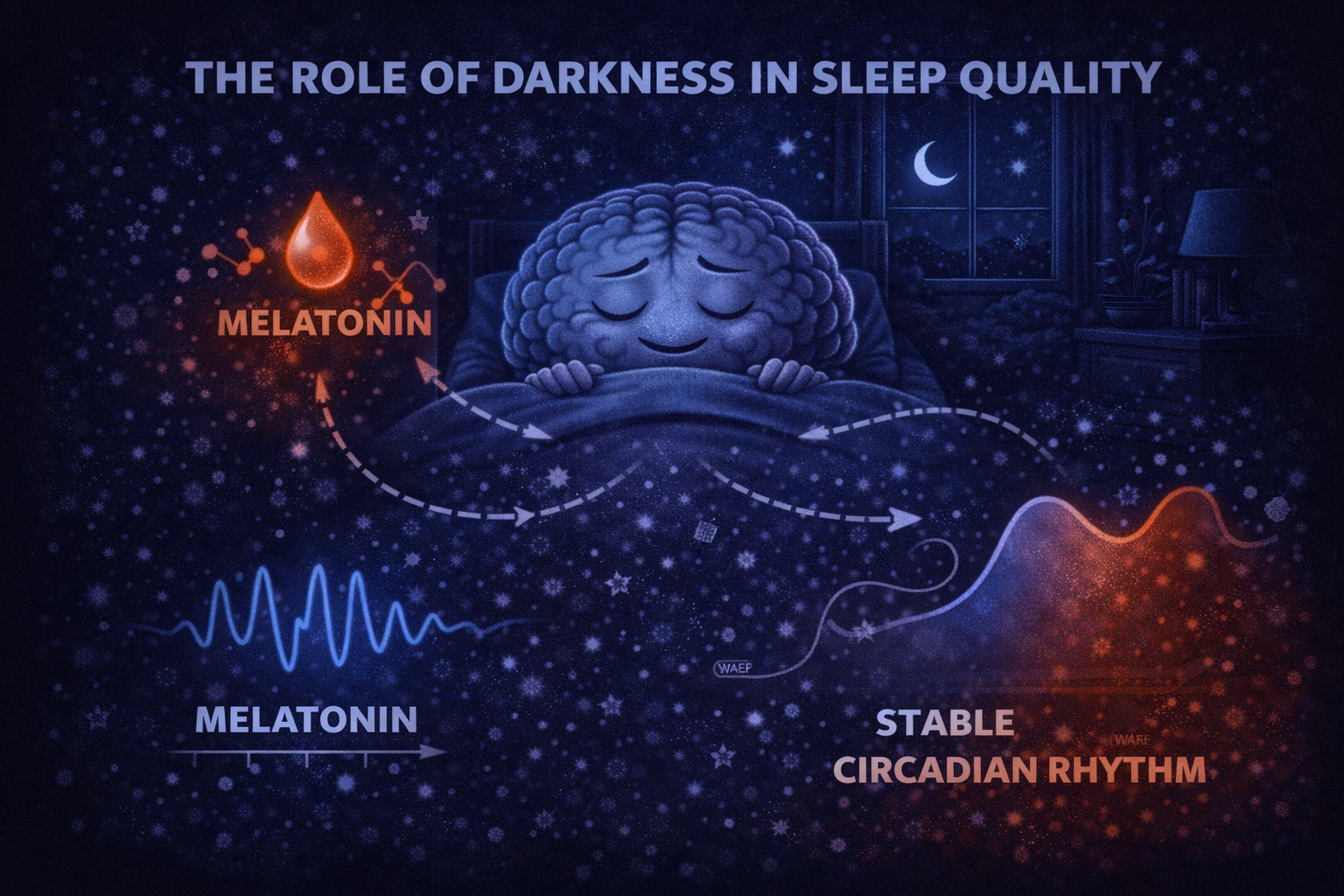
    The Role of Darkness in Sleep Quality

    Why darkness determines how deeply and restoratively you sleep

    Sleep quality is often blamed on stress, noise, or sleep duration. While these factors matter, one of the most overlooked influences on sleep quality is darkness.

    Darkness does more than help you fall asleep. It determines how deeply you sleep, how stable your sleep cycles are, and how restored you feel the next day. When darkness is incomplete or inconsistent, sleep becomes lighter, more fragmented, and less restorative—even if total sleep time seems adequate.


    Sleep Quality Depends on Clear Nighttime Signals

    The brain needs certainty to sleep well.

    Sleep quality improves when the brain receives a clear, unambiguous signal that night has arrived. Darkness provides this signal by telling the brain to fully shift into recovery mode.

    When light remains present, the brain hesitates. Sleep still happens, but it is less efficient.


    How Darkness Supports Melatonin Stability

    Melatonin is central to sleep quality.

    Darkness allows melatonin levels to rise steadily and remain elevated throughout the night. This stable melatonin signal supports continuous sleep and proper cycling through sleep stages.

    When darkness is interrupted, melatonin production fluctuates, weakening sleep depth and continuity.


    Darkness and Sleep Depth

    Deep sleep depends on environmental signals.

    In darkness, the brain is more likely to enter and maintain deep sleep stages. These stages are responsible for physical recovery, immune support, and neural restoration.

    Exposure to light during the night reduces time spent in deep sleep, making rest feel shallow.


    REM Sleep and Darkness

    REM sleep is sensitive to light disruption.

    Darkness supports stable REM sleep cycles by maintaining circadian alignment and reducing nighttime alertness. When light exposure occurs at night, REM sleep becomes fragmented or shortened.

    Poor REM sleep reduces emotional processing and mental clarity.


    Why Even Low Light Can Reduce Sleep Quality

    The circadian system is highly sensitive.

    Dim light sources—night lights, hallway lighting, electronic indicators—can still interfere with nighttime signaling. The brain does not require bright light to detect disruption.

    Small amounts of light can reduce sleep efficiency over time.


    Darkness and Sleep Continuity

    Quality sleep requires continuity.

    Darkness reduces micro-awakenings and nighttime alertness. When light intrudes, the brain partially reactivates, increasing the likelihood of fragmented sleep.

    Sleep becomes lighter and more easily disturbed.


    How Darkness Reduces Nighttime Arousal

    Darkness quiets alerting systems.

    Heart rate slows, stress signaling decreases, and the nervous system shifts into recovery mode. This physiological downregulation allows sleep to deepen naturally.

    Light exposure prevents full shutdown, keeping the body partially alert.


    Modern Environments and Poor Darkness

    Modern life weakens natural darkness.

    Streetlights, indoor lighting, screens, and ambient glow keep nighttime light levels higher than biology expects. This constant exposure degrades sleep quality gradually.

    People often adapt without realizing sleep depth is declining.


    Why Darkness Matters More Than Sleep Duration

    Long sleep does not guarantee quality sleep.

    Without proper darkness, sleep can be long but inefficient. Deep and REM sleep suffer, and recovery remains incomplete.

    Darkness determines how effectively sleep performs its function.


    Improving Sleep Quality by Improving Darkness

    Enhancing darkness improves sleep quality directly.

    Reducing evening light, eliminating nighttime light sources, and creating a darker sleep environment strengthen nighttime signaling and deepen sleep.

    Consistency is more important than perfection.


    Why Darkness Improves How You Feel the Next Day

    Restorative sleep depends on depth.

    When darkness supports deep and REM sleep, the brain completes recovery processes. Energy, mood, and clarity improve without extra effort.

    Darkness allows sleep to do its work fully.


    The Core Idea to Remember

    Darkness plays a central role in sleep quality by supporting depth, continuity, and recovery.

    By stabilizing melatonin, reducing alertness, and reinforcing circadian timing, darkness allows sleep to become truly restorative. Without it, sleep becomes lighter and less effective.

    Improving sleep quality often starts by improving darkness.
  • How Darkness Signals the Brain to Sleep

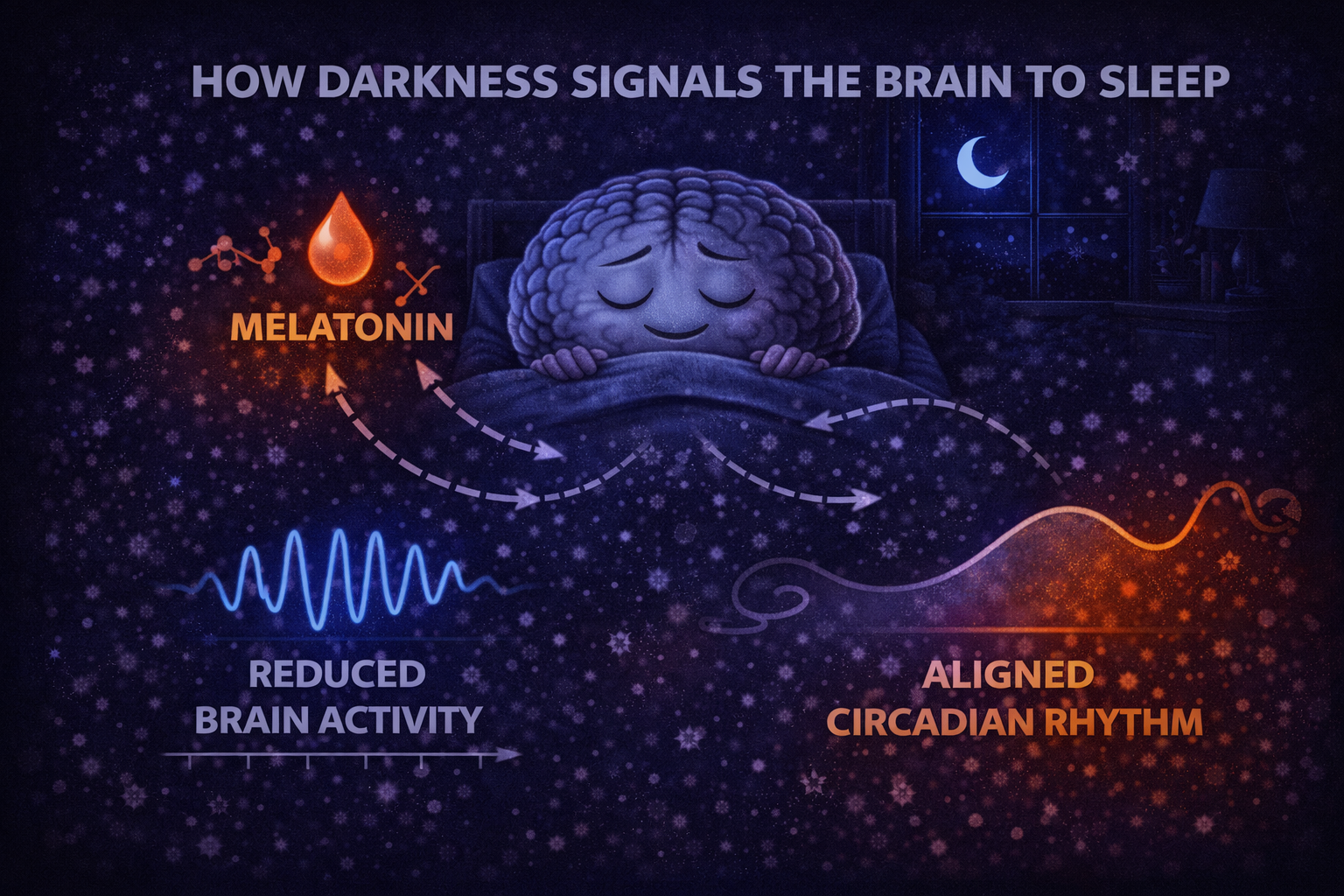
    How Darkness Signals the Brain to Sleep

    Why the absence of light actively triggers the body’s night mode

    Sleep does not start simply because the body is tired. It starts when the brain receives a clear biological signal that night has arrived. That signal is darkness.

    Darkness is not passive. It actively tells the brain to shut down alert systems, release sleep-promoting hormones, and shift the body into recovery mode. When darkness is delayed or incomplete, sleep timing and quality suffer—even if exhaustion is present.


    Darkness Is a Biological Signal, Not Just a Lack of Light

    The brain treats darkness as information.

    Specialized light-sensitive cells in the eyes continuously monitor ambient light levels. When light decreases, signaling to the brain’s internal clock changes. This shift tells the brain that daytime has ended.

    Darkness initiates a chain reaction that prepares the body for sleep.


    How Darkness Triggers Melatonin Release

    Melatonin is the hormone of night.

    As darkness increases, melatonin production rises. This hormone signals sleepiness, lowers body temperature, and coordinates nighttime physiology.

    Without sufficient darkness, melatonin release is delayed or suppressed, making sleep harder to initiate.


    Darkness and the Circadian Clock

    The circadian rhythm relies on contrast.

    Bright light during the day and darkness at night create a clear day–night pattern. Darkness anchors the nighttime phase of this rhythm.

    When darkness is weak or inconsistent, circadian timing becomes unstable, leading to delayed sleep and fragmented rest.


    Why Even Dim Light Can Disrupt the Signal

    The circadian system is highly sensitive.

    Low levels of light in the evening—especially blue or white light—can weaken the darkness signal. The brain interprets this as extended daytime.

    As a result, alertness remains elevated and sleep onset is delayed.


    Darkness and Sleep Depth

    Darkness affects more than sleep onset.

    Proper darkness supports deeper sleep stages, including deep sleep and REM sleep. When darkness is incomplete, sleep may feel lighter and less restorative.

    Sleep duration may be adequate, but quality declines.


    How Darkness Reduces Nighttime Alertness

    Alertness systems depend on light.

    In darkness, neural alerting systems quiet down. Heart rate slows, stress signaling decreases, and the brain shifts into recovery mode.

    Light exposure at night prevents this shutdown, keeping the brain partially alert.


    Why Modern Environments Reduce Darkness

    Modern life minimizes natural darkness.

    Streetlights, indoor lighting, screens, and ambient glow keep light levels elevated well into the night. This blurs the boundary between day and night.

    The brain struggles to identify when sleep should begin.


    Darkness and Emotional Regulation

    Darkness supports emotional recovery.

    By enabling melatonin release and proper sleep architecture, darkness indirectly improves emotional regulation, stress recovery, and mood stability.

    Poor darkness contributes to emotional reactivity and mental fatigue.


    Why Total Darkness Is Not Always Necessary

    The goal is clarity, not perfection.

    The brain does not require absolute darkness, but it does require a clear reduction in light. Gradual dimming and consistency matter more than extreme measures.

    Biology responds to patterns, not absolutes.


    How to Strengthen the Darkness Signal

    Supporting darkness means reducing competing signals.

    Dimming lights, avoiding screens late at night, and minimizing ambient glow allow the brain to recognize nighttime properly.

    Consistency trains the circadian system to respond more effectively.


    Why Darkness Makes Falling Asleep Easier

    When darkness is clear, sleep feels natural.

    Sleepiness increases without effort, alertness fades, and the body transitions smoothly into rest. This reflects proper biological signaling rather than forced relaxation.

    Darkness tells the brain that it is safe to sleep.


    The Core Idea to Remember

    Darkness signals the brain to sleep by activating nighttime biology.

    By allowing melatonin to rise and alert systems to quiet down, darkness initiates sleep timing, depth, and recovery. Without sufficient darkness, the brain delays sleep even when tired.

    Sleep improves not by forcing rest—but by allowing darkness to do its job.

  • How to Reduce Light Exposure Before Bed

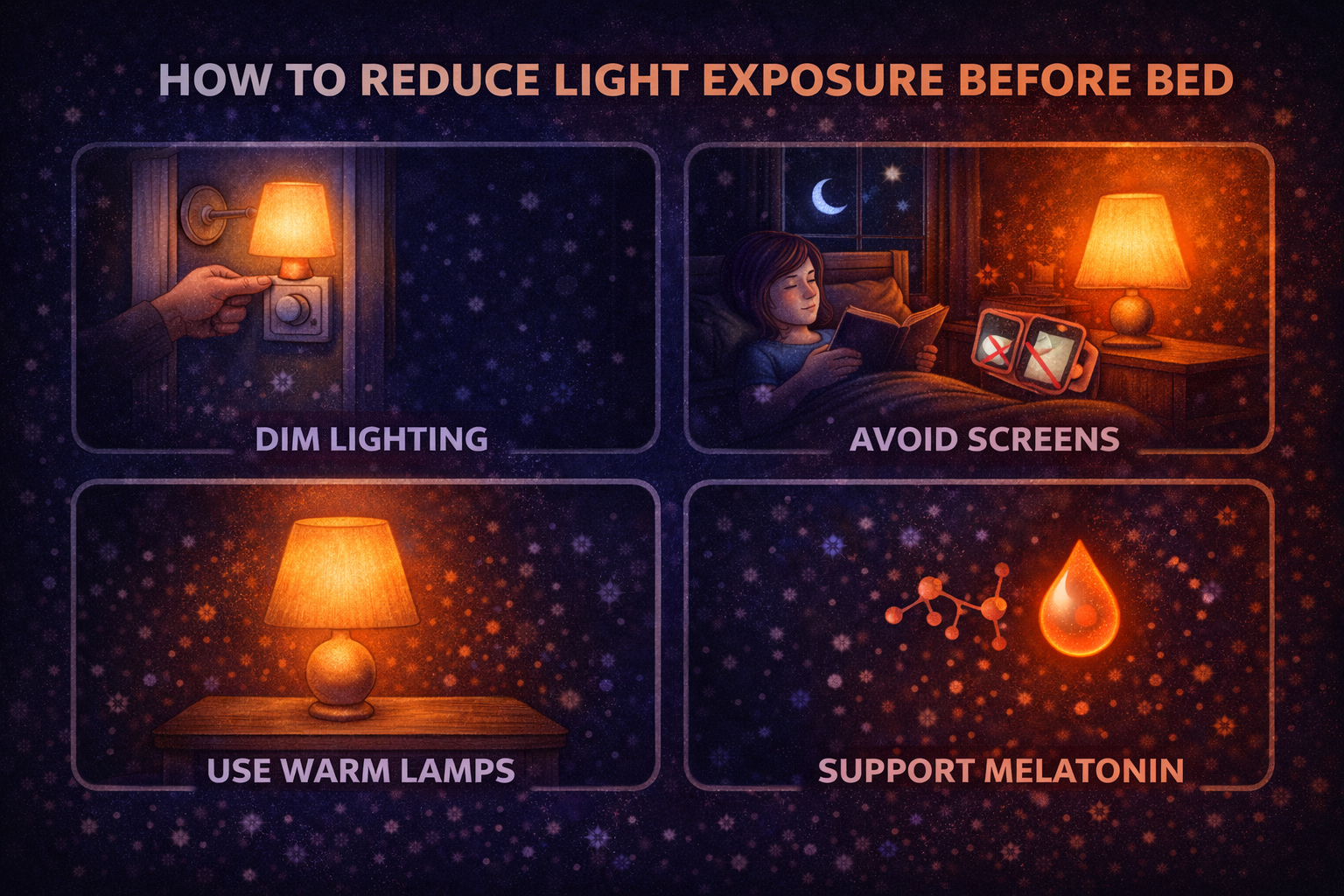
    How to Reduce Light Exposure Before Bed

    Practical ways to protect melatonin and prepare your brain for sleep

    Many sleep problems don’t begin at bedtime. They begin hours earlier, when light exposure quietly tells the brain to stay alert. By the time you try to sleep, the biological signals are already misaligned.

    Reducing light exposure before bed is one of the most effective, non-medical ways to improve sleep timing and quality. It doesn’t require extreme measures—only intentional changes that align evening light with biology.


    Why Evening Light Matters So Much

    Light is the brain’s strongest timing signal.

    As evening approaches, the brain expects light levels to fall. This drop allows melatonin to rise and initiates nighttime physiology. When light remains bright, the brain delays this transition.

    Reducing evening light is not about darkness all day—it’s about darkness at the right time.


    Start Reducing Light Earlier Than You Think

    Timing matters more than intensity alone.

    Reducing light exposure only at bedtime is often too late. The circadian system responds to cumulative light signals over several hours.

    Dimming lights 2–3 hours before bed is far more effective than sudden darkness right before sleep.


    Dim Indoor Lighting in the Evening

    Brightness signals alertness.

    Lowering overall room brightness in the evening tells the brain that night is approaching. This includes overhead lights, lamps, and decorative lighting.

    Using fewer light sources with softer intensity helps initiate the sleep transition.


    Use Warm, Low-Intensity Light Sources

    Color temperature affects melatonin.

    Warm light (amber, red, or soft yellow) interferes less with melatonin than cool white or blue light. Switching to warmer bulbs in the evening reduces circadian disruption.

    The goal is light that supports visibility without stimulating alertness.


    Limit Screen Exposure Before Bed

    Screens are concentrated light sources.

    Phones, tablets, computers, and televisions deliver bright, blue-rich light directly into the eyes. Reducing screen use in the evening significantly improves sleep readiness.

    When screens are unavoidable, shorter exposure and earlier cutoffs matter more than filters alone.


    Lower Screen Brightness and Use Night Modes

    Brightness amplifies disruption.

    Reducing screen brightness and enabling night modes lowers the alerting signal sent to the brain. While not a complete solution, these steps reduce harm when screens are used.

    Behavior still matters more than settings.


    Avoid Overhead Lighting at Night

    Overhead lights mimic daytime conditions.

    Turning off ceiling lights and relying on localized, low-level lighting reduces the brain’s perception of daytime. This supports melatonin release and relaxation.

    Smaller light sources create a more sleep-friendly environment.


    Create a “Light Curfew” Routine

    Consistency trains the brain.

    Establishing a routine where lights are dimmed at the same time each evening helps stabilize circadian timing. Over time, sleepiness begins to appear more naturally.

    Routine reduces the need for conscious effort.


    Use Darkness as a Signal, Not an Obstacle

    Darkness is biologically meaningful.

    As light fades, the brain shifts into night mode. Allowing this transition supports sleep onset, depth, and emotional regulation.

    Darkness is not the absence of activity—it is an active signal for sleep.


    Be Careful With Late-Night Bright Environments

    Light exposure outside the home counts.

    Bright stores, gyms, offices, and street lighting can delay sleep when encountered late at night. Being mindful of late-evening environments helps protect sleep timing.

    Even short exposures can shift circadian signals.


    Why Small Changes Make a Big Difference

    The circadian system is sensitive.

    You don’t need perfect darkness or extreme measures. Gradual, consistent reductions in evening light exposure are enough to improve sleep over time.

    Biology responds to patterns, not perfection.


    The Core Idea to Remember

    Reducing light exposure before bed helps the brain transition into sleep mode.

    By dimming lights, limiting screens, and prioritizing darkness at the right time, melatonin rises naturally and sleep becomes easier.

    Sleep improves not by forcing rest—but by removing the signals that keep the brain awake.

  • How Light Exposure Affects Your Sleep (And What to Do About It)

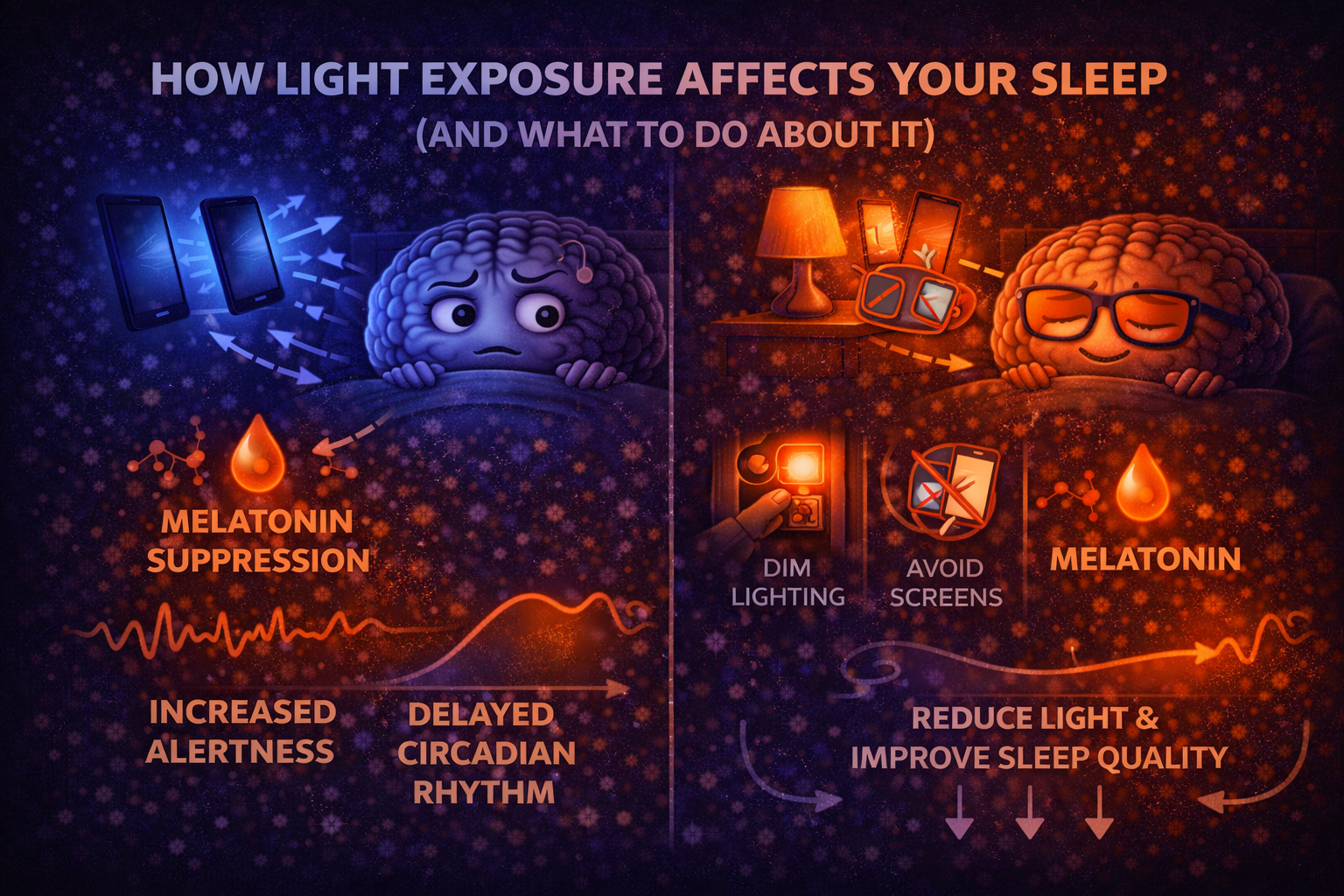
    How Light Exposure Affects Your Sleep (And What to Do About It)

    Why light is the strongest signal controlling your sleep–wake cycle

    Sleep is often treated as something that happens when the day ends. In reality, sleep is actively controlled by signals the brain receives long before bedtime. Among all of them, light is the most powerful.

    Light exposure determines when you feel alert, when you feel sleepy, and how deeply you sleep. Understanding how light affects sleep explains why modern environments make sleep harder—and what can be done to restore alignment.


    Light Is the Brain’s Primary Time Signal

    The brain uses light to tell time.

    Specialized cells in the eyes detect light and send timing signals directly to the brain’s central clock. This system evolved to synchronize the body with sunrise and sunset.

    When light exposure follows natural patterns, sleep timing feels effortless. When it doesn’t, sleep becomes fragmented and mistimed.


    How Morning Light Sets Your Sleep Schedule

    Morning light anchors your circadian rhythm.

    Exposure to bright light early in the day signals the brain that the day has begun. This timing cue starts the internal clock and determines when melatonin will be released later at night.

    Without sufficient morning light, the sleep schedule drifts later, making it harder to fall asleep at night.


    Why Evening Light Delays Sleep

    Evening light sends the wrong signal.

    Artificial light at night tells the brain that it is still daytime. This delays melatonin release, increases alertness, and shifts sleep timing later.

    The brighter and bluer the light, the stronger this delay becomes.


    Blue Light and Its Unique Impact on Sleep

    Blue light is especially disruptive.

    Screens, LED lighting, and modern devices emit high levels of blue light. This wavelength strongly suppresses melatonin and increases alertness.

    Even short exposure in the evening can delay sleep onset and reduce sleep quality.


    Light Exposure and Sleep Depth

    Light affects more than sleep timing.

    Improper light exposure reduces sleep depth and continuity. Fragmented sleep, reduced deep sleep, and disrupted REM sleep are common consequences of circadian misalignment caused by light.

    Sleep may feel long but unrefreshing.


    Why Indoor Living Confuses the Brain

    Modern light environments are unnatural.

    Indoor lighting during the day is often too dim, while evening lighting is too bright. This reverses natural light signals and confuses the circadian system.

    The brain struggles to distinguish day from night.


    How Irregular Light Exposure Disrupts Sleep Consistency

    Inconsistent light patterns prevent stabilization.

    When light exposure changes daily—late nights, screens, irregular schedules—the circadian rhythm cannot settle. Sleep timing becomes unpredictable.

    Consistency matters more than perfection.


    What to Do About Morning Light

    Prioritize early light exposure.

    Spending time outdoors in the morning or near a bright window helps anchor the circadian rhythm. Even on cloudy days, outdoor light is far stronger than indoor lighting.

    This single habit improves nighttime sleep quality.


    How to Reduce Harmful Evening Light

    Evening light should be minimized.

    Dimming lights, avoiding screens close to bedtime, and using warmer lighting reduces melatonin suppression. The goal is not darkness all day—but darkness at the right time.

    This allows the brain to prepare for sleep naturally.


    Do Blue Light Filters Actually Help?

    Blue light filters help—but only partially.

    They reduce the intensity of blue wavelengths but do not eliminate alerting effects entirely. Behavioral changes matter more than filters alone.

    Reducing exposure time is more effective than relying on software.


    Why Darkness Signals the Brain to Sleep

    Darkness is an active signal.

    As light fades, melatonin rises and the brain shifts into night mode. This transition supports sleep onset, depth, and emotional regulation.

    True darkness strengthens this signal.


    Long-Term Effects of Poor Light Management

    Chronic light misalignment accumulates.

    Over time, poor light exposure contributes to insomnia, fatigue, mood instability, and reduced cognitive performance. These effects develop gradually and are often overlooked.

    Correcting light exposure can reverse many of them.


    The Core Idea to Remember

    Light exposure controls sleep timing, depth, and quality.

    Morning light anchors the circadian rhythm. Evening light delays sleep and weakens recovery. Managing light is one of the most powerful, non-invasive ways to improve sleep.

    Sleep improves not when you force it—but when light cues are aligned with biology.


    Slug