Tag: sleep hygiene

  • How to Build a Sleep-Friendly Lifestyle

    How to Build a Sleep-Friendly Lifestyle

    How daily habits, light, and environment shape your brain’s ability to rest

    Sleep is not an isolated event. It is the result of biological processes that unfold throughout the entire day. The brain does not suddenly switch into sleep mode at night. Instead, it gradually transitions based on signals related to light exposure, behavior, timing, and environment.

    A sleep-friendly lifestyle is not built at bedtime. It is built through consistent signals that teach the brain when to be alert and when to disengage.

    Understanding these signals helps explain why sleep improves naturally when daily rhythms align with the brain’s expectations.


    Light Exposure Sets the Foundation

    Light is the most powerful regulator of the circadian rhythm, the internal system that controls sleep timing, hormone release, and alertness.

    Exposure to natural light early in the day strengthens the brain’s sense of timing. It reinforces the distinction between day and night, helping alertness rise during waking hours and decline in the evening.

    At night, the opposite becomes important.

    Artificial light, especially in dark environments, can delay the brain’s transition into sleep. Even low levels of light can signal alertness to parts of the nervous system that monitor the environment.

    Reducing light exposure helps remove this signal.
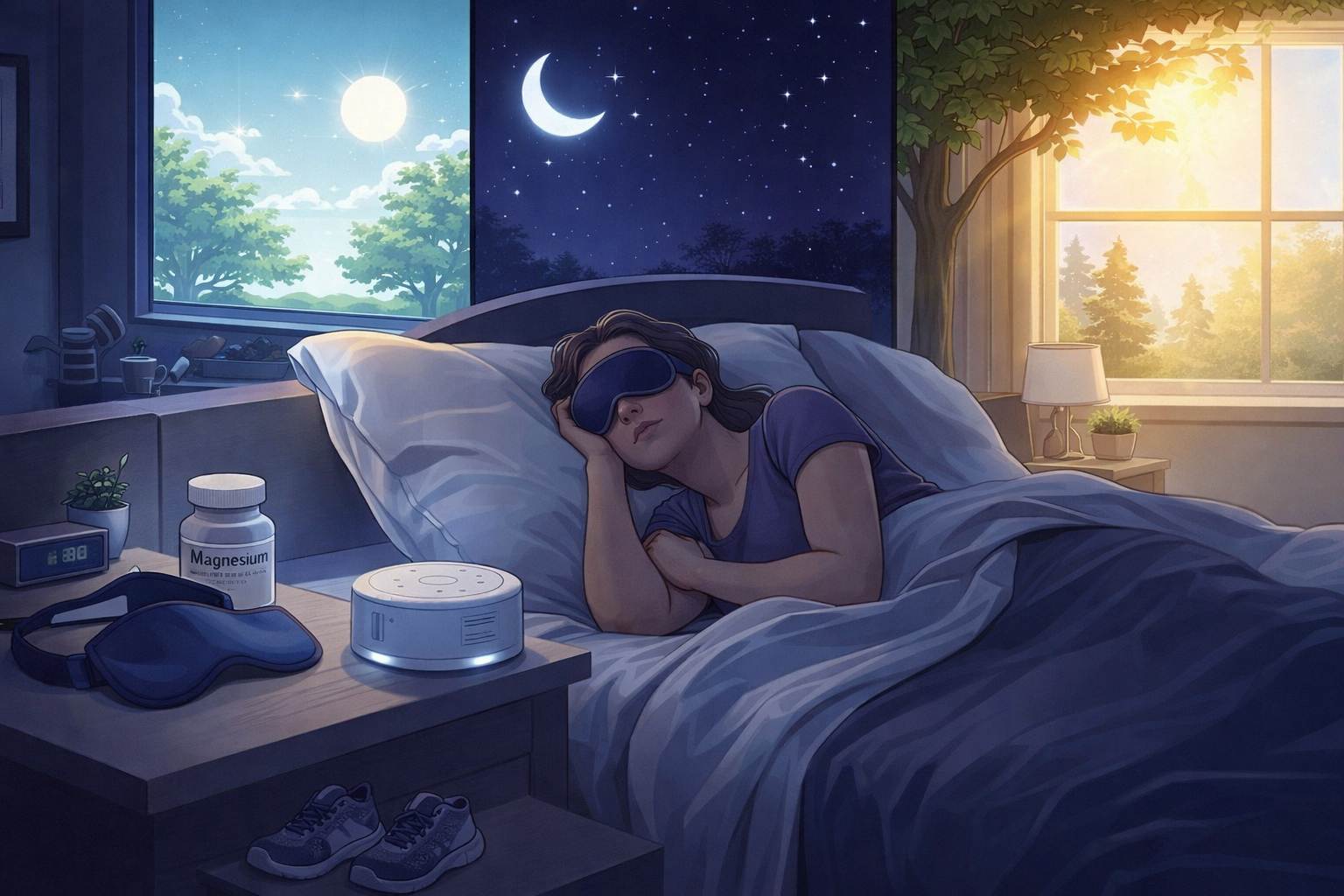
    Some people use a comfortable sleep mask to create complete darkness and minimize visual stimulation, supporting the brain’s transition into a sleep-ready state.


    Consistency Teaches the Brain When to Sleep

    The brain relies heavily on patterns.

    Going to sleep and waking at consistent times allows internal systems to anticipate rest. Hormones such as melatonin begin to rise predictably, and alertness naturally declines.

    Irregular timing weakens these signals.

    When sleep and wake times shift frequently, the brain cannot prepare efficiently. Sleep becomes less stable, even if total duration appears sufficient.

    Consistency strengthens sleep more effectively than occasional attempts to compensate with extra hours.


    The Environment Influences Nighttime Alertness

    The sleeping environment communicates safety or uncertainty to the brain.

    When the brain detects unpredictable sensory input, it maintains a level of alertness in order to monitor potential changes. This process occurs automatically and can interfere with the transition into deeper sleep.

    Stable sensory conditions reduce this monitoring response.

    Consistent background sound, such as white noise, can help mask sudden environmental changes and support a more stable sleep environment by reducing the brain’s need to remain vigilant.


    The Nervous System Must Shift Out of Alert Mode

    Sleep requires the nervous system to move away from problem-solving and threat detection.

    Stress, cognitive overload, and constant stimulation keep alertness systems active longer than necessary. Even when the body feels tired, the brain may remain engaged.

    A sleep-friendly lifestyle includes periods of reduced stimulation that allow alertness to decline gradually.

    Supporting this transition is partly physiological.
    Some people include magnesium glycinate in their evening routine, as it plays a role in nervous system regulation and relaxation processes involved in sleep readiness.


    Daily Behavior Shapes Nighttime Sleep

    Sleep quality is influenced by what happens during waking hours.

    Physical activity, mental engagement, and exposure to daylight strengthen sleep pressure, the biological drive that builds throughout the day.

    At the same time, excessive stimulation late in the evening can delay the brain’s ability to disengage.

    Sleep emerges more easily when the brain has experienced a clear distinction between active periods and rest periods.

    This distinction helps the nervous system recognize when sleep is appropriate.


    Sleep Is the Result of Rhythm, Not Effort

    One of the most common misconceptions is that sleep can be forced through effort.

    In reality, sleep occurs when alertness systems release control. This release depends on timing, environment, and nervous system state.

    A sleep-friendly lifestyle works by aligning these factors.

    Light exposure, consistent timing, environmental stability, and reduced stimulation create the conditions that allow sleep to emerge naturally.

    When these signals are present, the brain does not need to be forced into sleep. It follows the rhythm it was designed to maintain.


    The Core Idea to Remember

    Sleep is not built at night. It is built throughout the day.

    A lifestyle that supports natural rhythms teaches the brain when to be alert and when to rest. Over time, sleep becomes more stable, deeper, and more restorative — not because it is controlled, but because the conditions allow it to happen.
  • How to Reduce Light Exposure Before Bed

    How to Reduce Light Exposure Before Bed

    Practical ways to protect melatonin and prepare your brain for sleep

    Many sleep problems don’t begin at bedtime. They begin hours earlier, when light exposure quietly tells the brain to stay alert. By the time you try to sleep, the biological signals are already misaligned.

    Reducing light exposure before bed is one of the most effective, non-medical ways to improve sleep timing and quality. It doesn’t require extreme measures—only intentional changes that align evening light with biology.


    Why Evening Light Matters So Much

    Light is the brain’s strongest timing signal.

    As evening approaches, the brain expects light levels to fall. This drop allows melatonin to rise and initiates nighttime physiology. When light remains bright, the brain delays this transition.

    Reducing evening light is not about darkness all day—it’s about darkness at the right time.


    Start Reducing Light Earlier Than You Think

    Timing matters more than intensity alone.

    Reducing light exposure only at bedtime is often too late. The circadian system responds to cumulative light signals over several hours.

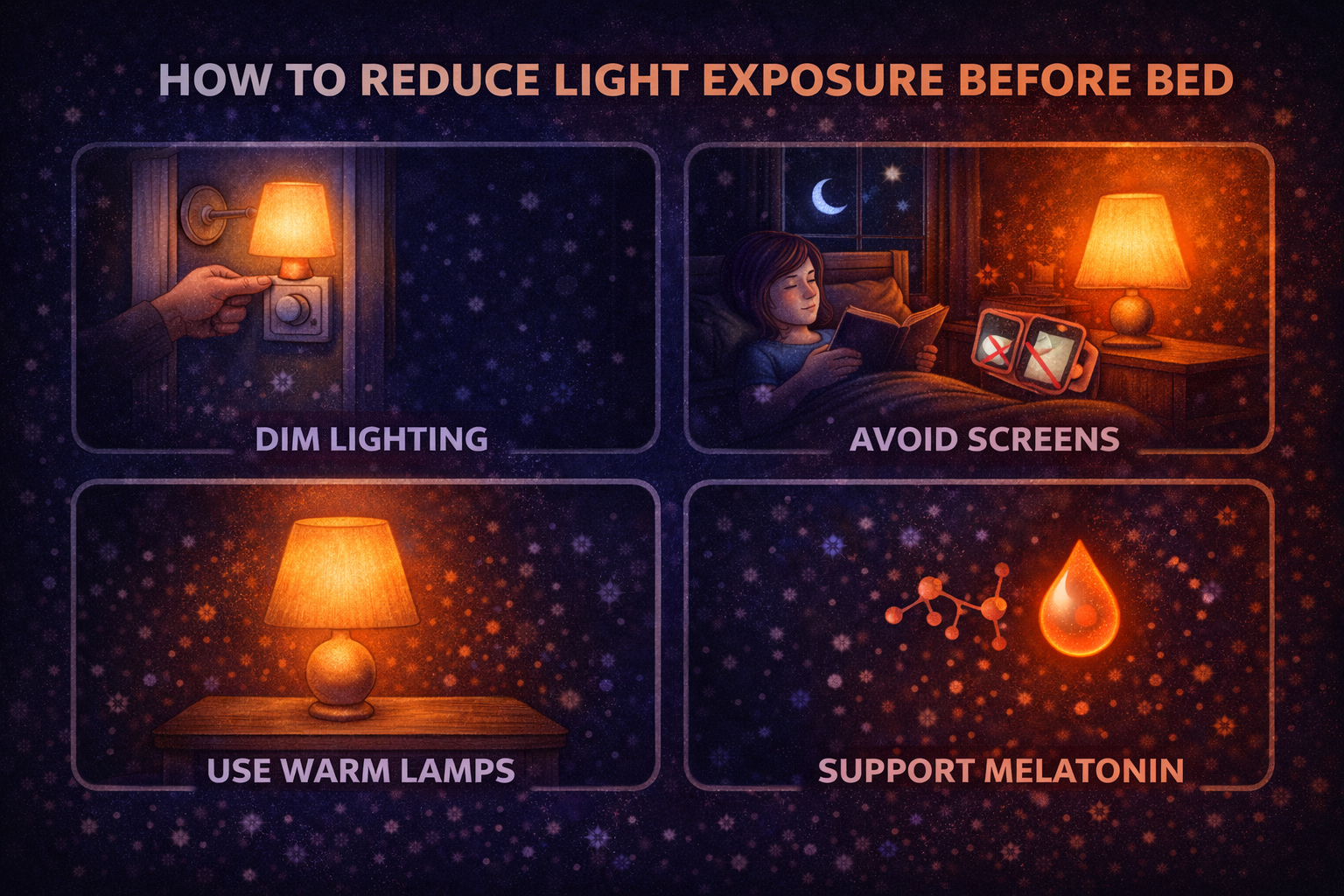
    Dimming lights 2–3 hours before bed is far more effective than sudden darkness right before sleep.


    Dim Indoor Lighting in the Evening

    Brightness signals alertness.

    Lowering overall room brightness in the evening tells the brain that night is approaching. This includes overhead lights, lamps, and decorative lighting.

    Using fewer light sources with softer intensity helps initiate the sleep transition.


    Use Warm, Low-Intensity Light Sources

    Color temperature affects melatonin.

    Warm light (amber, red, or soft yellow) interferes less with melatonin than cool white or blue light. Switching to warmer bulbs in the evening reduces circadian disruption.

    The goal is light that supports visibility without stimulating alertness.


    Limit Screen Exposure Before Bed

    Screens are concentrated light sources.

    Phones, tablets, computers, and televisions deliver bright, blue-rich light directly into the eyes. Reducing screen use in the evening significantly improves sleep readiness.

    When screens are unavoidable, shorter exposure and earlier cutoffs matter more than filters alone.


    Lower Screen Brightness and Use Night Modes

    Brightness amplifies disruption.

    Reducing screen brightness and enabling night modes lowers the alerting signal sent to the brain. While not a complete solution, these steps reduce harm when screens are used.

    Behavior still matters more than settings.


    Avoid Overhead Lighting at Night

    Overhead lights mimic daytime conditions.

    Turning off ceiling lights and relying on localized, low-level lighting reduces the brain’s perception of daytime. This supports melatonin release and relaxation.

    Smaller light sources create a more sleep-friendly environment.


    Create a “Light Curfew” Routine

    Consistency trains the brain.

    Establishing a routine where lights are dimmed at the same time each evening helps stabilize circadian timing. Over time, sleepiness begins to appear more naturally.

    Routine reduces the need for conscious effort.


    Use Darkness as a Signal, Not an Obstacle

    Darkness is biologically meaningful.

    As light fades, the brain shifts into night mode. Allowing this transition supports sleep onset, depth, and emotional regulation.

    Darkness is not the absence of activity—it is an active signal for sleep.


    Be Careful With Late-Night Bright Environments

    Light exposure outside the home counts.

    Bright stores, gyms, offices, and street lighting can delay sleep when encountered late at night. Being mindful of late-evening environments helps protect sleep timing.

    Even short exposures can shift circadian signals.


    Why Small Changes Make a Big Difference

    The circadian system is sensitive.

    You don’t need perfect darkness or extreme measures. Gradual, consistent reductions in evening light exposure are enough to improve sleep over time.

    Biology responds to patterns, not perfection.


    The Core Idea to Remember

    Reducing light exposure before bed helps the brain transition into sleep mode.

    By dimming lights, limiting screens, and prioritizing darkness at the right time, melatonin rises naturally and sleep becomes easier.

    Sleep improves not by forcing rest—but by removing the signals that keep the brain awake.