How darkness, comfort, and sensory reduction help the brain transition into deeper sleep
Light is one of the most powerful signals affecting the sleeping brain. Even when your eyes are closed, the nervous system continues to monitor the environment for signs of day or night.
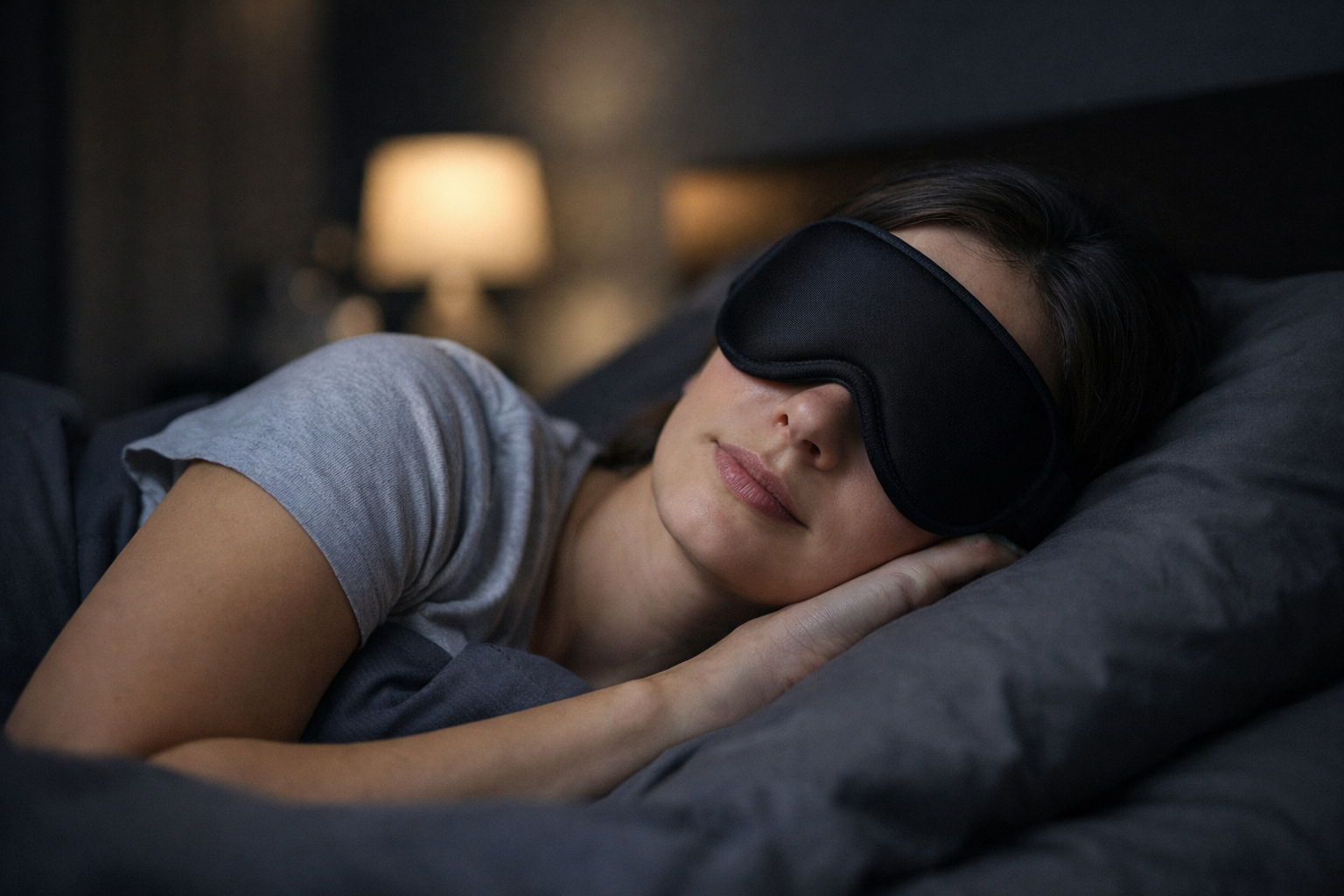
A sleep mask works by removing one of the brain’s primary alertness signals: light.
But not all sleep masks influence sleep in the same way. Their effectiveness depends on how well they support the brain’s ability to disengage from environmental monitoring.
Understanding what makes a sleep mask effective requires looking at how the brain responds to darkness, comfort, and sensory stability.
The Brain Never Fully Stops Monitoring the Environment
Sleep does not mean complete disconnection.
Even during sleep, parts of the brain continue scanning for sensory input. This process exists to protect you. Light, sound, and physical discomfort can all trigger micro-arousals — small activations that fragment sleep without fully waking you.
Light is particularly influential.
Even low levels of ambient light can reduce melatonin production and maintain a subtle level of alertness in the nervous system.
Complete darkness removes this signal, allowing deeper disengagement.
Some people use a sleep mask to create a consistently dark environment, especially when external light sources cannot be fully controlled.
Darkness Helps Stabilize Circadian Signaling
The circadian rhythm depends on clear signals.
Bright light tells the brain it is time to be alert. Darkness tells it that rest and recovery should begin.
When darkness is incomplete, this signal becomes weaker.
A sleep mask strengthens the contrast between day and night by ensuring that the visual system receives a consistent darkness signal, even if the surrounding environment changes.
This consistency helps support the brain’s natural transition into deeper sleep stages.
Comfort Influences Whether the Brain Can Fully Relax
Physical discomfort keeps the nervous system partially alert.
If a sleep mask creates pressure, irritation, or friction, the brain continues to monitor that sensation. Instead of promoting sleep, the mask becomes another source of stimulation.
Effective sleep masks minimize this effect.
Soft materials, stable positioning, and minimal pressure allow the brain to ignore the mask entirely. When the brain stops monitoring the body, it can disengage more completely.
Some people prefer masks designed to reduce pressure on the eyes while maintaining full darkness, helping the nervous system remain undisturbed throughout the night.
Stability Matters More Than Tightness
A common misconception is that tighter masks work better.
In reality, excessive tightness increases sensory input. The brain interprets pressure as a signal that requires monitoring.
A stable but gentle fit is more effective.
When the mask stays in place without creating pressure, the brain receives consistent darkness without additional stimulation.
This stability allows sleep to deepen naturally.
Sensory Reduction Helps the Brain Release Control
Sleep begins when the brain stops actively monitoring the environment.
Darkness is one of the strongest safety signals.
When visual input disappears, the brain can shift resources away from environmental awareness and toward internal recovery processes.
This shift supports deeper and more restorative sleep.
A sleep mask works not by forcing sleep, but by removing signals that interfere with the brain’s ability to disengage.
Sleep Masks Are Most Effective in Unstable Light Environments
Sleep masks are particularly helpful when environmental light cannot be controlled.
Common examples include:
-
Urban environments with street lighting
-
Early sunrise during summer months
-
Indoor light from electronics or adjacent rooms
-
Travel environments such as airplanes or hotels
In these situations, the brain receives inconsistent light signals.
Some people use a sleep mask to maintain darkness and protect the brain’s natural sleep rhythm when external conditions are unpredictable.
The Core Idea to Remember
A good sleep mask supports the brain’s ability to disengage.
It works by removing light, minimizing sensory stimulation, and allowing the nervous system to enter a stable state of rest.
Sleep improves not because the mask forces it, but because the brain receives clearer signals that it is safe to let go.
When darkness becomes consistent, the transition into sleep becomes easier, deeper, and more stable.