Tag: sleep pressure

  • Why You Sleep Better Some Nights Than Others

    Why You Sleep Better Some Nights Than Others

    How subtle shifts in timing, stress, and physiology change sleep quality from night to night

    Most people notice that sleep quality fluctuates. One night feels deep and effortless, the next feels light and fragmented — even when bedtime, duration, and routine appear unchanged.

    These differences are not random. Sleep quality varies because the brain’s readiness for sleep changes from day to day. Small shifts in circadian timing, stress load, sleep pressure, and environmental cues can significantly alter how restorative sleep feels.


    Sleep Quality Is Context-Dependent

    Sleep is not produced in isolation.

    Each night’s sleep reflects what happened during the day — physically, mentally, and biologically. Stress exposure, light timing, activity levels, and emotional load all influence how easily the brain can enter and maintain restorative sleep.

    Two nights with identical bedtimes can produce very different outcomes because the internal context is different.


    Circadian Alignment Changes Daily

    The circadian rhythm is stable, but not rigid.

    Light exposure, meal timing, and daily routines can subtly shift circadian signals from one day to the next. When sleep timing aligns well with these signals, sleep feels smooth and consolidated.

    When alignment is slightly off, sleep becomes lighter or more fragmented, even if the change is barely noticeable.


    Sleep Pressure Is Not the Same Every Night

    Sleep pressure builds based on how long and how intensely the brain has been awake.

    Days with high cognitive load, physical activity, or extended wakefulness increase sleep pressure, often leading to deeper sleep. Quieter or less demanding days may produce lower pressure, making sleep lighter.

    This variation explains why sleep can feel deeper after demanding days and lighter after low-activity days.


    Stress Fluctuations Shape Nighttime Arousal

    Stress levels vary daily, even when they feel “normal.”

    Small increases in emotional load, unresolved concerns, or anticipation can elevate nighttime arousal. This makes it harder for the brain to fully disengage, reducing sleep depth and increasing awakenings.

    On lower-stress days, the brain enters recovery mode more easily, improving sleep quality.


    The Role of Light and Evening Stimulation

    Evening light exposure is rarely identical from night to night.

    Screens, indoor lighting, and cognitive stimulation can delay the brain’s transition into sleep. Minor differences — such as extra screen time or later light exposure — can shift sleep onset and depth.

    These small changes accumulate into noticeable differences in sleep quality.


    Why Sleep Architecture Varies Nightly

    Sleep stages do not follow a fixed pattern every night.

    The distribution of deep sleep and REM sleep adapts to recent needs. After sleep loss or high stress, the brain may prioritize certain stages. On other nights, lighter sleep may dominate.

    This flexibility is normal, but it means that sleep quality naturally varies.


    Environmental Sensitivity Changes Over Time

    Sensitivity to noise, temperature, and comfort can fluctuate.

    On some nights, minor disturbances are ignored. On others, they trigger awakenings. This variability reflects changes in arousal threshold rather than environmental failure.

    As a result, identical environments can produce different sleep outcomes.


    Why “Doing Everything Right” Doesn’t Guarantee Good Sleep

    Many people expect perfect sleep when routines are followed precisely.

    However, sleep depends on internal readiness more than external rules. Even ideal habits cannot override biological variability from day to day.

    Good sleep increases the probability of restorative nights — it does not guarantee them.


    Why Variability Is Normal, Not a Problem

    Some night-to-night variation in sleep quality is healthy.

    The brain adapts sleep architecture to changing needs. Expecting identical sleep every night creates unnecessary frustration and increases sleep-related stress.

    Understanding variability reduces pressure and helps prevent overreaction to single bad nights.


    Improving the Odds of Better Nights

    The goal is not control, but consistency.

    Stable wake times, regular light exposure, and reduced evening stimulation increase the likelihood of good sleep across many nights. When the brain receives clear, repeated signals, sleep quality improves on average.

    Good sleep is a trend, not a single event.


    The Core Idea to Remember

    You sleep better some nights than others because sleep is shaped by daily biology, not rigid rules.

    Small changes in circadian alignment, stress, sleep pressure, and stimulation alter how the brain recovers each night. Variability is normal — patterns matter more than perfection.

    Understanding this makes sleep easier to support and less stressful to manage.

  • The Best Time to Go to Bed According to Biology

    The Best Time to Go to Bed According to Biology

    Why the “right” bedtime depends on internal timing, not fixed clock hours

    People often ask what time they should go to bed, expecting a precise answer like 10:00 p.m. or 11:00 p.m. Bedtime advice is frequently presented as a universal rule, disconnected from individual biology.

    In reality, the best time to go to bed is not defined by the clock alone. It is determined by biological timing — specifically, how your circadian rhythm, sleep pressure, and chronotype interact. When bedtime aligns with these internal processes, sleep feels easier and more restorative. When it does not, sleep becomes forced and fragmented.


    Why There Is No Universal Bedtime

    Human sleep timing varies widely.

    Some people feel naturally sleepy early in the evening, while others remain alert well into the night. These differences are not habits or preferences; they reflect biological variation in circadian timing.

    A bedtime that works perfectly for one person may be biologically inappropriate for another. This is why rigid bedtime rules often fail, even when followed consistently.


    The Role of the Circadian Rhythm in Bedtime

    The circadian rhythm regulates when the brain transitions from alertness to readiness for sleep.

    As evening approaches, alertness gradually declines, body temperature begins to drop, and hormonal signals shift toward rest. This process unfolds on a schedule determined by the internal clock, not by social expectations.

    The optimal bedtime occurs when this biological transition is already underway. Going to bed too early or too late disrupts this process, making sleep harder to initiate and less efficient.


    Sleep Pressure and Its Interaction With Timing

    Sleep pressure builds the longer you stay awake.

    This pressure works together with the circadian rhythm to determine when sleep feels natural. When both systems align — sufficient sleep pressure and appropriate circadian timing — sleep onset is smooth.

    If sleep pressure is high but circadian timing is misaligned, falling asleep can still be difficult. This explains why extreme fatigue does not always guarantee easy sleep.


    How Chronotype Influences Ideal Bedtime

    Chronotype plays a major role in determining when bedtime feels right.

    Earlier chronotypes experience the biological transition to sleep earlier in the evening, while later chronotypes reach this transition much later. Forcing an early bedtime on a later chronotype often results in prolonged sleep onset and restless nights.

    Understanding chronotype helps explain why advice about early bedtimes works for some people and consistently fails for others.


    Why Going to Bed Too Early Backfires

    Going to bed before the brain is biologically ready can increase alertness rather than reduce it.

    When bedtime is imposed too early, sleep pressure may not be sufficient, and circadian signals may still promote wakefulness. The result is lying awake, increased frustration, and heightened cognitive activity.

    Over time, this pattern can condition the brain to associate bedtime with wakefulness instead of rest.


    Why Going to Bed Too Late Has Consequences

    Delaying bedtime beyond the biological window also carries costs.

    Staying awake past the natural sleep onset period often reduces sleep quality and shortens total sleep time. Late bedtimes can interfere with deep sleep distribution and increase morning grogginess, especially when wake-up times are fixed.

    Chronic late bedtimes also shift circadian timing further, making it progressively harder to fall asleep earlier in the future.


    How Modern Life Disrupts Biological Bedtime

    Artificial lighting, screens, and irregular schedules interfere with the brain’s ability to recognize nighttime.

    Even when biological readiness for sleep emerges, bright light and mental stimulation can delay the transition. This creates a gap between internal signals and actual bedtime, weakening sleep quality.

    Modern environments often encourage later bedtimes without adjusting wake-up times, amplifying circadian misalignment.


    Finding the Right Bedtime for Your Biology

    The best bedtime is one that aligns with both sleep pressure and circadian timing.

    Rather than focusing on a specific hour, observing patterns is more effective. When sleep onset feels easy and consistent, timing is likely aligned. When sleep feels forced or delayed, timing may be off.

    Biological bedtime often reveals itself through repeated cues, not through rigid rules.


    Why Consistency Matters More Than the Exact Hour

    Once a biologically appropriate bedtime is found, consistency becomes critical.

    Regular sleep timing strengthens circadian alignment and improves sleep efficiency. Small variations are tolerable, but frequent large shifts confuse the internal clock and reduce sleep quality.

    The brain values predictability more than precision.


    The Core Idea to Remember

    The best time to go to bed is not a fixed hour on the clock. It is the moment when biology signals readiness for sleep.

    When bedtime aligns with circadian timing, sleep feels natural and restorative. When it does not, effort increases and quality declines.

    Understanding bedtime through biology rather than rules allows sleep to become easier, deeper, and more reliable over time.

  • The Science Behind Feeling Rested

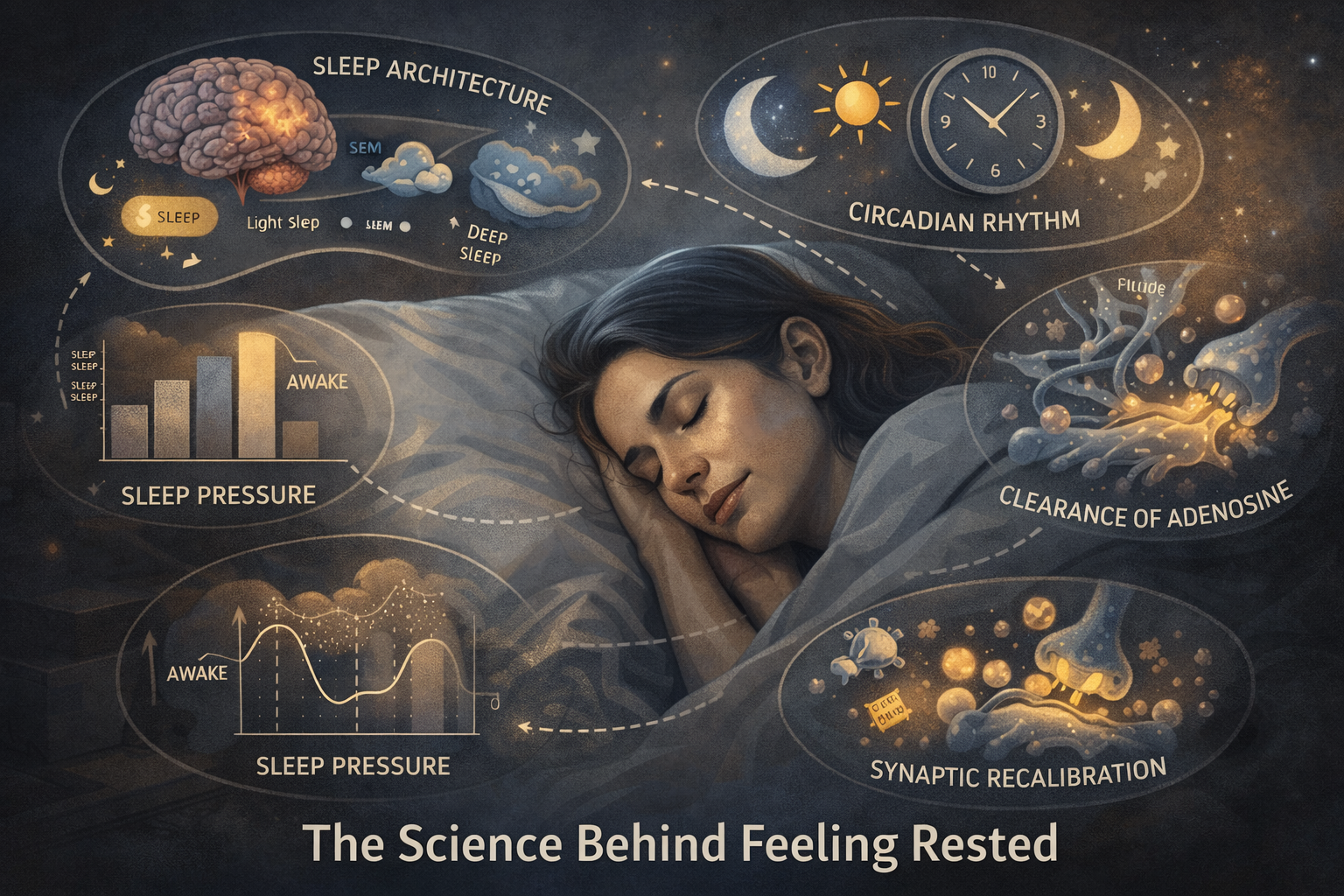
    The Science Behind Feeling Rested

    Feeling Rested Is Not the Same as Sleeping Longer

    Many people assume that feeling rested is simply a matter of sleeping more hours. In reality, the sensation of being refreshed after sleep is determined by how sleep is structured and regulated, not just by its duration.

    Sleep is a complex biological process governed by interacting systems that control timing, depth, continuity, and recovery. When these systems align, people wake up feeling mentally clear, physically restored, and emotionally stable. When they do not, sleep may be long but unrefreshing.

    Understanding the science behind feeling rested requires looking beyond the clock.


    The Role of Sleep Architecture

    Sleep is organized into repeating cycles, each composed of different stages, including light sleep, deep sleep, and REM sleep. This structure is known as sleep architecture.

    A typical night includes four to six cycles, each lasting about 90 minutes. Feeling rested depends on:

    • Sufficient deep sleep early in the night

    • Adequate REM sleep in later cycles

    • Smooth transitions between stages

    • Minimal fragmentation or awakenings

    Deep sleep supports physical recovery, metabolic regulation, and immune function. REM sleep plays a central role in emotional processing, learning, and memory integration. Disruption of either stage can significantly reduce perceived restfulness, even if total sleep time appears adequate.


    Sleep Pressure and Homeostatic Balance

    Another key factor behind feeling rested is sleep pressure, a biological drive that builds during wakefulness and dissipates during sleep.

    The longer a person stays awake, the stronger the pressure to sleep becomes. High-quality sleep efficiently reduces this pressure. Poor-quality or fragmented sleep does not.

    When sleep pressure is not adequately relieved, individuals may wake up feeling:

    • Heavy or mentally foggy

    • Physically sluggish

    • Unmotivated or irritable

    This explains why sleeping longer does not always improve how rested someone feels. The issue is not the amount of sleep, but how effectively sleep reduces accumulated pressure.


    Circadian Rhythm Alignment

    The circadian rhythm is the internal biological clock that regulates sleep timing, hormone release, body temperature, and alertness. Feeling rested strongly depends on sleeping in alignment with this rhythm.

    When sleep occurs at biologically appropriate times:

    • Sleep stages organize more efficiently

    • Hormonal recovery processes function optimally

    • Morning alertness improves

    Circadian misalignment—such as irregular bedtimes, late-night light exposure, or social jet lag—can reduce sleep quality even when total sleep duration remains unchanged.

    People who sleep “enough” hours but at inconsistent times often report waking unrefreshed because their internal clock and sleep schedule are out of sync.


    The Importance of Sleep Continuity

    Sleep continuity refers to how uninterrupted sleep remains throughout the night. Frequent micro-awakenings, even if not remembered, fragment sleep architecture and reduce its restorative value.

    Causes of reduced continuity include:

    • Stress and cognitive hyperarousal

    • Environmental noise or light

    • Sleep-disordered breathing

    • Irregular sleep schedules

    Fragmented sleep limits time spent in deeper stages and prevents smooth progression through cycles. As a result, the brain and body fail to complete key recovery processes, leading to persistent fatigue despite adequate time in bed.


    Neurochemical Recovery During Sleep

    Feeling rested is also tied to neurochemical balance.

    During sleep, especially deep sleep, the brain reduces levels of neuromodulators associated with wakefulness, such as norepinephrine and cortisol. This downregulation allows neural circuits to reset sensitivity and restore efficiency.

    At the same time, sleep supports:

    • Synaptic recalibration

    • Energy restoration at the cellular level

    • Clearance of metabolic byproducts

    If sleep is shallow or repeatedly interrupted, these neurochemical processes remain incomplete, contributing to the sensation of mental exhaustion upon waking.


    Why Subjective Rest Does Not Always Match Objective Sleep

    Interestingly, how rested someone feels does not always correlate perfectly with measured sleep duration. This disconnect occurs because subjective restfulness reflects integrated recovery, not isolated metrics.

    Two individuals may both sleep seven hours, yet experience very different outcomes depending on:

    • Sleep timing

    • Sleep depth distribution

    • Fragmentation

    • Stress levels

    This is why wearable data alone cannot fully explain why someone feels rested or not. Biological context matters more than raw numbers.


    The Accumulation Effect of Chronic Disruption

    When sleep architecture, circadian alignment, and continuity are repeatedly disrupted, the feeling of being rested gradually disappears. Over time, the nervous system adapts to chronic sleep strain, lowering baseline alertness and recovery capacity.

    This adaptation can make fatigue feel “normal,” masking the extent of underlying sleep debt. Restfulness only returns when sleep quality is consistently restored, not through occasional recovery nights.


    The Key Takeaway

    Feeling rested is not the result of a single factor. It emerges when sleep architecture, sleep pressure, circadian timing, and continuity work together.

    More sleep does not automatically mean better recovery. High-quality, well-timed, and uninterrupted sleep is what allows the brain and body to complete the processes that produce true rest.

    Understanding this distinction is essential for addressing persistent fatigue and restoring long-term sleep health.