Why sleep continuity depends on nervous system stability, circadian timing, and environmental predictability
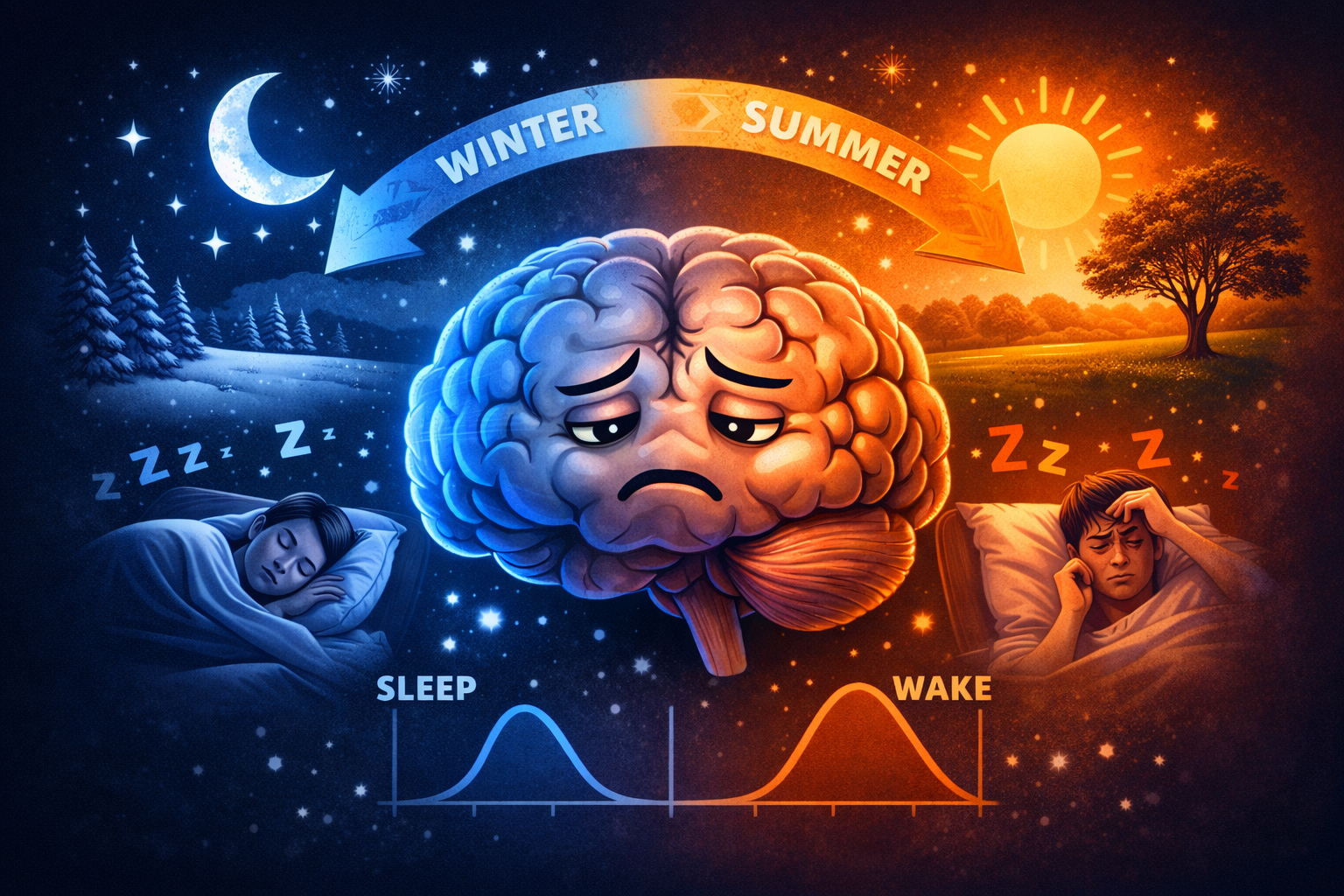
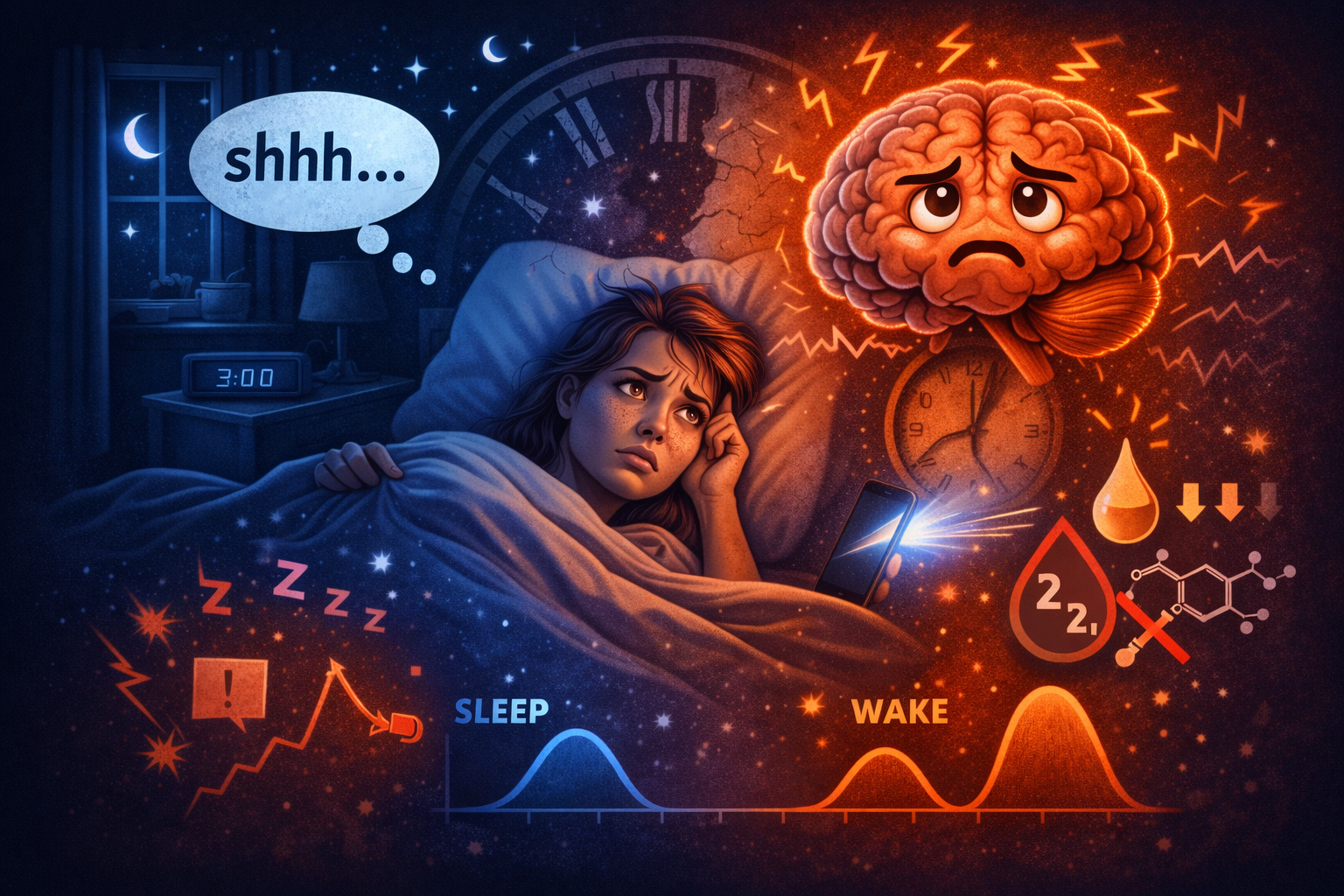
Waking up during the night is not unusual. Brief awakenings are part of normal sleep physiology and often go unnoticed. The problem arises when the brain remains alert and cannot return easily to sleep.
Staying asleep requires more than falling asleep successfully. It depends on whether the nervous system can maintain a stable disengaged state over several hours.
Sleep continuity reflects how safe and predictable the brain perceives the internal and external environment to be.
Understanding why sleep becomes fragmented reveals why uninterrupted sleep cannot be forced, but must be supported.
Sleep Is a Dynamic Biological Process
Sleep unfolds in cycles.
Each cycle moves through lighter and deeper stages before returning briefly toward wakefulness. These transitions allow the brain to regulate recovery, memory consolidation, and physiological balance.
During these transition points, the brain becomes more sensitive to disturbances.
If alertness systems activate too strongly, full awakening occurs.
If stability is maintained, the brain returns naturally into deeper sleep.
Sleep continuity depends on how easily the brain can pass through these vulnerable transition periods.
The Nervous System Must Remain in a Low-Alert State
The nervous system constantly evaluates safety.
Even during sleep, parts of the brain monitor for unexpected changes. This protective mechanism helps ensure survival but can interfere with sleep stability.
Stress, uncertainty, and physiological activation increase baseline alertness.
When alertness remains elevated, the brain becomes more likely to fully awaken during normal sleep transitions.
Stable sleep requires the nervous system to remain in a low-alert condition throughout the night.
Circadian Timing Stabilizes Sleep Structure
The circadian rhythm does not only determine when sleep begins. It also helps maintain sleep once it has started.
Hormonal signals, body temperature, and neural activity follow predictable patterns across the night.
When sleep timing is irregular, these patterns become less stable.
This instability increases the likelihood of nighttime awakenings.
Consistent sleep timing strengthens circadian coordination and improves sleep continuity.
Environmental Predictability Supports Continuous Sleep
The brain responds strongly to sensory changes.
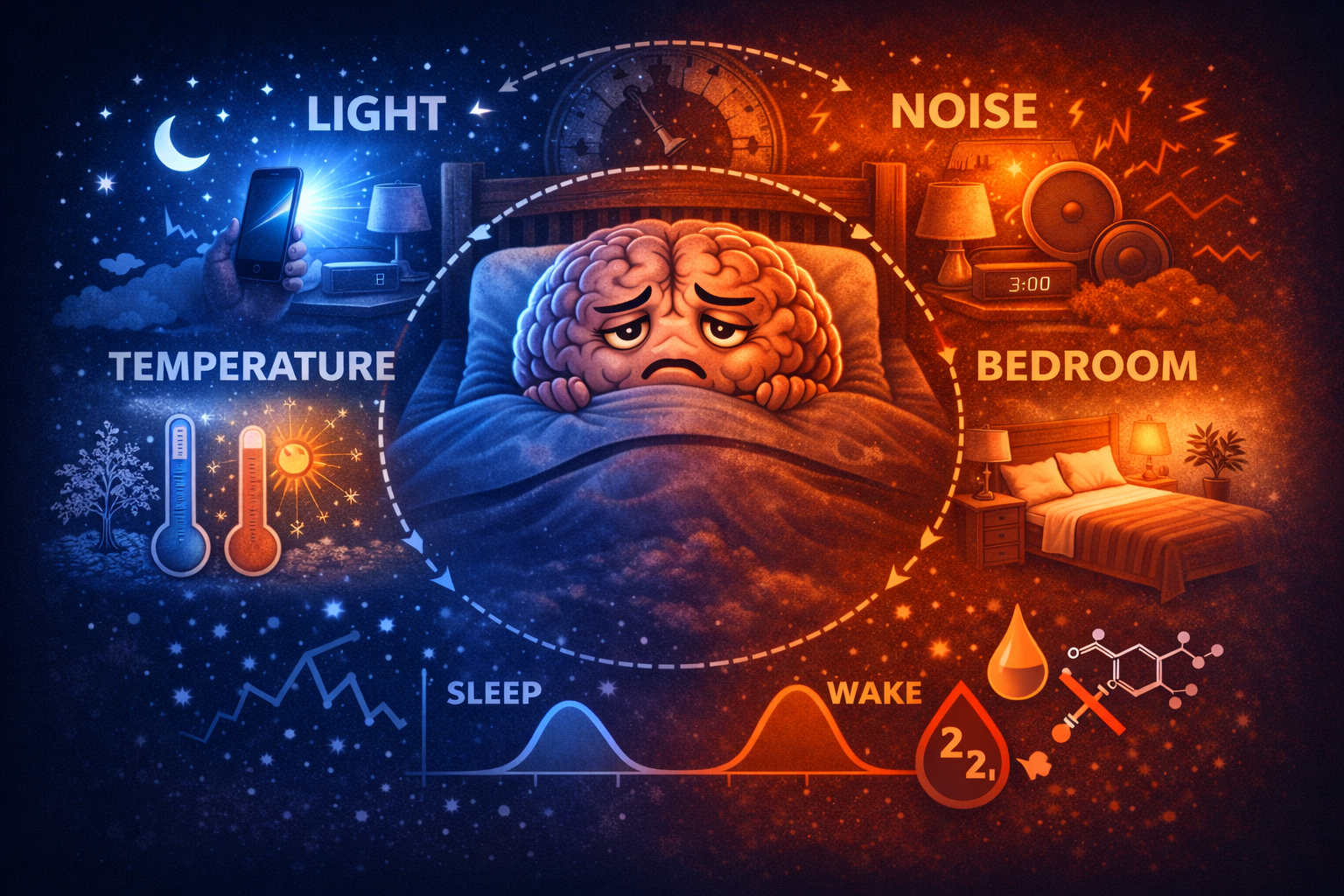
Light, sound, and physical discomfort can all trigger awakenings.
Even subtle variations can activate monitoring systems.
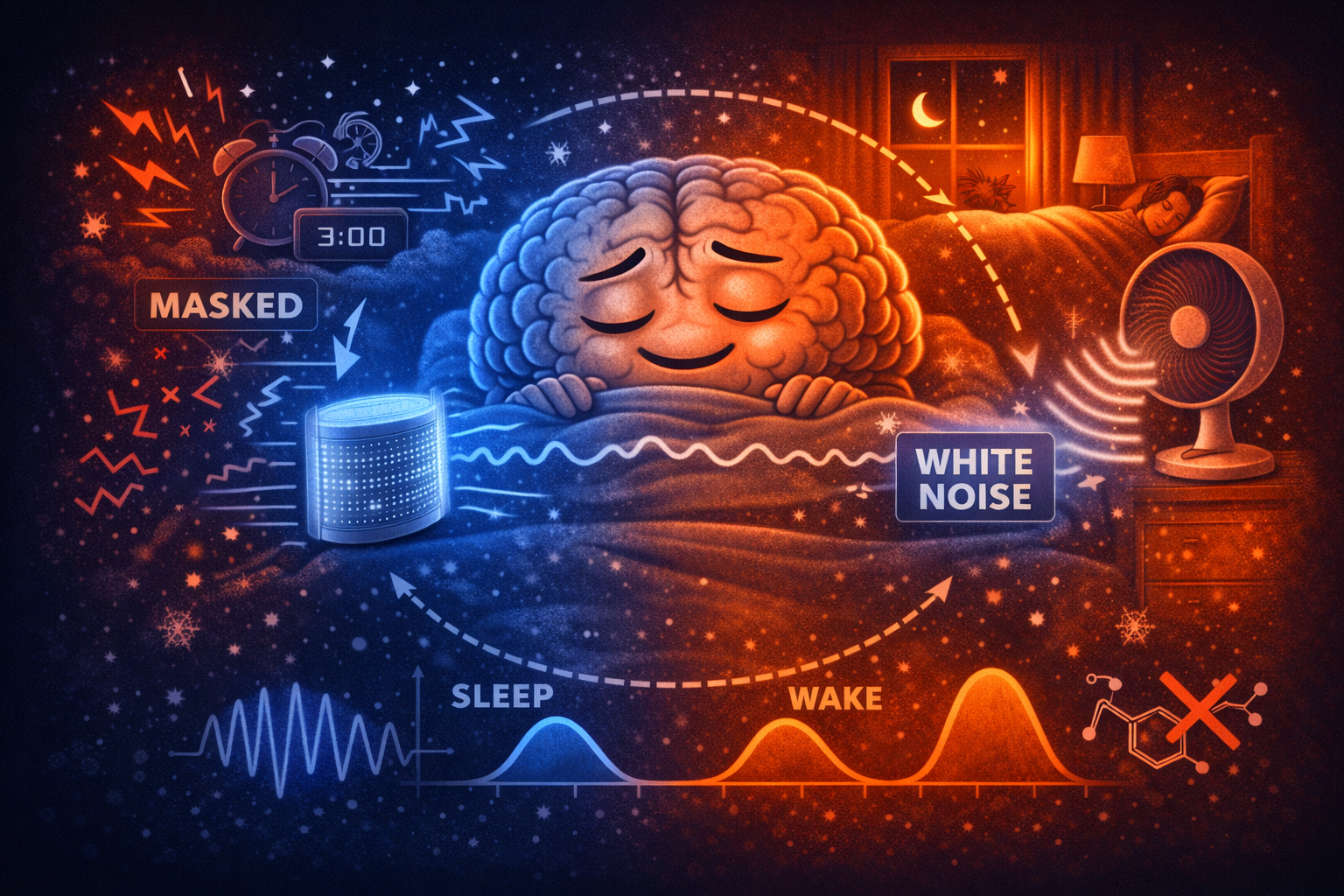
A stable sensory environment allows the brain to remain disengaged.
Some people use environmental stabilization strategies, such as maintaining darkness and reducing unpredictable sensory input, to help the brain remain in sleep mode throughout the night.
When the environment remains consistent, the brain is less likely to interrupt sleep.
Hyperarousal Is One of the Most Common Causes of Night Wakings
Hyperarousal refers to an elevated state of nervous system activation.
This state can persist even when the body is physically tired.
The brain remains prepared to respond rather than recover.
This condition increases sensitivity to internal and external signals.
As a result, normal sleep transitions are more likely to trigger awakening.
Reducing hyperarousal allows sleep cycles to continue naturally.
Sleep Continuity Depends on Stability, Not Effort
Trying to control sleep after waking often increases alertness.
Effort signals importance to the brain.
This reinforces wakefulness.
Sleep resumes when alertness decreases naturally.
This process cannot be forced.
Sleep continuity emerges when the brain no longer perceives a need to remain alert.
The Core Idea to Remember
Staying asleep requires the brain to remain disengaged.
Sleep becomes continuous when circadian timing, nervous system state, and environmental stability support recovery rather than monitoring.
Uninterrupted sleep is not something the brain produces through effort, but something it allows when conditions remain stable.