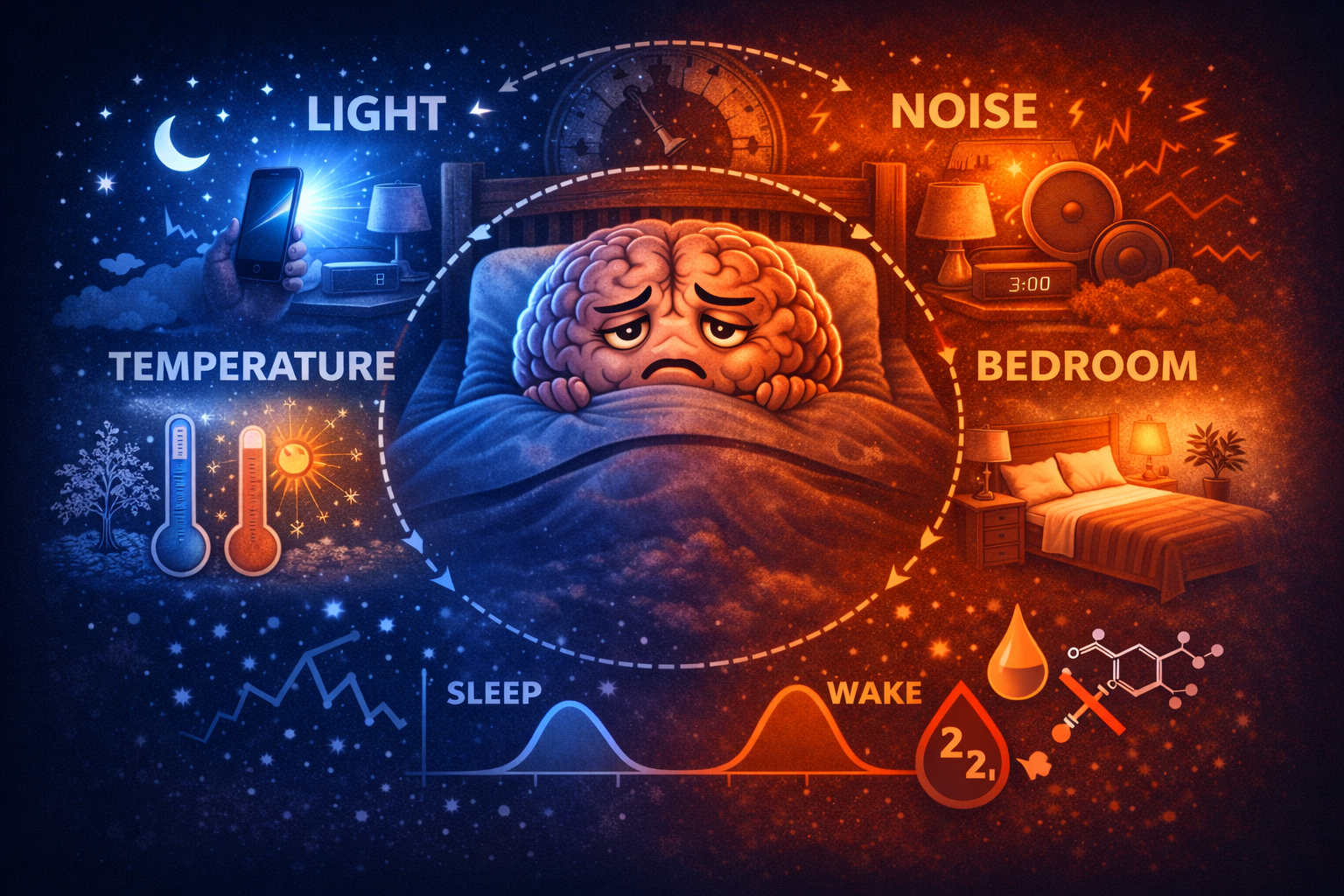
How light, sound, temperature, and stability determine how well you sleep
Sleep quality is often blamed on stress, routines, or sleep duration. While these factors matter, the environment in which you sleep plays a decisive role in how deep, continuous, and restorative your sleep actually is.
The brain does not sleep in isolation. It constantly interprets environmental signals to decide whether it is safe to fully shut down. When the sleep environment is supportive, sleep deepens naturally. When it is disruptive, sleep becomes lighter and fragmented—even if you spend enough time in bed.
Sleep Quality Depends on Environmental Safety Signals
The sleeping brain remains responsive.
Even during deep sleep, the brain monitors the environment for potential threats. Conditions that signal safety allow sleep to deepen. Conditions that signal unpredictability or discomfort keep alert systems partially active.
Sleep quality reflects how safe the environment feels to the brain.
Light as a Primary Environmental Factor
Light strongly influences sleep quality.
Darkness supports melatonin stability, sleep depth, and continuity. Light exposure at night weakens these processes, even at low intensity.
A sleep environment that remains dark throughout the night allows the brain to remain in recovery mode.
Sound and Sleep Fragmentation
Noise affects sleep even without full awakenings.
Sudden or irregular sounds trigger micro-arousals that fragment sleep stages. Over time, this reduces deep sleep and REM sleep, making rest feel shallow.
A stable auditory environment supports uninterrupted sleep.
Temperature and Physical Comfort
Temperature determines sleep depth.
A slightly cool environment helps the body lower core temperature, which is required for deep sleep. Excess warmth increases awakenings and lightens sleep.
Thermal stability matters more than exact temperature values.
Environmental Consistency Matters More Than Perfection
Predictability supports sleep.
The brain adapts best to environments that remain stable across the night. Frequent changes in light, sound, or temperature prevent full adaptation.
Consistency allows sleep stages to remain uninterrupted.
Bedding, Materials, and Sensory Input
Physical contact influences sleep.
Breathable bedding, comfortable surfaces, and non-irritating materials reduce sensory stimulation. Discomfort increases micro-arousals even when it does not cause waking.
Sleep quality improves when sensory input is minimized.
Why the Bedroom Should Be a Dedicated Sleep Space
Context matters to the brain.
When the bedroom is associated with rest, darkness, and calm, sleep onset and depth improve. When it is associated with stimulation or work, alert systems remain active.
Environmental association shapes sleep readiness.
Environmental Stress and Emotional Regulation
Sleep environment affects emotional recovery.
Poor environments increase stress signaling and reduce emotional processing during sleep. Over time, this contributes to mood instability and fatigue.
Supportive environments enhance emotional regulation overnight.
Why Sleep Duration Alone Is Misleading
Long sleep does not guarantee quality sleep.
If the environment disrupts sleep stages, recovery remains incomplete. People may sleep for many hours yet feel unrefreshed.
Quality depends on environmental support, not time alone.
Small Environmental Improvements Add Up
Sleep responds to cumulative changes.
Minor improvements—dimming lights, reducing noise, improving airflow—compound over time. The brain responds to patterns rather than dramatic interventions.
Gradual optimization produces lasting benefits.
Building a Sleep-Supportive Environment
A good sleep environment supports biology.
Darkness, quiet, coolness, and stability work together to signal safety. When these conditions align, sleep becomes deeper and more efficient without effort.
The environment does the work for you.
The Core Idea to Remember
Sleep quality depends heavily on the environment because the brain sleeps best when conditions signal safety and stability.
Light, sound, temperature, and consistency determine how deeply and continuously you sleep. Without environmental support, sleep becomes lighter and less restorative—even if duration is adequate.
Improving sleep quality often begins by improving the space where sleep happens.
