Tag: sleep timing

  • How Light at Night Confuses the Brain

    How Light at Night Confuses the Brain

    Why nighttime light disrupts circadian signals and keeps the brain in daytime mode

    The brain relies on light to understand time. When light appears at night, that understanding breaks down. Even when you feel tired, nighttime light sends a conflicting message: stay alert.

    This confusion doesn’t just delay sleep. It disrupts circadian timing, weakens sleep depth, and interferes with emotional and cognitive recovery. Light at night tells the brain the wrong story about where it is in the day–night cycle.


    The Brain Uses Light to Tell Time

    Timekeeping is biological.

    Specialized light-sensitive cells in the eyes send continuous timing information to the brain’s internal clock. This clock uses light to coordinate sleep, hormones, alertness, and metabolism.

    At night, the brain expects darkness. Light breaks that expectation.


    Why Nighttime Light Sends Conflicting Signals

    Light equals daytime to the brain.

    When light is detected at night, the brain interprets it as extended day—even if the intensity is modest. This delays the transition into night mode and keeps alert systems active.

    The result is biological confusion, not relaxation.


    How Light at Night Suppresses Melatonin

    Melatonin signals night.

    In darkness, melatonin rises and coordinates nighttime physiology. Light exposure at night suppresses melatonin, delaying sleepiness and reducing sleep quality.

    Even brief exposure can disrupt this signal.


    Light at Night and Increased Alertness

    Nighttime light actively stimulates the brain.

    It increases reaction time, focus, and neural activity. This makes the brain feel “on” when it should be powering down.

    Feeling tired does not override this signal.


    Why the Brain Can’t Ignore Nighttime Light

    The circadian system is automatic.

    It does not respond to intention or habit. Light signals are processed reflexively, bypassing conscious control.

    This is why “just relaxing” under bright light doesn’t prepare the brain for sleep.


    Light at Night and Circadian Delay

    Repeated nighttime light shifts the internal clock.

    Sleepiness appears later, wake times drift, and circadian alignment weakens. Over time, this creates chronic misalignment between biological night and social schedules.

    Sleep becomes inconsistent and fragmented.


    How Nighttime Light Affects Sleep Depth

    Confusion persists after sleep begins.

    Light exposure at night reduces deep sleep and disrupts REM sleep by weakening circadian signaling. Sleep may be long but shallow.

    Recovery processes remain incomplete.


    Why Dim Light Still Matters

    Low light is not neutral.

    The circadian system is highly sensitive, especially in the evening and at night. Dim room lighting, screens, or ambient glow can still interfere with nighttime signaling.

    Small signals add up biologically.


    Light at Night and Emotional Regulation

    Nighttime light affects more than sleep.

    By disrupting sleep architecture, light at night increases emotional reactivity, stress sensitivity, and mood instability the next day.

    The effects accumulate gradually.


    Why Modern Environments Increase Confusion

    Modern nights are rarely dark.

    Streetlights, indoor lighting, devices, and illuminated screens keep light present far beyond sunset. The brain receives mixed signals every night.

    This constant ambiguity prevents full nighttime shutdown.


    Reducing Confusion Through Darkness

    Clarity restores sleep biology.

    Reducing light exposure at night allows the brain to recognize night properly. Melatonin rises, alert systems quiet down, and sleep deepens naturally.

    Darkness resolves confusion.


    Why Nighttime Darkness Improves Sleep Without Effort

    When signals are clear, sleep follows.

    The brain doesn’t need to be forced into rest—it needs accurate information. Darkness provides that information.

    Sleep improves when the brain understands that night has truly arrived.


    The Core Idea to Remember

    Light at night confuses the brain because it sends a daytime signal during biological night.

    By suppressing melatonin, increasing alertness, and delaying circadian timing, nighttime light keeps the brain partially awake even when tired.

    Sleep improves when nighttime light is reduced and darkness is allowed to do its job.
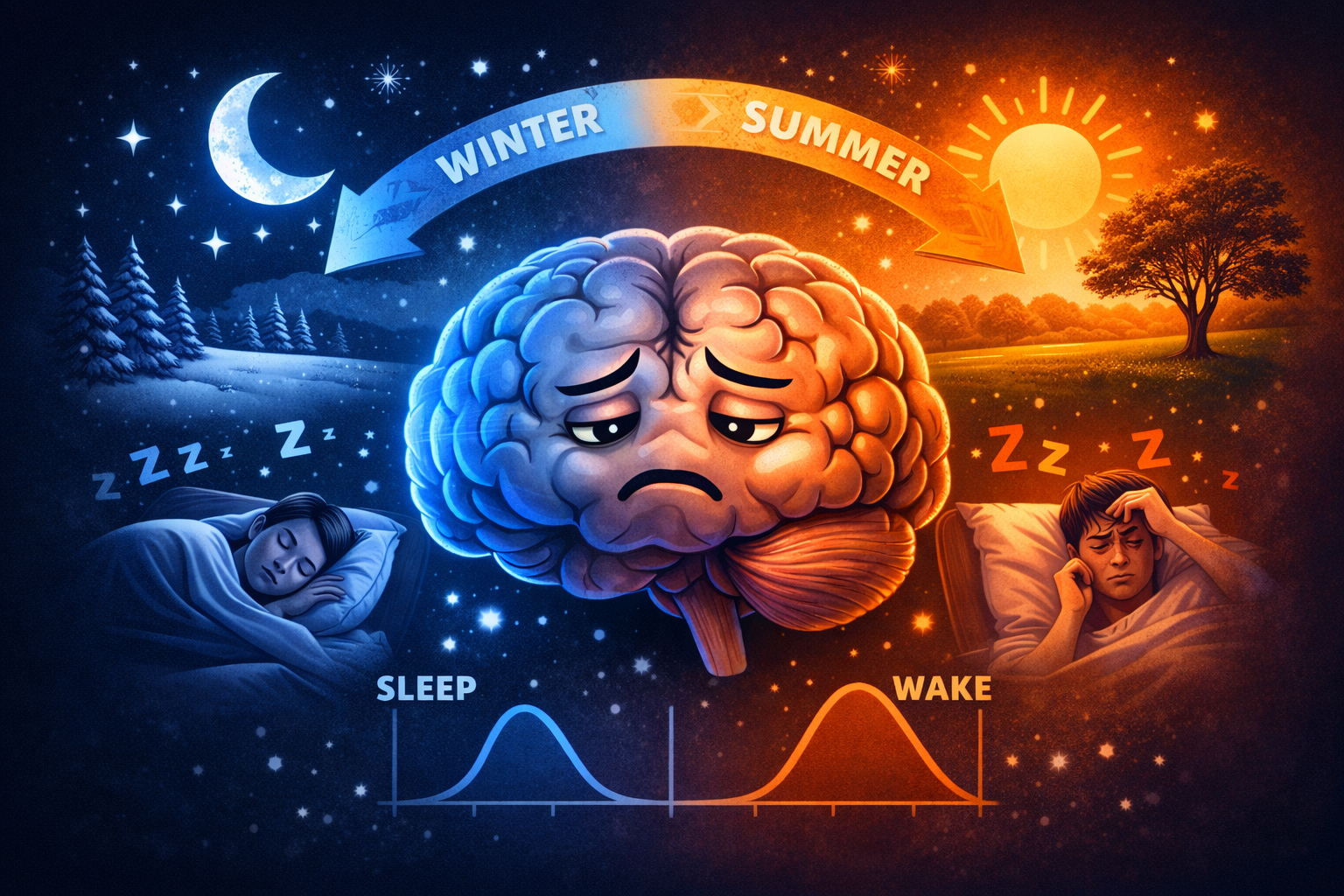
  • How Seasonal Light Changes Affect Sleep

    How Seasonal Light Changes Affect Sleep

    Why shifts in daylight across the year change sleep timing, depth, and energy

    Sleep does not exist in a vacuum. It is regulated by the same environmental signals that change with the seasons—most importantly, light. As daylight hours expand and contract across the year, the brain’s internal clock adjusts. When these adjustments are smooth, sleep adapts naturally. When they are abrupt or poorly supported, sleep becomes unstable.

    Seasonal light changes influence when you feel sleepy, how deeply you sleep, and how rested you feel during the day. Understanding this relationship explains why sleep often feels different in summer and winter—and how to reduce seasonal disruption.


    The Circadian Clock Tracks Seasonal Light

    The circadian system evolved to track day length.

    Specialized light-sensitive cells in the eyes signal not only time of day, but also changes in daylight duration. Longer days and shorter nights in summer, and the reverse in winter, provide information that subtly shifts sleep timing.

    These seasonal cues influence melatonin timing and sleep architecture.


    Why Longer Summer Days Delay Sleep

    Extended evening light pushes the clock later.

    In summer, light persists into the evening, delaying melatonin release. This makes it harder to feel sleepy at the usual time, even when wake time remains fixed.

    The result is later sleep onset and, often, reduced sleep duration.


    How Winter Darkness Changes Sleep Pressure

    Short days increase nighttime signaling.

    In winter, reduced daylight and earlier darkness can advance melatonin release. Sleepiness may appear earlier, and some people experience longer sleep duration.

    However, insufficient daytime light can weaken circadian strength, leading to fragmented or low-quality sleep.


    Seasonal Light and Sleep Depth

    Light patterns affect sleep structure.

    Irregular or insufficient daylight exposure reduces circadian amplitude, which can weaken deep sleep and REM sleep. This is common in winter when outdoor light exposure drops.

    Sleep may become longer but less restorative.


    Why Energy Levels Shift With the Seasons

    Energy follows circadian alignment.

    Seasonal changes in light alter alertness rhythms. Reduced winter light can lower daytime alertness, while late summer light can push alertness too late into the night.

    These shifts affect mood, focus, and perceived sleep quality.


    Daytime Light Exposure Matters More in Winter

    Bright daytime light strengthens the clock.

    In winter, indoor living and weak daylight reduce circadian input. Without strong daytime light, the brain struggles to differentiate day from night.

    Increasing outdoor exposure helps stabilize sleep timing and depth.


    Why Seasonal Transitions Are Disruptive

    The problem is change, not the season itself.

    Transitions between seasons—especially spring and fall—require circadian adjustment. Sudden shifts in light timing can temporarily disrupt sleep.

    Consistency and gradual adaptation reduce these effects.


    Seasonal Light and Early Morning Awakenings

    Changing dawn timing affects wake signals.

    Earlier summer sunrises can trigger earlier awakenings, while late winter sunrises may delay morning alertness.

    Managing morning light exposure helps regulate wake timing.


    Artificial Light Can Worsen Seasonal Misalignment

    Artificial light blunts natural seasonal cues.

    Excess evening light in summer and insufficient daytime light in winter flatten circadian signals. This prevents proper seasonal adjustment.

    Supporting natural light patterns improves adaptation.


    How to Support Sleep Across Seasons

    Seasonal alignment requires intentional light management.

    Increasing outdoor light during the day—especially in winter—and reducing evening light exposure year-round helps stabilize the circadian rhythm.

    The goal is clear contrast between day and night, regardless of season.


    Why Sleep Quality Changes Feel Personal—but Aren’t

    Seasonal sleep changes are biological.

    Feeling “off” during certain times of year is often due to light-driven circadian shifts, not personal failure or poor habits.

    Understanding this reduces frustration and supports adjustment.


    The Core Idea to Remember

    Seasonal light changes affect sleep by shifting circadian timing and strength.

    Longer summer days delay sleep, while winter darkness can weaken circadian signals without adequate daytime light. Sleep quality improves when light exposure is managed to support clear day–night contrast.

    Sleep adapts best when biology—not the calendar—is supported.

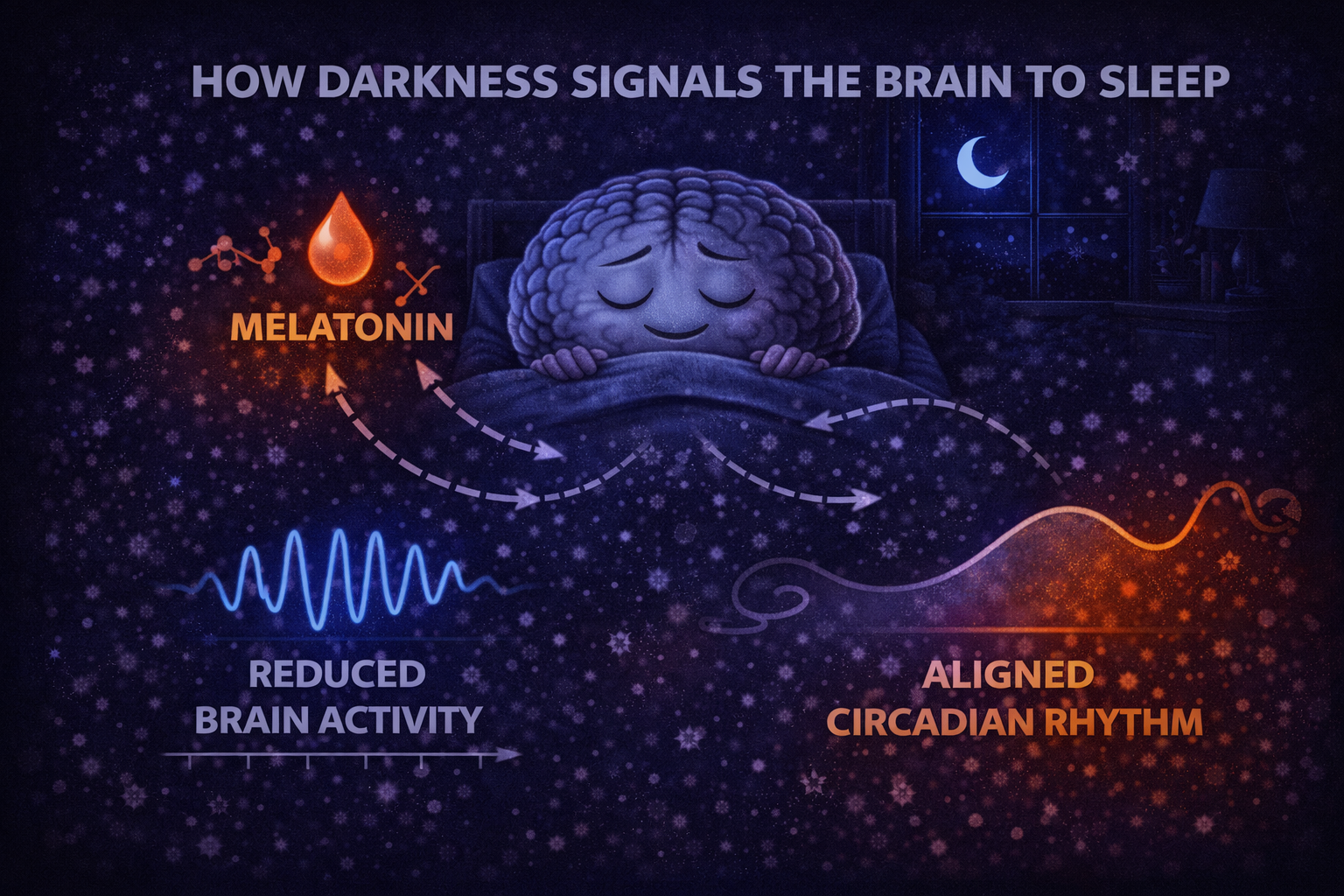
  • How Darkness Signals the Brain to Sleep

    How Darkness Signals the Brain to Sleep

    Why the absence of light actively triggers the body’s night mode

    Sleep does not start simply because the body is tired. It starts when the brain receives a clear biological signal that night has arrived. That signal is darkness.

    Darkness is not passive. It actively tells the brain to shut down alert systems, release sleep-promoting hormones, and shift the body into recovery mode. When darkness is delayed or incomplete, sleep timing and quality suffer—even if exhaustion is present.


    Darkness Is a Biological Signal, Not Just a Lack of Light

    The brain treats darkness as information.

    Specialized light-sensitive cells in the eyes continuously monitor ambient light levels. When light decreases, signaling to the brain’s internal clock changes. This shift tells the brain that daytime has ended.

    Darkness initiates a chain reaction that prepares the body for sleep.


    How Darkness Triggers Melatonin Release

    Melatonin is the hormone of night.

    As darkness increases, melatonin production rises. This hormone signals sleepiness, lowers body temperature, and coordinates nighttime physiology.

    Without sufficient darkness, melatonin release is delayed or suppressed, making sleep harder to initiate.


    Darkness and the Circadian Clock

    The circadian rhythm relies on contrast.

    Bright light during the day and darkness at night create a clear day–night pattern. Darkness anchors the nighttime phase of this rhythm.

    When darkness is weak or inconsistent, circadian timing becomes unstable, leading to delayed sleep and fragmented rest.


    Why Even Dim Light Can Disrupt the Signal

    The circadian system is highly sensitive.

    Low levels of light in the evening—especially blue or white light—can weaken the darkness signal. The brain interprets this as extended daytime.

    As a result, alertness remains elevated and sleep onset is delayed.


    Darkness and Sleep Depth

    Darkness affects more than sleep onset.

    Proper darkness supports deeper sleep stages, including deep sleep and REM sleep. When darkness is incomplete, sleep may feel lighter and less restorative.

    Sleep duration may be adequate, but quality declines.


    How Darkness Reduces Nighttime Alertness

    Alertness systems depend on light.

    In darkness, neural alerting systems quiet down. Heart rate slows, stress signaling decreases, and the brain shifts into recovery mode.

    Light exposure at night prevents this shutdown, keeping the brain partially alert.


    Why Modern Environments Reduce Darkness

    Modern life minimizes natural darkness.

    Streetlights, indoor lighting, screens, and ambient glow keep light levels elevated well into the night. This blurs the boundary between day and night.

    The brain struggles to identify when sleep should begin.


    Darkness and Emotional Regulation

    Darkness supports emotional recovery.

    By enabling melatonin release and proper sleep architecture, darkness indirectly improves emotional regulation, stress recovery, and mood stability.

    Poor darkness contributes to emotional reactivity and mental fatigue.


    Why Total Darkness Is Not Always Necessary

    The goal is clarity, not perfection.

    The brain does not require absolute darkness, but it does require a clear reduction in light. Gradual dimming and consistency matter more than extreme measures.

    Biology responds to patterns, not absolutes.


    How to Strengthen the Darkness Signal

    Supporting darkness means reducing competing signals.

    Dimming lights, avoiding screens late at night, and minimizing ambient glow allow the brain to recognize nighttime properly.

    Consistency trains the circadian system to respond more effectively.


    Why Darkness Makes Falling Asleep Easier

    When darkness is clear, sleep feels natural.

    Sleepiness increases without effort, alertness fades, and the body transitions smoothly into rest. This reflects proper biological signaling rather than forced relaxation.

    Darkness tells the brain that it is safe to sleep.


    The Core Idea to Remember

    Darkness signals the brain to sleep by activating nighttime biology.

    By allowing melatonin to rise and alert systems to quiet down, darkness initiates sleep timing, depth, and recovery. Without sufficient darkness, the brain delays sleep even when tired.

    Sleep improves not by forcing rest—but by allowing darkness to do its job.

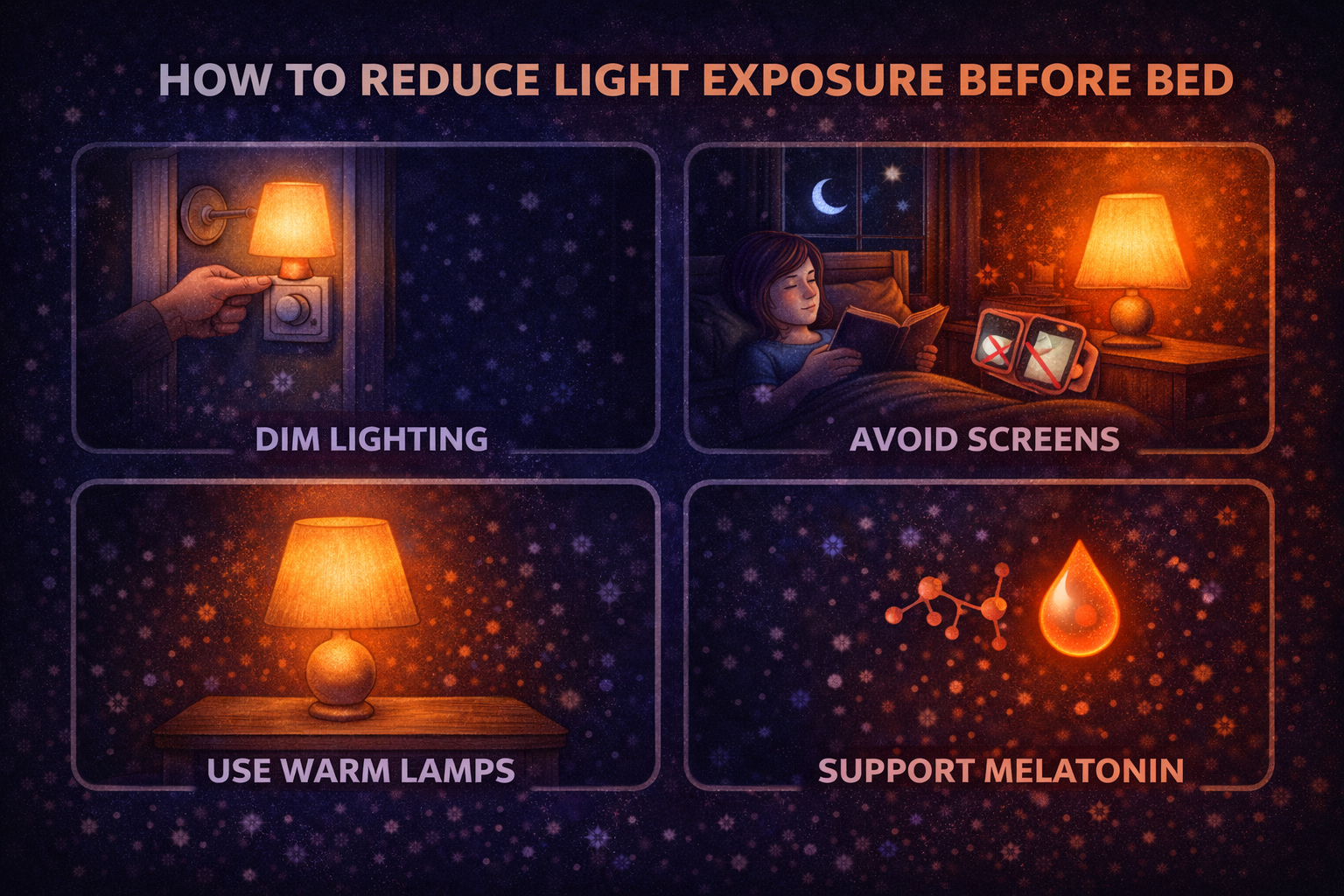
  • How to Reduce Light Exposure Before Bed

    How to Reduce Light Exposure Before Bed

    Practical ways to protect melatonin and prepare your brain for sleep

    Many sleep problems don’t begin at bedtime. They begin hours earlier, when light exposure quietly tells the brain to stay alert. By the time you try to sleep, the biological signals are already misaligned.

    Reducing light exposure before bed is one of the most effective, non-medical ways to improve sleep timing and quality. It doesn’t require extreme measures—only intentional changes that align evening light with biology.


    Why Evening Light Matters So Much

    Light is the brain’s strongest timing signal.

    As evening approaches, the brain expects light levels to fall. This drop allows melatonin to rise and initiates nighttime physiology. When light remains bright, the brain delays this transition.

    Reducing evening light is not about darkness all day—it’s about darkness at the right time.


    Start Reducing Light Earlier Than You Think

    Timing matters more than intensity alone.

    Reducing light exposure only at bedtime is often too late. The circadian system responds to cumulative light signals over several hours.

    Dimming lights 2–3 hours before bed is far more effective than sudden darkness right before sleep.


    Dim Indoor Lighting in the Evening

    Brightness signals alertness.

    Lowering overall room brightness in the evening tells the brain that night is approaching. This includes overhead lights, lamps, and decorative lighting.

    Using fewer light sources with softer intensity helps initiate the sleep transition.


    Use Warm, Low-Intensity Light Sources

    Color temperature affects melatonin.

    Warm light (amber, red, or soft yellow) interferes less with melatonin than cool white or blue light. Switching to warmer bulbs in the evening reduces circadian disruption.

    The goal is light that supports visibility without stimulating alertness.


    Limit Screen Exposure Before Bed

    Screens are concentrated light sources.

    Phones, tablets, computers, and televisions deliver bright, blue-rich light directly into the eyes. Reducing screen use in the evening significantly improves sleep readiness.

    When screens are unavoidable, shorter exposure and earlier cutoffs matter more than filters alone.


    Lower Screen Brightness and Use Night Modes

    Brightness amplifies disruption.

    Reducing screen brightness and enabling night modes lowers the alerting signal sent to the brain. While not a complete solution, these steps reduce harm when screens are used.

    Behavior still matters more than settings.


    Avoid Overhead Lighting at Night

    Overhead lights mimic daytime conditions.

    Turning off ceiling lights and relying on localized, low-level lighting reduces the brain’s perception of daytime. This supports melatonin release and relaxation.

    Smaller light sources create a more sleep-friendly environment.


    Create a “Light Curfew” Routine

    Consistency trains the brain.

    Establishing a routine where lights are dimmed at the same time each evening helps stabilize circadian timing. Over time, sleepiness begins to appear more naturally.

    Routine reduces the need for conscious effort.


    Use Darkness as a Signal, Not an Obstacle

    Darkness is biologically meaningful.

    As light fades, the brain shifts into night mode. Allowing this transition supports sleep onset, depth, and emotional regulation.

    Darkness is not the absence of activity—it is an active signal for sleep.


    Be Careful With Late-Night Bright Environments

    Light exposure outside the home counts.

    Bright stores, gyms, offices, and street lighting can delay sleep when encountered late at night. Being mindful of late-evening environments helps protect sleep timing.

    Even short exposures can shift circadian signals.


    Why Small Changes Make a Big Difference

    The circadian system is sensitive.

    You don’t need perfect darkness or extreme measures. Gradual, consistent reductions in evening light exposure are enough to improve sleep over time.

    Biology responds to patterns, not perfection.


    The Core Idea to Remember

    Reducing light exposure before bed helps the brain transition into sleep mode.

    By dimming lights, limiting screens, and prioritizing darkness at the right time, melatonin rises naturally and sleep becomes easier.

    Sleep improves not by forcing rest—but by removing the signals that keep the brain awake.

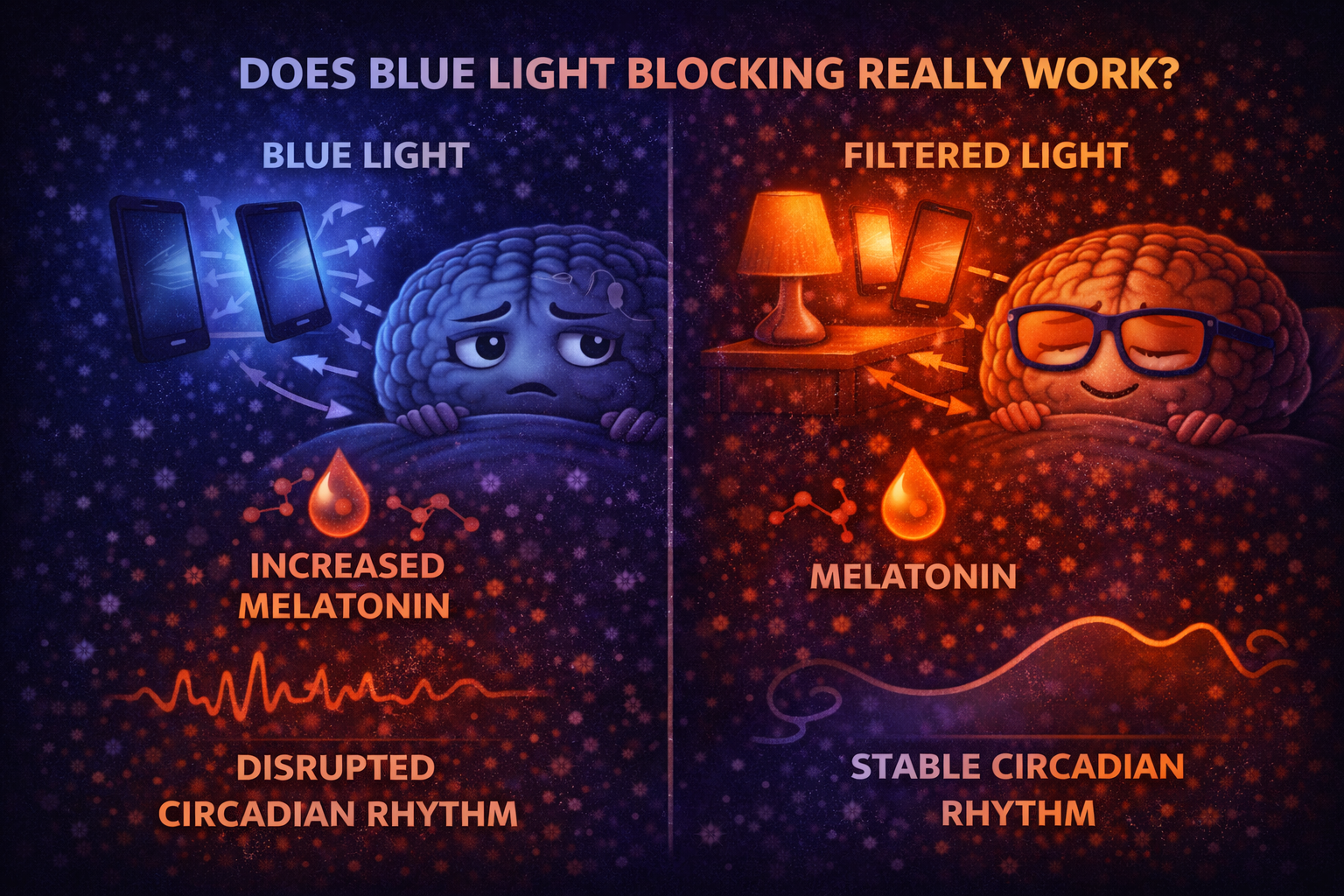
  • Does Blue Light Blocking Really Work?

    Does Blue Light Blocking Really Work?

    What blue light blocking can and cannot do for your sleep

    Blue light blocking glasses, screen filters, and “night mode” settings are widely promoted as simple solutions for sleep problems. Many people use them hoping to fall asleep faster and sleep more deeply.

    But the reality is more nuanced. Blue light blocking can help—but it is not a complete fix. Its effectiveness depends on timing, behavior, and expectations. Understanding what blue light blocking actually does clarifies when it works and when it doesn’t.


    Why Blue Light Blocking Exists

    Blue light delays sleep by signaling daytime to the brain.

    Blocking blue wavelengths reduces melatonin suppression and limits circadian delay. This is the biological rationale behind blue light blocking tools.

    They are designed to weaken one specific signal—not to replace healthy sleep habits.


    What Blue Light Blocking Does Well

    Blue light blocking reduces one major disruptor.

    By filtering blue wavelengths, these tools decrease the alerting signal sent to the brain in the evening. This can support earlier melatonin release and make sleepiness feel more natural.

    For people exposed to screens at night, this reduction can be meaningful.


    Why Blue Light Blocking Is Not a Complete Solution

    Blocking blue light does not eliminate alertness.

    Brightness, screen content, mental stimulation, and timing still affect sleep. Even filtered light can delay sleep if exposure is long or intense.

    The brain responds to more than just wavelength.


    Screens Still Stimulate the Brain

    Visual content matters.

    Reading messages, watching videos, or engaging emotionally activates cognitive and emotional systems regardless of light color. This stimulation delays sleep independently of blue light.

    Blue light blocking does not prevent mental arousal.


    How Effective Are Blue Light Blocking Glasses?

    Glasses can reduce circadian disruption—but with limits.

    They are most helpful when worn consistently in the evening and combined with dim lighting. Their effect is smaller if screens are used intensively late at night.

    They work best as a support, not a solution.


    What About Screen Night Modes and Filters?

    Software filters help—but partially.

    Night modes reduce blue wavelengths but often maintain brightness and contrast. This still stimulates the visual system and the brain.

    Reducing screen time matters more than adjusting screen color alone.


    Why Timing Matters More Than Filtering

    Light timing is more important than light filtering.

    Blocking blue light late at night helps less than reducing exposure earlier in the evening. Prolonged exposure—even filtered—can still delay sleep.

    The circadian system responds to cumulative signals.


    Blue Light Blocking and Sleep Quality

    Blue light blocking mainly affects sleep timing.

    It may help you fall asleep earlier but does not guarantee deeper sleep. Sleep depth depends on overall circadian alignment, stress levels, and sleep continuity.

    Blocking blue light improves conditions—but doesn’t replace biology.


    When Blue Light Blocking Is Most Useful

    It works best when:

    • evening screen use is unavoidable

    • lighting is already dim

    • bedtime is consistent

    • exposure time is limited

    In these conditions, blue light blocking can meaningfully support sleep.


    When Blue Light Blocking Has Little Effect

    It helps less when:

    • screens are used intensively late at night

    • lighting is bright

    • sleep timing is irregular

    • stress and arousal remain high

    In these cases, behavior matters more than filtering.


    The Bigger Picture: Light Management

    Blue light is only part of the story.

    Sleep improves when light exposure is aligned across the entire day—bright mornings, dim evenings, consistent timing.

    Blocking blue light without managing overall light habits has limited impact.


    The Core Idea to Remember

    Blue light blocking works—but only within limits.

    It can reduce melatonin suppression and support earlier sleep onset, but it does not eliminate alertness, stimulation, or poor sleep habits.

    Blue light blocking is a tool—not a cure. Sleep improves most when light exposure, timing, and behavior work together.

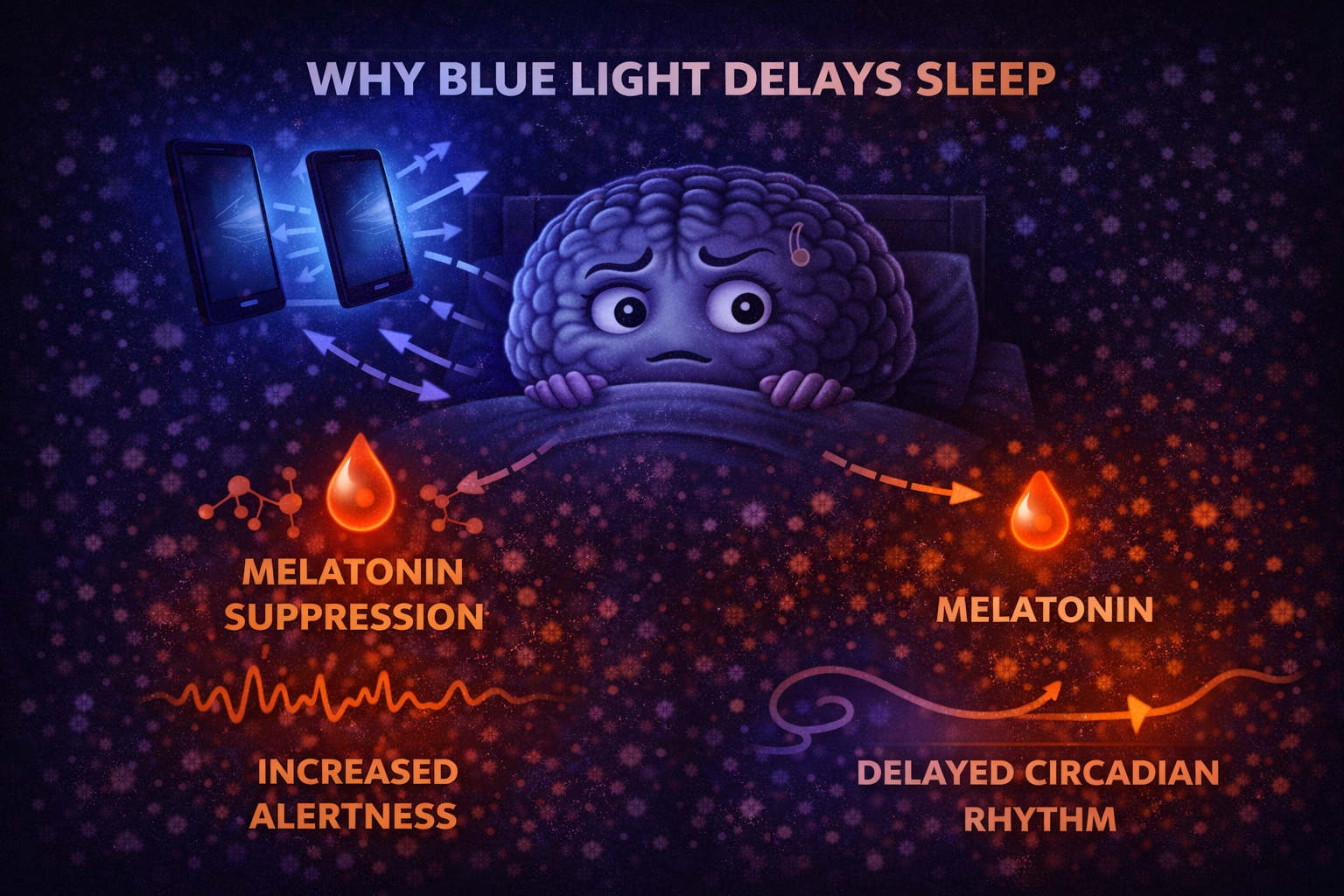
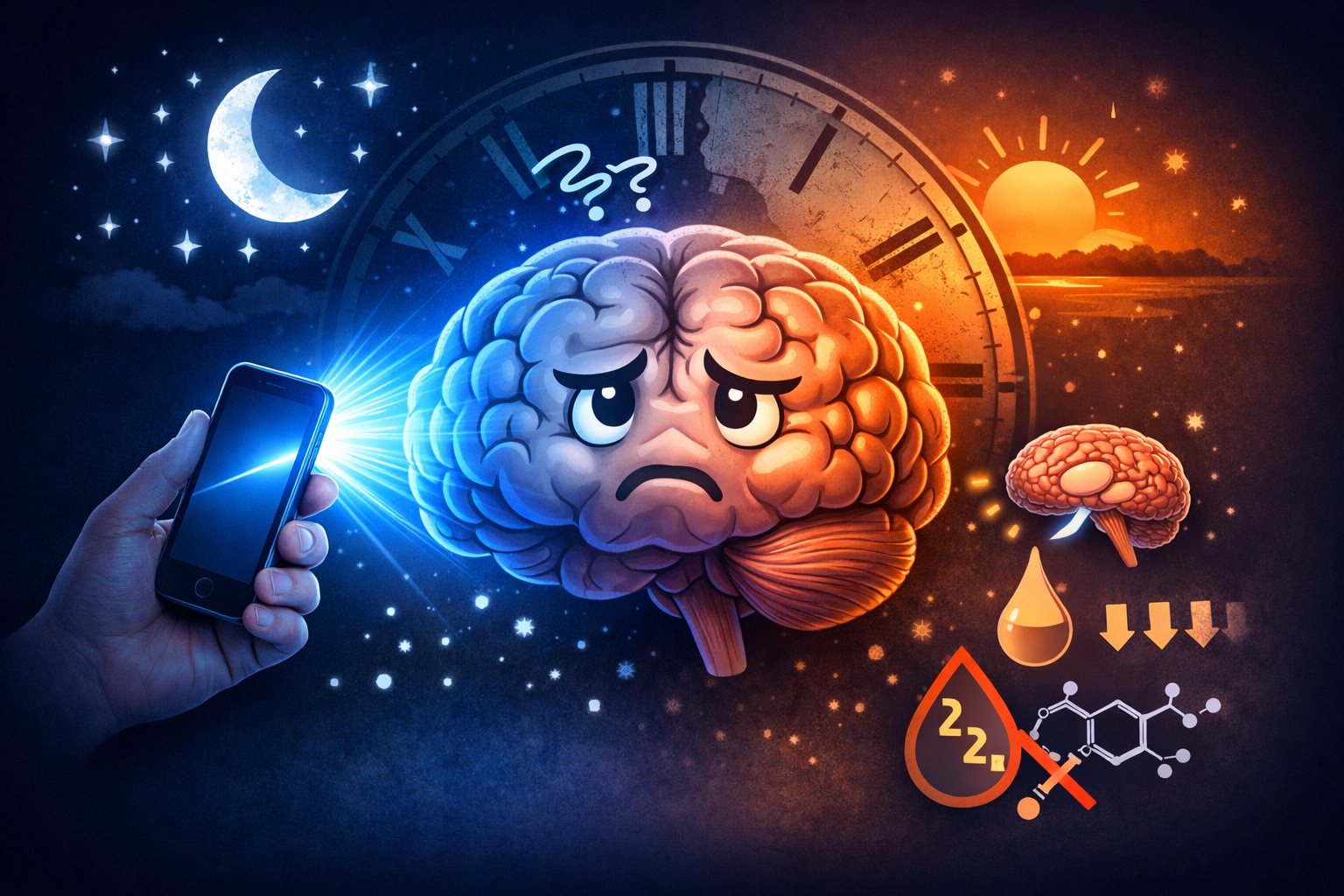
  • Why Blue Light Delays Sleep

    Why Blue Light Delays Sleep

    How artificial light at night interferes with melatonin and sleep timing

    Many people struggle to fall asleep even when they feel tired. They go to bed on time, turn off the lights, and still lie awake. Often, the cause isn’t stress or lack of discipline — it’s light exposure earlier in the evening.

    Blue light is one of the strongest signals affecting the brain’s sleep system. In modern environments, exposure to blue light at night delays sleep onset, disrupts circadian timing, and weakens sleep quality, even when total sleep time seems adequate.


    The Brain Uses Light to Decide When to Sleep

    Sleep timing is regulated by the circadian rhythm.

    The brain relies on light signals from the eyes to determine whether it is day or night. When light is detected, the brain increases alertness. When light fades, it prepares the body for sleep.

    Blue light sends a particularly strong “daytime” signal.


    Why Blue Light Is More Disruptive Than Other Light

    Not all light affects sleep equally.

    Blue wavelengths strongly activate specialized light-sensitive cells in the eyes that communicate directly with the brain’s internal clock. These cells evolved to respond to daylight, which is rich in blue light.

    When blue light appears at night, the brain interprets it as extended daytime.


    Blue Light and Melatonin Suppression

    Melatonin is the hormone that signals night.

    As darkness increases, melatonin rises, promoting sleepiness and initiating nighttime physiology. Blue light suppresses melatonin production more powerfully than other wavelengths.

    Even brief evening exposure can delay melatonin release and push sleep timing later.


    Why Screens Are Especially Problematic

    Screens emit concentrated blue light.

    Phones, tablets, computers, and televisions deliver blue wavelengths directly into the eyes at close range. This exposure is intense and sustained, making it especially disruptive in the evening.

    Using screens close to bedtime delays sleep onset even if brightness is reduced.


    Blue Light and Increased Alertness

    Blue light does more than suppress melatonin.

    It actively increases alertness, reaction time, and cognitive stimulation. This makes the brain feel “wired” even when the body is tired.

    This mismatch explains why people often feel exhausted yet unable to fall asleep.


    How Blue Light Shifts the Circadian Clock

    Evening blue light delays circadian timing.

    The internal clock shifts later, causing sleepiness to appear later at night and wake time to drift later in the morning. Over time, this creates chronic misalignment.

    This shift occurs even without conscious awareness.


    Blue Light and Sleep Depth

    Delayed sleep timing affects sleep structure.

    When sleep is pushed later, the proportion of deep sleep and REM sleep can be reduced or fragmented. Sleep may feel long but unrefreshing.

    Quality declines even when quantity remains unchanged.


    Why Indoor Lighting Adds to the Problem

    Modern lighting extends exposure.

    LED lighting used in homes and public spaces often contains blue wavelengths. Bright indoor lighting in the evening reinforces the signal that it is still daytime.

    This prolongs alertness beyond biological night.


    Do Blue Light Filters Fully Solve the Problem?

    Filters help, but they are not enough.

    Blue light filters and night modes reduce wavelength intensity but do not eliminate alerting effects. The brain still responds to light exposure, brightness, and stimulation.

    Reducing exposure time matters more than filtering alone.


    How to Minimize Blue Light Exposure at Night

    Managing blue light requires behavior.

    Dimming lights, using warmer lighting, limiting screen use before bed, and creating a darker evening environment allow melatonin to rise naturally.

    Consistency is more important than perfection.


    Why Darkness Matters More Than You Think

    Darkness is an active biological signal.

    As light disappears, the brain transitions into night mode. This transition supports sleep onset, depth, and emotional regulation.

    Protecting darkness protects sleep.


    The Core Idea to Remember

    Blue light delays sleep because it sends a powerful daytime signal to the brain.

    By suppressing melatonin, increasing alertness, and shifting circadian timing, blue light makes falling asleep harder and sleep less restorative.

    Sleep improves not by forcing rest — but by aligning light exposure with biology.

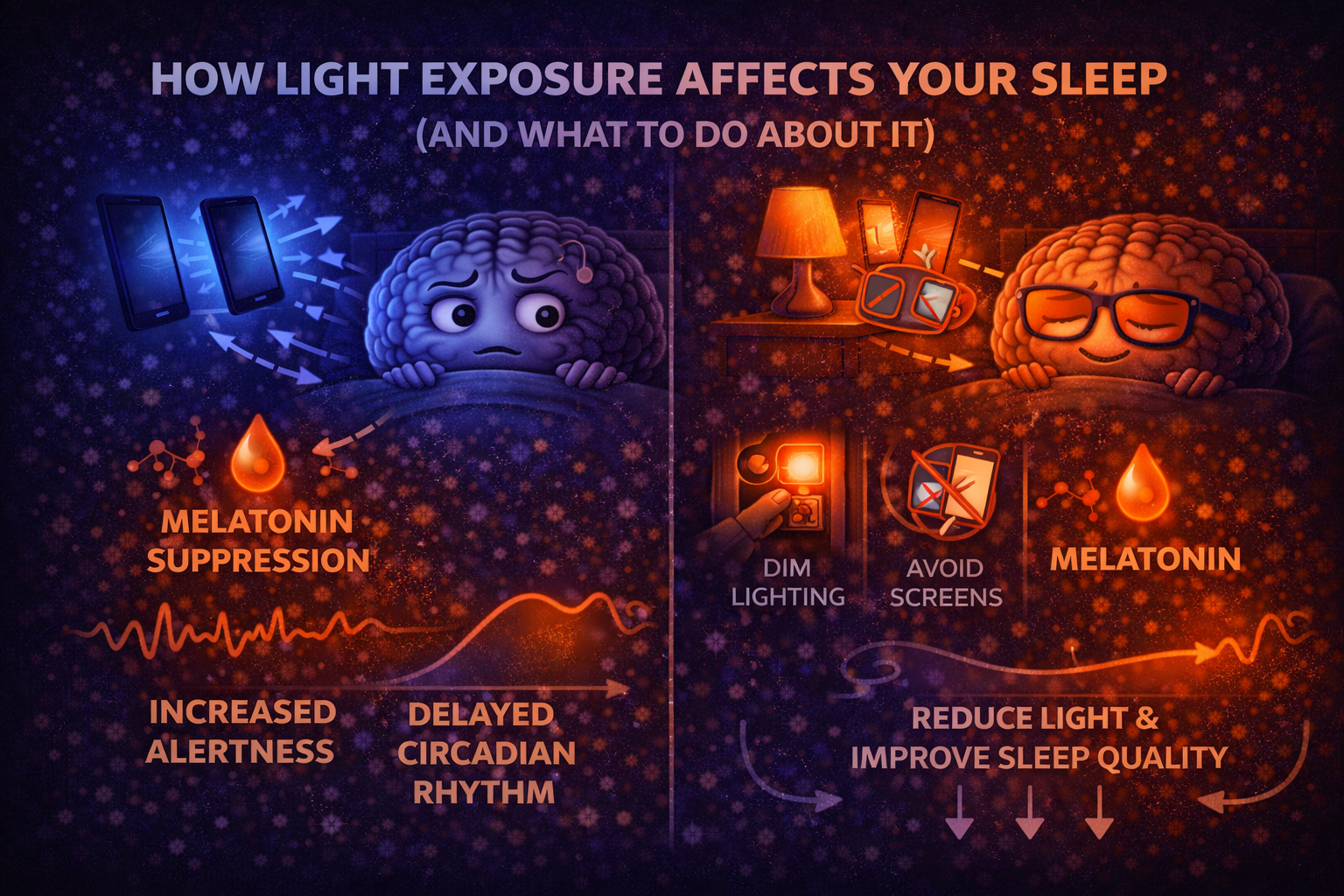
  • How Light Exposure Affects Your Sleep (And What to Do About It)

    How Light Exposure Affects Your Sleep (And What to Do About It)

    Why light is the strongest signal controlling your sleep–wake cycle

    Sleep is often treated as something that happens when the day ends. In reality, sleep is actively controlled by signals the brain receives long before bedtime. Among all of them, light is the most powerful.

    Light exposure determines when you feel alert, when you feel sleepy, and how deeply you sleep. Understanding how light affects sleep explains why modern environments make sleep harder—and what can be done to restore alignment.


    Light Is the Brain’s Primary Time Signal

    The brain uses light to tell time.

    Specialized cells in the eyes detect light and send timing signals directly to the brain’s central clock. This system evolved to synchronize the body with sunrise and sunset.

    When light exposure follows natural patterns, sleep timing feels effortless. When it doesn’t, sleep becomes fragmented and mistimed.


    How Morning Light Sets Your Sleep Schedule

    Morning light anchors your circadian rhythm.

    Exposure to bright light early in the day signals the brain that the day has begun. This timing cue starts the internal clock and determines when melatonin will be released later at night.

    Without sufficient morning light, the sleep schedule drifts later, making it harder to fall asleep at night.


    Why Evening Light Delays Sleep

    Evening light sends the wrong signal.

    Artificial light at night tells the brain that it is still daytime. This delays melatonin release, increases alertness, and shifts sleep timing later.

    The brighter and bluer the light, the stronger this delay becomes.


    Blue Light and Its Unique Impact on Sleep

    Blue light is especially disruptive.

    Screens, LED lighting, and modern devices emit high levels of blue light. This wavelength strongly suppresses melatonin and increases alertness.

    Even short exposure in the evening can delay sleep onset and reduce sleep quality.


    Light Exposure and Sleep Depth

    Light affects more than sleep timing.

    Improper light exposure reduces sleep depth and continuity. Fragmented sleep, reduced deep sleep, and disrupted REM sleep are common consequences of circadian misalignment caused by light.

    Sleep may feel long but unrefreshing.


    Why Indoor Living Confuses the Brain

    Modern light environments are unnatural.

    Indoor lighting during the day is often too dim, while evening lighting is too bright. This reverses natural light signals and confuses the circadian system.

    The brain struggles to distinguish day from night.


    How Irregular Light Exposure Disrupts Sleep Consistency

    Inconsistent light patterns prevent stabilization.

    When light exposure changes daily—late nights, screens, irregular schedules—the circadian rhythm cannot settle. Sleep timing becomes unpredictable.

    Consistency matters more than perfection.


    What to Do About Morning Light

    Prioritize early light exposure.

    Spending time outdoors in the morning or near a bright window helps anchor the circadian rhythm. Even on cloudy days, outdoor light is far stronger than indoor lighting.

    This single habit improves nighttime sleep quality.


    How to Reduce Harmful Evening Light

    Evening light should be minimized.

    Dimming lights, avoiding screens close to bedtime, and using warmer lighting reduces melatonin suppression. The goal is not darkness all day—but darkness at the right time.

    This allows the brain to prepare for sleep naturally.


    Do Blue Light Filters Actually Help?

    Blue light filters help—but only partially.

    They reduce the intensity of blue wavelengths but do not eliminate alerting effects entirely. Behavioral changes matter more than filters alone.

    Reducing exposure time is more effective than relying on software.


    Why Darkness Signals the Brain to Sleep

    Darkness is an active signal.

    As light fades, melatonin rises and the brain shifts into night mode. This transition supports sleep onset, depth, and emotional regulation.

    True darkness strengthens this signal.


    Long-Term Effects of Poor Light Management

    Chronic light misalignment accumulates.

    Over time, poor light exposure contributes to insomnia, fatigue, mood instability, and reduced cognitive performance. These effects develop gradually and are often overlooked.

    Correcting light exposure can reverse many of them.


    The Core Idea to Remember

    Light exposure controls sleep timing, depth, and quality.

    Morning light anchors the circadian rhythm. Evening light delays sleep and weakens recovery. Managing light is one of the most powerful, non-invasive ways to improve sleep.

    Sleep improves not when you force it—but when light cues are aligned with biology.


    Slug

  • How Long It Takes to Fix a Broken Sleep Schedule

    How Long It Takes to Fix a Broken Sleep Schedule

    Why restoring sleep timing is a gradual biological process, not a quick reset

    When sleep schedules fall apart, the first question is almost always the same: How long will this take to fix? After weeks or months of late nights, irregular wake-ups, or shifting routines, many people expect recovery to happen after a few “good” nights.

    Biologically, sleep timing does not reset instantly. Fixing a broken sleep schedule means retraining the brain’s internal clock — a process that unfolds gradually and follows biological constraints rather than motivation or effort.


    What a Broken Sleep Schedule Actually Means

    A sleep schedule is considered broken when sleep and wake times lose consistency.

    This often happens due to late nights, rotating schedules, stress, travel, illness, or prolonged irregular routines. Over time, the circadian rhythm loses its ability to predict when sleep should occur.

    The core issue is not just lost sleep. It is lost timing stability. The brain no longer knows when to prepare for rest or when to support alertness.


    Why Sleep Timing Can’t Be Fixed Overnight

    The circadian rhythm does not respond like a switch.

    It adjusts slowly based on repeated cues, especially light exposure and consistent wake times. When sleep schedules change abruptly, the internal clock moves in small increments rather than large jumps.

    This is why one or two early nights rarely solve the problem. The brain needs repetition to believe the new timing is reliable.


    The Typical Timeline for Repair

    For most people, noticeable improvement begins within one to two weeks of consistent timing.

    Full stabilization often takes two to four weeks, depending on how disrupted the schedule was. Long-standing irregularity or shift-like patterns may take longer.

    There is no universal timeline. Chronotype, stress levels, light exposure, and prior sleep debt all influence recovery speed.


    Why Some People Recover Faster Than Others

    Not everyone’s internal clock adjusts at the same rate.

    Earlier chronotypes generally shift earlier more easily, while later chronotypes tend to adapt more slowly. Stress, anxiety, and inconsistent routines further slow the process.

    This explains why two people following similar strategies can experience very different timelines.


    Why “Catching Up on Sleep” Doesn’t Fix Timing

    Sleeping longer reduces sleep pressure, but it does not reset circadian timing.

    If extra sleep occurs at inconsistent or biologically inappropriate hours, the internal clock remains unstable. You may feel less exhausted but still out of sync.

    Timing consistency — not extra hours — is what teaches the brain when sleep should happen.


    The Role of Wake-Up Time in Resetting Sleep

    Wake-up time is the strongest anchor for sleep timing.

    A consistent wake-up time sends a clear signal to the circadian rhythm, helping it re-align day by day. Bedtime often adjusts naturally once wake time stabilizes.

    Frequent changes in wake-up time delay this adjustment and prolong recovery.


    Why the Adjustment Phase Often Feels Worse

    During the reset period, many people feel temporarily worse.

    Sleep may feel lighter, fatigue may increase, and alertness can fluctuate. This does not mean the process is failing — it means the circadian rhythm is reorganizing.

    Abandoning consistency during this phase resets progress and extends recovery time.


    Why Forcing Early Bedtimes Slows Progress

    Trying to force sleep rarely accelerates repair.

    If bedtime is imposed before the brain is ready, sleep onset becomes difficult and fragmented. This creates frustration and conditions the brain to associate bed with wakefulness.

    Letting sleep arrive naturally — guided by consistent wake timing — is more effective than pushing bedtime earlier.


    How Long “Fully Fixed” Really Is

    A sleep schedule is considered fully restored when timing feels stable and sleep arrives easily most nights.

    For mild disruption, this may take a couple of weeks. For chronic disruption, it can take several weeks of steady routines before sleep feels reliably normal again.

    The brain continues fine-tuning even after sleep starts improving.


    The Core Idea to Remember

    Fixing a broken sleep schedule takes time because the circadian rhythm changes slowly.

    The brain needs repeated, consistent signals to relearn when to sleep and wake. Quick fixes rarely work, but steady alignment does.

    Patience is not optional here — it is part of the biology. When timing is respected, recovery follows.

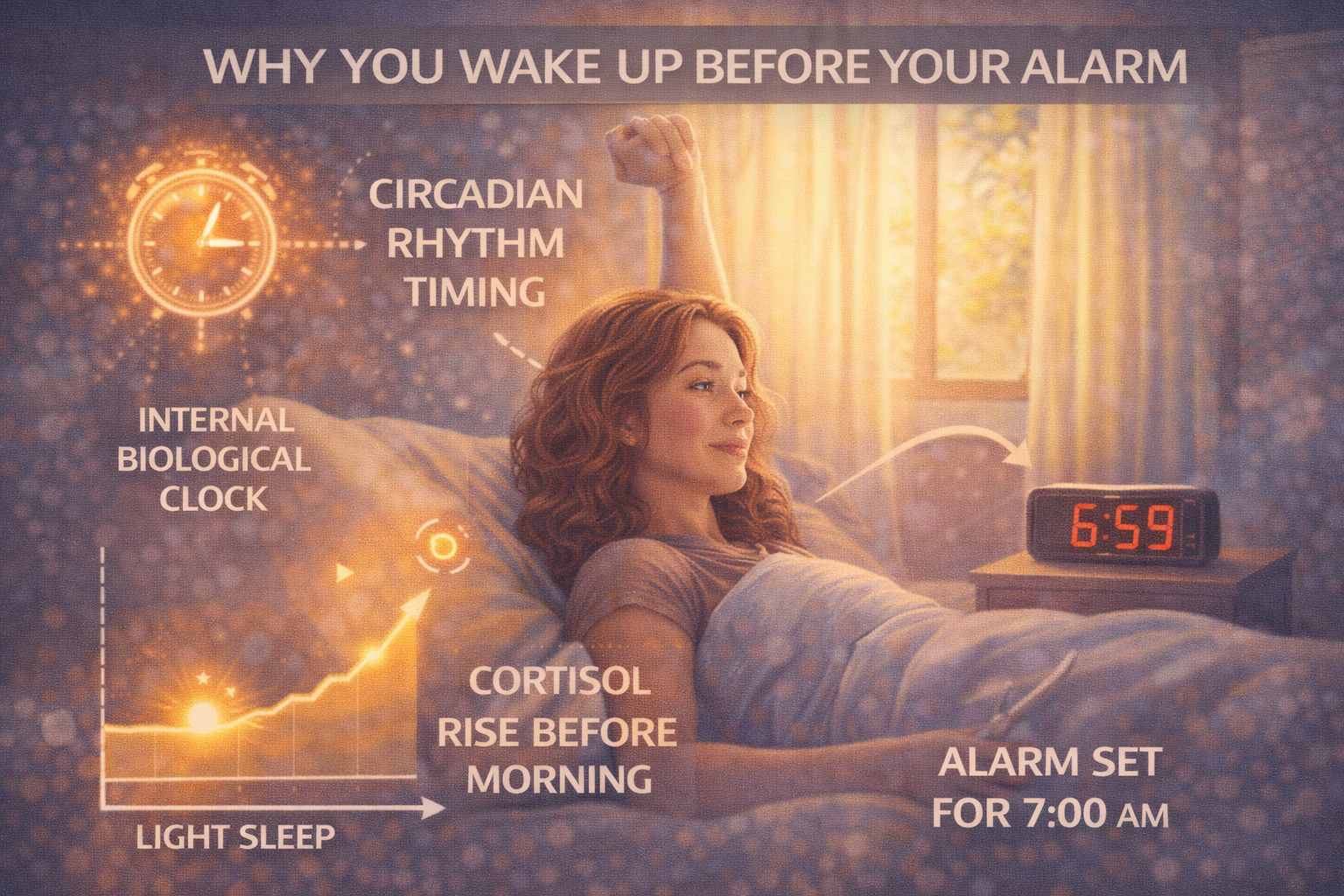
  • Why You Wake Up Before Your Alarm

    Why You Wake Up Before Your Alarm

    Why You Wake Up Before Your Alarm

    How circadian timing, stress, and anticipation trigger early awakenings

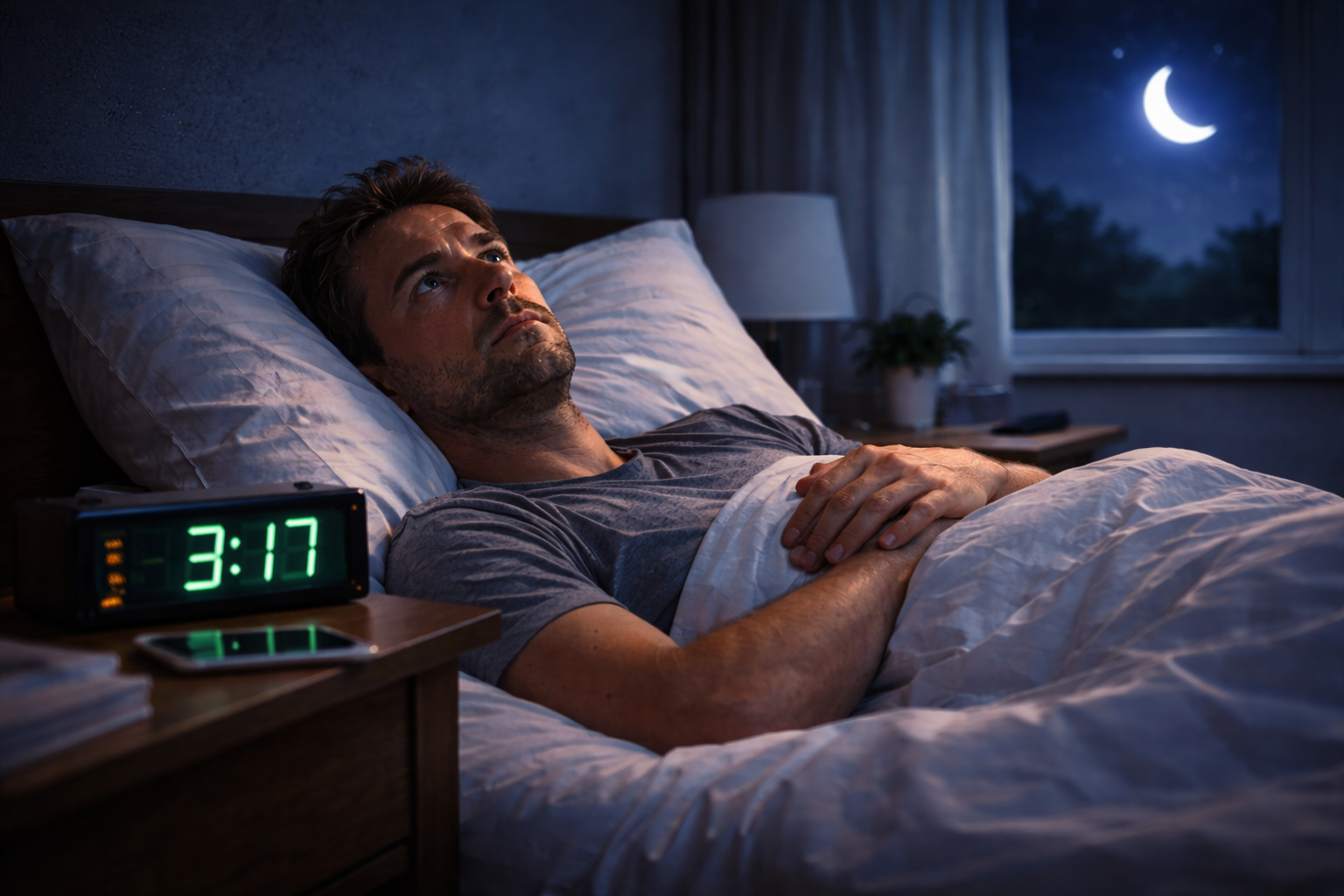
    Waking up before your alarm can feel confusing or frustrating. Sometimes it happens once and feels harmless. Other times it becomes a pattern — early mornings, alertness too soon, and difficulty falling back asleep.

    This experience is rarely random. Waking before the alarm is often a sign that the brain has already transitioned toward wakefulness. The reason lies in how circadian timing, stress systems, and learned anticipation interact during the final hours of sleep.


    The Brain Wakes Up Before the Alarm Does

    Waking up is not caused by the alarm itself.

    The brain begins preparing for wakefulness well before morning. Hormones shift, body temperature rises, and alertness gradually increases as part of the circadian rhythm.

    If this transition reaches a certain threshold before the alarm goes off, you wake naturally — sometimes minutes, sometimes much earlier.


    Circadian Rhythm and Early Wake Signals

    The circadian rhythm determines when the brain expects the day to begin.

    If your internal clock is shifted earlier than your alarm time, wake-promoting signals may rise sooner than intended. This can happen due to consistent early schedules, light exposure, or gradual shifts in sleep timing.

    In these cases, waking before the alarm is a sign of circadian alignment — not necessarily a problem.


    Stress and the Early Morning Alert Response

    Stress is a common cause of unwanted early awakenings.

    Stress hormones naturally rise in the early morning to support waking. When stress levels are elevated, this rise can occur earlier or more intensely, triggering premature alertness.

    Even low-grade or subconscious stress can activate the brain before the desired wake time.


    Why Anticipation Wakes You Up

    The brain learns patterns quickly.

    If you regularly wake at a certain time, worry about waking early, or anticipate an upcoming obligation, the brain begins preparing earlier. This learned anticipation can override sleep continuity.

    As a result, the brain exits sleep not because rest is complete, but because it expects action.


    Sleep Pressure Is Lowest in the Morning

    Sleep pressure decreases across the night.

    By early morning, sleep pressure is naturally lower than at bedtime. This makes sleep more fragile and easier to interrupt.

    When combined with rising circadian alertness or stress signals, even small disturbances can cause full awakening.


    Why Falling Back Asleep Is Hard

    Once the brain transitions toward wakefulness, returning to sleep becomes difficult.

    Alertness systems activate quickly, while sleep-promoting systems take longer to re-engage. The brain interprets early waking as the start of the day, even if the alarm has not sounded.

    This imbalance explains why early awakenings often end the night entirely.


    Early Waking and Sleep Fragmentation

    Frequent early awakenings fragment sleep.

    While total sleep time may not appear drastically reduced, the final and often REM-rich portion of sleep is shortened. This can affect emotional processing and leave sleep feeling incomplete.

    Repeated early waking contributes to cumulative fatigue over time.


    Why Sleeping Earlier Doesn’t Always Help

    Many people respond to early awakenings by going to bed earlier.

    If circadian timing does not shift accordingly, this strategy increases time in bed without extending sleep. The brain still wakes at the same internal time.

    Timing alignment matters more than bedtime alone.


    When Early Waking Is Actually Normal

    Not all early awakenings are negative.

    If you wake feeling alert, rested, and calm, early waking may simply reflect a well-aligned circadian rhythm. Problems arise when early waking is accompanied by fatigue, anxiety, or sleep loss.

    The context determines whether the pattern is healthy or disruptive.


    Reducing Unwanted Early Wake-Ups

    Improving early waking often involves reducing early-morning alert signals.

    Supporting circadian alignment, managing stress, and protecting sleep continuity help the brain maintain sleep through the final hours. The goal is not forcing sleep, but preventing premature activation.

    When the brain stays in recovery mode longer, sleep naturally extends closer to the alarm.


    The Core Idea to Remember

    Waking up before your alarm happens because the brain has already begun waking.

    Circadian timing, stress hormones, anticipation, and low sleep pressure combine to trigger early alertness. This process is biological, not random.

    Understanding why it happens helps distinguish healthy early waking from patterns that undermine sleep — and points toward alignment rather than effort as the solution.

  • What Happens When You Sleep at the Wrong Time

    What Happens When You Sleep at the Wrong Time

    How mistimed sleep disrupts brain function even when duration seems adequate

    Most people think of poor sleep as sleeping too little. But many sleep problems come from something more subtle: sleeping at the wrong time. You can spend enough hours in bed and still wake up feeling foggy, drained, or emotionally off.

    When sleep occurs out of sync with the circadian rhythm, the brain cannot use those hours efficiently. The problem is not rest itself — it is timing. Sleeping at the wrong biological moment changes how the brain recovers, processes information, and regulates energy the next day.


    Sleep Is More Than Time Spent Asleep

    Sleep is not a passive state where recovery happens automatically.

    The brain follows a structured sequence of processes during the night. Hormone release, neural repair, memory consolidation, and metabolic regulation are all timed to occur during specific circadian windows.

    When sleep is mistimed, these processes still occur — but less efficiently. The same number of hours can deliver very different outcomes depending on when they happen.


    Circadian Rhythm and Biological Night

    The circadian rhythm defines a biological night that is not identical to clock time.

    During biological night, alertness drops, body temperature declines, and the brain becomes optimized for deep, restorative sleep. This window is determined by internal timing, not by social schedules.

    Sleeping outside this window means the brain is trying to recover while biological signals still promote wakefulness or early alertness.


    Why Sleep at the Wrong Time Feels Less Restorative

    When sleep is mistimed, deeper stages of sleep become harder to sustain.

    The brain may enter sleep, but transitions between sleep stages are more fragmented. Deep sleep can be shortened or delayed, and REM sleep may be altered.

    As a result, sleep feels lighter and less refreshing, even when duration appears sufficient.


    The Cognitive Effects of Mistimed Sleep

    Sleeping at the wrong time affects daytime brain function.

    Common effects include:

    • reduced attention and slower thinking

    • impaired memory formation

    • increased mental fatigue

    • difficulty sustaining focus

    These symptoms often resemble sleep deprivation, even when total sleep time is adequate. The brain is not fully restored because recovery occurred at a biologically suboptimal moment.


    Emotional Regulation and Timing

    Sleep timing also influences emotional processing.

    Mistimed sleep disrupts neural circuits involved in emotional regulation, making mood more volatile and stress responses stronger. Irritability, anxiety, and emotional sensitivity become more pronounced.

    This helps explain why people can feel emotionally “off” after nights that looked fine on paper.


    Why Sleeping During the Day Is Different

    Daytime sleep is often used to compensate for night work or late schedules.

    However, sleeping during daylight hours occurs when circadian signals promote alertness. Light exposure, elevated body temperature, and hormonal patterns all reduce sleep efficiency.

    Even long daytime sleep episodes rarely provide the same restorative benefit as well-timed nighttime sleep.


    Mistimed Sleep and Long-Term Fatigue

    Occasional mistimed sleep is manageable. Chronic mistiming is not.

    Repeatedly sleeping at the wrong time keeps the circadian rhythm in a state of conflict. Over time, this leads to persistent fatigue, brain fog, and reduced cognitive resilience.

    The body never fully adapts because internal signals remain inconsistent.


    Why Willpower Cannot Override Timing

    Many people attempt to compensate for mistimed sleep through discipline.

    Caffeine, rigid routines, or pushing through fatigue may temporarily mask symptoms, but they do not correct the underlying misalignment. Biological systems respond to timing cues, not effort.

    Without alignment, recovery remains incomplete.


    Restoring Alignment Matters More Than Sleeping Longer

    Fixing mistimed sleep is not primarily about adding hours.

    Improving timing consistency, light exposure, and alignment with biological night often restores sleep quality more effectively than extending sleep duration alone.

    The brain needs sleep at the right time to recover fully.


    The Core Idea to Remember

    Sleeping at the wrong time disrupts recovery even when sleep duration looks adequate.

    The brain is designed to restore itself during specific circadian windows. When sleep falls outside those windows, energy, focus, and emotional balance suffer.

    Sleep quality depends as much on when you sleep as on how long you sleep — and timing is a biological requirement, not a preference.