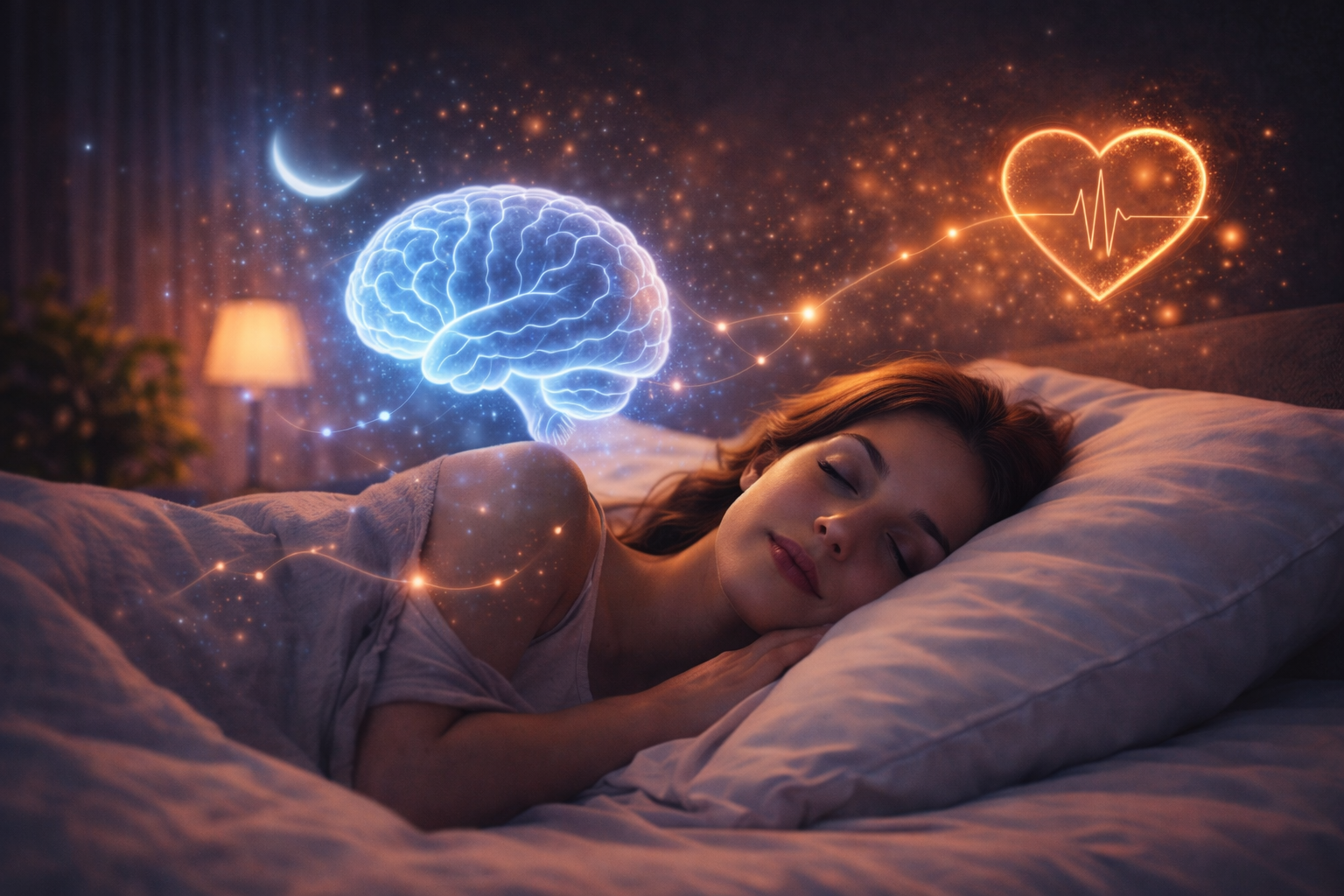
Sleep is often treated as a passive state — something that happens when the day ends and the mind shuts off. Mental health, on the other hand, is usually discussed in terms of thoughts, emotions, and psychological resilience.
In reality, these two domains are deeply interconnected. Sleep is not just related to mental health; it is one of its biological foundations.
When sleep is stable and restorative, the brain regulates emotions, stress, and cognition more effectively. When sleep is disrupted, mental health often suffers — even in the absence of psychological stressors. Understanding this relationship changes how we interpret anxiety, mood instability, and cognitive fatigue.
The brain does not reset without sleep
The brain is constantly active. During waking hours, it processes information, manages emotions, and responds to stress. Sleep provides the only extended period during which the brain can recalibrate these systems.
During sleep, neural networks involved in emotion and stress are reorganized. Connections are strengthened or weakened based on relevance, helping the brain maintain balance. Without sufficient restorative sleep, this recalibration process becomes incomplete.
The result is a brain that remains overstimulated and less able to regulate emotional responses during the day.
Emotional regulation depends on sleep quality
One of sleep’s most important roles is emotional regulation. Well-rested brains respond to emotional stimuli with greater flexibility and control. Poorly rested brains react more intensely and recover more slowly.
Research consistently shows that sleep loss amplifies negative emotions and reduces the ability to manage stress. Small challenges feel overwhelming, and emotional reactions become harder to contain.
This does not mean that sleep causes mental health disorders, but it strongly influences how resilient the brain is to emotional stress.
Stress, anxiety, and the sleep cycle
Stress and sleep interact in a bidirectional loop. Stress can disrupt sleep, and disrupted sleep increases stress sensitivity.
When sleep quality declines, the brain’s stress response becomes more reactive. Stress hormones remain elevated longer, and the nervous system struggles to return to baseline. Over time, this creates a state of chronic hyperarousal.
Even in individuals without clinical anxiety, poor sleep can produce symptoms such as restlessness, racing thoughts, and heightened worry. These symptoms often improve when sleep stabilizes.
Sleep and mood stability
Mood stability relies on consistent neural signaling. Sleep supports this consistency by maintaining healthy communication between brain regions involved in emotion and decision-making.
When sleep is fragmented or poorly timed, this communication becomes less efficient. Mood swings, irritability, and emotional numbness become more common.
Importantly, these changes can occur even when sleep duration appears sufficient. Quality, timing, and continuity matter as much as hours.
Cognitive health and mental clarity
Mental health is not only about emotions; it also includes cognitive clarity. Sleep plays a critical role in attention, memory, and executive function.
Good sleep allows the brain to consolidate memories, filter irrelevant information, and prepare for learning. Poor sleep reduces these capacities, leading to brain fog, slower thinking, and reduced problem-solving ability.
Over time, chronic sleep disruption can make cognitive tasks feel disproportionately difficult, contributing to frustration and reduced confidence.
Why sleep is a foundation, not a supplement
Sleep is sometimes treated as an optional enhancement to mental health strategies. In reality, it is foundational.
Therapeutic techniques, stress management strategies, and lifestyle changes are far more effective when the brain is well-rested. Without sleep, these interventions operate on an unstable biological base.
This is why improving sleep often produces broad mental health benefits, even without directly addressing psychological content.
Modern life and mental health strain
Modern environments frequently undermine sleep quality through artificial light, irregular schedules, and constant stimulation. These factors disrupt circadian timing and reduce restorative sleep.
As a result, many people experience mental health symptoms that are partially rooted in biological misalignment rather than psychological pathology. Recognizing this distinction is essential for addressing the true source of distress.
The long-term perspective
Over time, consistent sleep disruption increases vulnerability to mood disorders and cognitive decline. Conversely, stable, high-quality sleep supports long-term emotional resilience and mental clarity.
Sleep does not eliminate life’s challenges, but it equips the brain to handle them more effectively.
The key takeaway
Sleep is not just correlated with mental health — it supports it at a biological level. Emotional regulation, stress resilience, and cognitive clarity all depend on the brain’s ability to recover during sleep.
Understanding sleep as a foundation rather than a supplement reframes mental health care. Before asking the mind to do more, the brain must be allowed to rest.